
Livraison le jour même ou le lendemain

Qualité garantie

Débloquez vos offres de bienvenue: Livraison GRATUITE | Jusqu'à -80 % | 30 jours d'essai gratuits à JoyPlus
Téléchargez l'application
Who hasn't felt the frustration of the “Low Battery” notification popping up at the worst possible moment? Whether you're commuting, travelling, or simply away from an outlet, watching your smartphone, laptop, or headphones die is more than just an inconvenience. Fortunately, the power bank market has exploded. But between technologies like USB-C Power Delivery (PD) and ever-increasing capacities, finding the right one can be overwhelming.
Our mission at Joybuy? To help you make sense of it all. This guide breaks down the key criteria and presents our selection of the top models to help you find the fast-charging USB-C power bank that will never let you down.
Before diving into our top picks, let's review the key factors that will make all the difference.
Expressed in milliampere-hours (mAh), capacity simply defines your power bank's energy reserve.
Having a large capacity is good. Charging fast is better. The output power, measured in watts (W), dictates how quickly your devices charge. Today, Power Delivery (PD) technology over USB-C has become the standard for fast charging.
For the most demanding devices (like the latest MacBook Pros), a PD 3.1 portable charger can deliver up to 140W or more, drastically reducing charge times. Be sure to check the maximum power your devices can accept to unlock your power bank's full potential.
Most current models feature at least one bidirectional USB-C port (used for charging both the power bank and your devices) and a USB-A port for maximum compatibility.
For Apple enthusiasts, a MagSafe power bank is a game-changer, with its magnetic attachment and wireless charging optimised for recent iPhones. It's an ultra-convenient solution to say goodbye to tangled cables.
Here are three models that cater to specific needs, from the urban commuter to the professional who's always between flights.
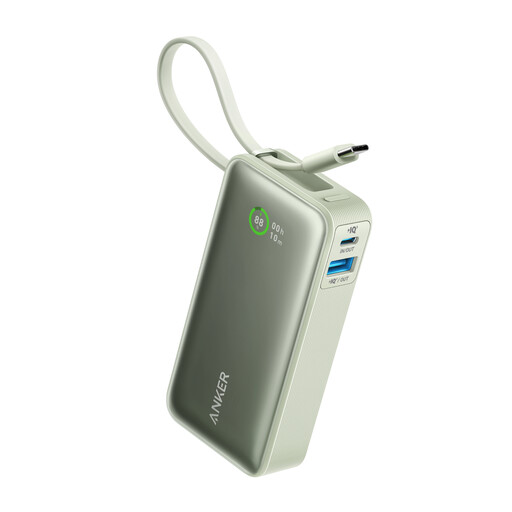
Why we love it: Its standout feature: the directly integrated USB-C cable. No more forgotten or tangled cables—it's always there, ready to go. A simple idea that makes it the perfect everyday companion.
Key features:
Who is it for? For those looking for a reliable, ultra-portable, all-in-one solution for their smartphone or tablet. An excellent entry point into the world of Anker power banks.
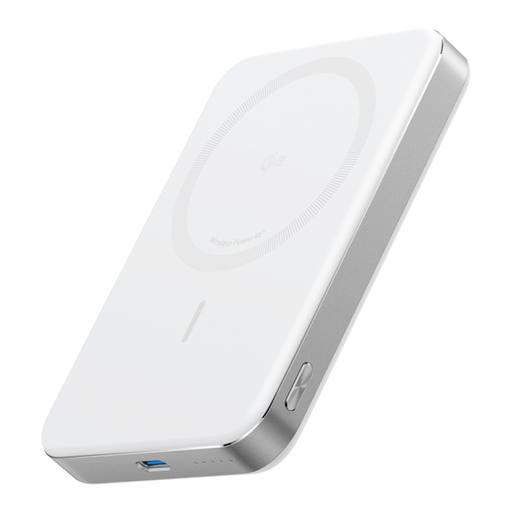
Why we love it: It combines an ultra-slim design with the power of Qi2-certified wireless charging. Its MagSafe compatibility makes it the ultimate portable charger for the iPhone 16. The wireless charging experience is as elegant as it is efficient.
Key features:
Who is it for? The essential accessory for iPhone owners (12 to 16 series) who want to combine the elegance of wireless with a minimalist design, without ever being tied down by a cable.
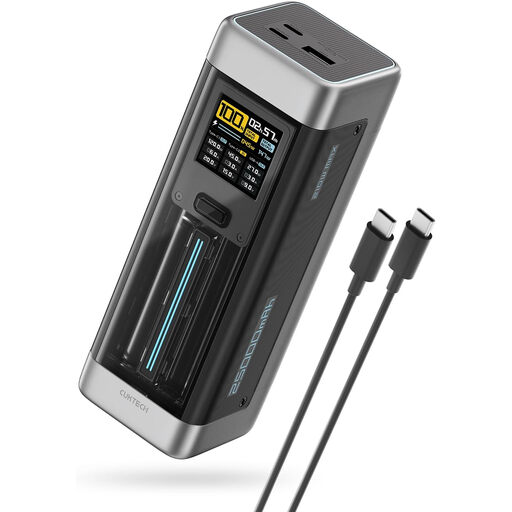
Why we love it: This isn't just a power bank; it's a true pocket-sized power station. With its 140W output and PD 3.1 standard, it plays in the big leagues. Its TFT screen, which displays all charging info in real-time, is the icing on the cake for tech enthusiasts who love to have full control.
Key features:
Who is it for? For mobile professionals, creatives, and tech enthusiasts who need to power multiple devices simultaneously, including a power bank for a laptop, without making any compromises on speed and performance.
Our selection is just a glimpse of what's available. The portable charger market is full of hidden gems. To explore other capacities, technologies, or form factors, feel free to browse our complete catalogue.
Discover Our Full Range of USB-C Power Banks
For daily use focused on your smartphone, 10,000 mAh is the perfect balance between portability and power. For travel, powering multiple devices, or charging a laptop, aim for 20,000 mAh or more.
Absolutely, provided it delivers sufficient output power (typically 45W or more) through a Power Delivery (PD) compatible USB-C port. Powerhouse models like the CUKTECH No. 20 with its 140W are even specifically designed for this. Simply check the power requirements of your laptop.
No, wired charging via USB-C PD remains the fastest option. For example, the Anker MagGo power bank offers 15W wirelessly (MagSafe/Qi2), compared to 30W via its USB-C port. MagSafe and Qi2 are all about convenience and the freedom from cables, a key advantage for everyday use.