
Livraison le jour même ou le lendemain

Qualité garantie

Débloquez vos offres de bienvenue: Livraison GRATUITE | Jusqu'à -80 % | 30 jours d'essai gratuits à JoyPlus
Téléchargez l'application
By the Joybuy Team, Your Tech Experts
A cable that charges at a snail's pace, frays after a few months, or is suddenly rejected by your device: it's a frustration we've all experienced. With the widespread adoption of the USB-C port on our smartphones (like the iPhone 16 or Samsung S24), tablets, and laptops, choosing the right fast-charging USB-C to USB-C cable has become essential.
The catch? The market is flooded with marketing promises that often lead to disappointing purchases. To avoid throwing your money away, here are the 3 most common pitfalls to avoid.
To cut through the noise and avoid these disappointments, focus on three non-negotiable technical specifications. They determine your cable's speed, durability, and safety.
Today, fast charging means the Power Delivery (PD) protocol. For the magic to happen, your charger, device, and cable must all speak the same language.
Make sure the cable explicitly mentions its Power Delivery cable compatibility and the maximum supported wattage.
A good reinforced USB-C cable is judged on several key points:
The USB-IF (USB Implementers Forum) certification is your best insurance policy. It guarantees the cable has passed a series of rigorous tests to:
A USB-IF certified cable is a small investment in the safety and longevity of your equipment.
We've analysed the market based on these objective criteria. Here are options that meet different needs and user profiles.
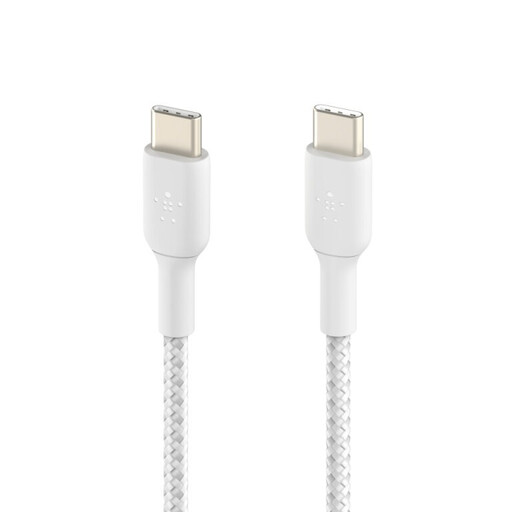
Why we chose it: The sensible choice for daily use. Its 1-meter length is ideal for the office or bedside table, and its 60W power is perfectly suited for fast-charging most smartphones and tablets.
The USB-IF certification ensures the 60W power is genuine and safe. Its braided nylon sheath, tested to withstand over 30,000 bends, sidesteps the "false durability" pitfall.
The perfect balance of certified durability, solid charging performance (60W), and the reliability of a brand renowned for its accessories.
Why we chose it: Perfect for those who want to break free from distance constraints, whether using their device on the couch while charging or reaching a distant hotel outlet. Its 2-meter length offers maximum flexibility.
The classic flaw of cheap, long cables? Power loss. Thanks to its USB-IF certification, this 2m braided USB-C cable guarantees a stable 60W output along its entire length, with no compromise on safety.
A generous 2-meter length combined with durable construction and certified charging power. The bonus: the included storage strap is very handy for travel.
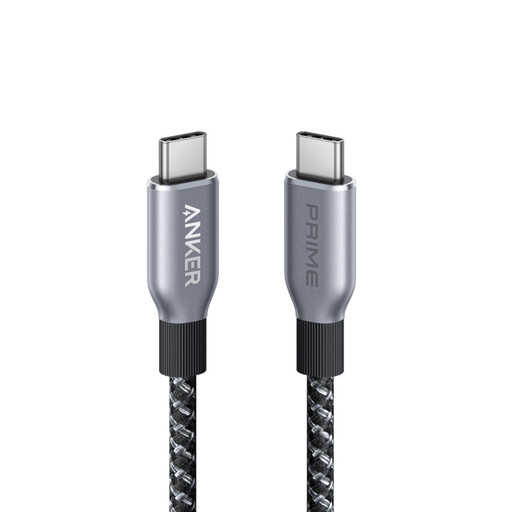
Why we chose it: For pros and enthusiasts with powerful machines, or simply for those who want a future-proof cable. Its 240W capability places it at the pinnacle of what USB-C technology can offer today.
Here, the advertised power isn't just for show: it includes the necessary E-Marker chip and a robust construction to dissipate heat, avoiding the pitfall of unfulfilled power promises.
Sheer power of 240W, ready to fuel the most demanding devices of today and tomorrow. Its design using recycled materials is an added bonus.
Explore our full selection of products that meet our quality criteria and current safety standards.
For the vast majority of users, a 60W cable is the most practical choice. It ensures fast charging for smartphones, tablets, and many laptops (MacBook Air, Dell XPS 13). Opt for a 100W or 240W cable only if you own a high-performance laptop (e.g., MacBook Pro 16", gaming laptop) and a compatible charger. Rest assured, using an overpowered cable won't damage your device; it simply won't charge any faster than what the device can handle.
In theory, yes. A longer length increases electrical resistance and can cause a slight power drop. In practice, with a quality, USB-IF certified cable, such as a 2-meter model from a reputable brand, this loss is completely unnoticeable in everyday use. The real risk with cheap, long cables is fragile construction and the lack of components to guarantee a stable power output.
Yes, and it's non-negotiable. A non-certified cable might work, but it's like playing Russian roulette with your hardware. It could fail to deliver the promised power, offer mediocre data transfer speeds, or, worse, damage your device's battery or charging port due to poor voltage regulation. To protect a smartphone or computer worth hundreds (or even thousands) of dollars, spending a little extra on a certified cable isn't an expense—it's an insurance policy.