
Livraison le jour même ou le lendemain

Qualité garantie

Débloquez vos offres de bienvenue: Livraison GRATUITE | Jusqu'à -80 % | 30 jours d'essai gratuits à JoyPlus
Téléchargez l'application
A cable that charges at a snail's pace, a connector that frays after a few months, a surprise incompatibility with your new laptop… Finding a good fast-charging USB-C cable can quickly turn into a headache. Between the jungle of standards (Power Delivery, E-Marker) and power ratings (60W, 100W, 240W), it's easy to get lost.
As the Head of Product Curation at Joybuy, my mission is to help you make sense of it all. This guide will demystify the technical specs that really matter and introduce you to a selection of reliable cables designed for different uses and devices. The goal: to help you make the right choice, with full confidence.
Before diving into our top picks, let's review the key points to check to ensure your future cable will meet your expectations.
This is the heart of the matter for truly fast charging. Power Delivery (PD) technology allows a cable to deliver much higher power than older USB standards.
Note that to take advantage of maximum speed, your wall charger must also be compatible with the target wattage.
A cable is put through a lot of stress in daily use. To avoid having to replace it every six months, opt for a braided USB-C cable. Its nylon or composite material sheath offers much better resistance to bending, tangling, and wear and tear than standard plastic. Reinforced connectors at the cable junction are also an excellent sign of longevity.
Today, most modern devices use a USB-C to USB-C cable connection. However, some ecosystems require specific solutions. If you juggle between older-generation Apple devices and USB-C devices, a 2-in-1 USB-C to Lightning cable can be very convenient. For owners of recent iPhones, a good USB-C cable is essential anyway to enjoy iPhone fast charging.
Here is our selection of four cables that meet specific needs, from everyday versatility to extreme performance.
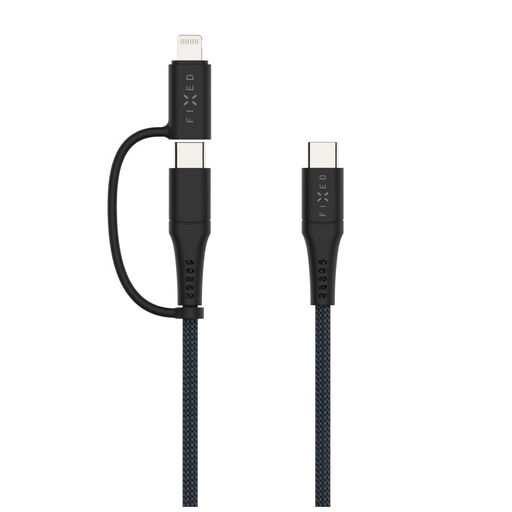
Why It Stands Out This is THE go-to cable for those who navigate between the Apple ecosystem and USB-C devices. Its integrated Lightning adapter, certified MFi (Made for iPhone/iPad), saves you from carrying multiple cables.
Key Features
Who is it for? The user who owns an iPhone or AirPods with a Lightning port, but also a MacBook, iPad Pro, or an Android smartphone with USB-C.
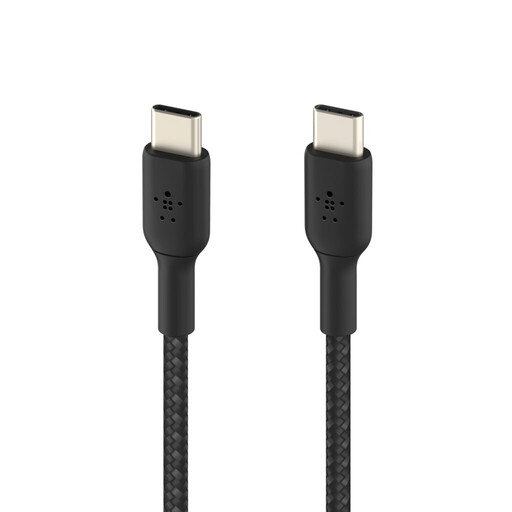
Why It Stands Out Belkin delivers a cable that combines performance with an eco-conscious design. Its construction from recycled plastic and its proven durability make it a reliable and responsible choice.
Key Features
Who is it for? The user looking for a robust and reliable USB-C to USB-C cable for daily use, with a preference for more environmentally friendly products.
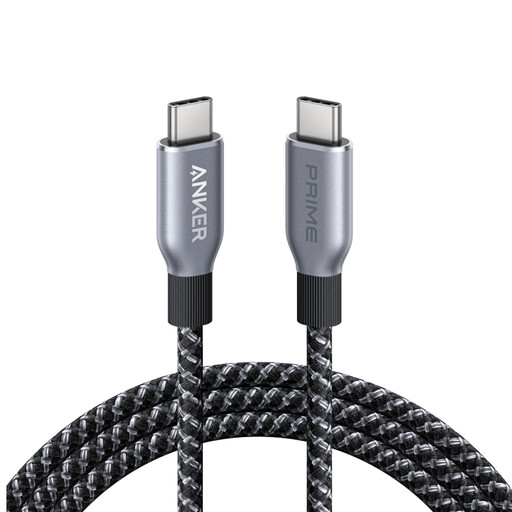
Why It Stands Out This cable is built for raw performance. With its 240W capability, it's ready for the Power Delivery 3.1 standard and can power the most demanding devices on the market, both now and in the future.
Key Features
Who is it for? Professionals, content creators, or gamers who use a very powerful laptop (e.g., MacBook Pro, Dell XPS, Razer Blade) and need the fastest charging speed available on the market.
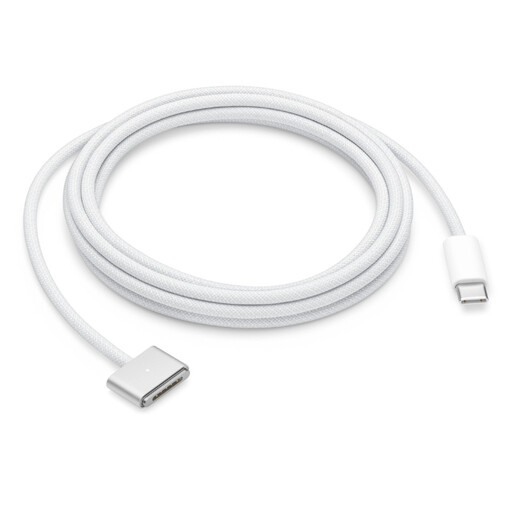
Why It Stands Out Designed specifically for recent MacBook Air and MacBook Pro models, this cable marks the grand return of the safe and convenient magnetic MagSafe connector. It's the official solution for perfect integration into the Apple ecosystem.
Key Features
Who is it for? Exclusively for owners of recent MacBooks equipped with a MagSafe 3 charging port, who prioritise the safety and user experience designed by Apple.
Our selection focuses on specific needs, but the USB-C cable market is vast. If you're looking for a different length, a different colour, or an intermediate power rating, many other solutions exist.
? Explore Our Full Range of USB-C to USB-C Cables
1. What's the difference between a standard USB-C cable and a Power Delivery (PD) cable? A standard USB-C cable is often limited to a low charging power (around 15W). In contrast, a Power Delivery (PD) compatible cable includes a chip that allows it to communicate with the charger and the device to deliver much higher power (up to 240W). This is what enables fast charging and the ability to power laptops.
2. Can a 240W cable damage my phone that only needs 25W? No, there is absolutely no risk. Power Delivery technology is smart: the device (your phone) will only "request" the power it needs (25W), and the charger will adapt to supply it. A 240W cable is simply capable of handling a higher current if a more power-hungry device, like a laptop, is connected to it.
3. Are all braided USB-C cables the same? No. While a braided sheath is a good indicator of durability, the quality of the braiding, the reinforcement of the connectors, and the quality of the internal wires vary greatly from one brand to another. It's better to stick with reputable brands that provide information on specific stress tests to guarantee the product's longevity.