
Livraison le jour même ou le lendemain

Qualité garantie

Débloquez vos offres de bienvenue: Livraison GRATUITE | Jusqu'à -80 % | 30 jours d'essai gratuits à JoyPlus
Téléchargez l'application
A fraying cable, frustratingly slow charging, a length that's all wrong for your desk… These frustrations are a daily reality for anyone juggling a smartphone, laptop, and tablet. USB-C has established itself as the universal connector, but not all cables are created equal. A poor choice can not only throttle your device's charging speed but also damage its battery in the long run.
This guide is here to help you cut through the noise and choose a high-performance, durable fast-charging USB-C cable that won't let you down. We've also selected several models that cater to specific needs: whether you're a professional, a gamer, or simply looking for a smarter cable than the one that came in the box.
Before you check out, it's essential to understand a few key technical concepts that make all the difference.
A cable's charging power is measured in watts (W). For truly fast charging, compatibility with the Power Delivery (PD) standard is a must.
Remember to check the maximum power supported by your device and your charger. The entire setup must be consistent to avoid any bottlenecks.
A cable's longevity primarily depends on its construction.
The standard one-metre cable is often too short. A 2?m USB-C cable provides welcome freedom of movement, allowing you to use your device comfortably even when it's plugged into a distant outlet. For specific uses, lengths of 3 metres or more are available, but be sure to choose a quality cable to avoid power loss.
Here are a few models that stand out from the crowd and meet specific needs.
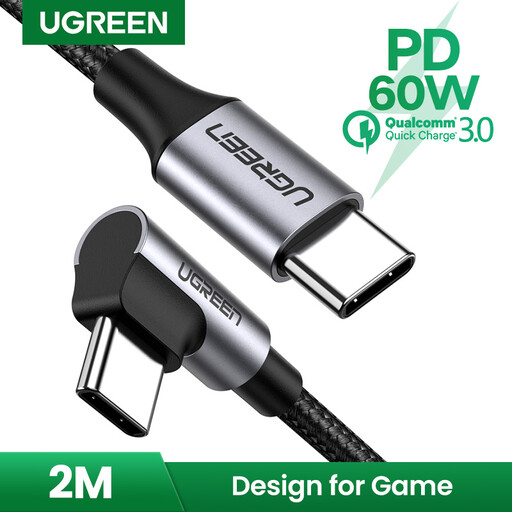
Its Strong Suit: A 90° connector that changes everything. This clever design prevents sharp, damaging bends at the port and wards off premature wear and tear.
Advantages:
Who is it for?: Mobile gamers, users who frequently handle their devices while charging, and those working at desks where space around ports is limited.
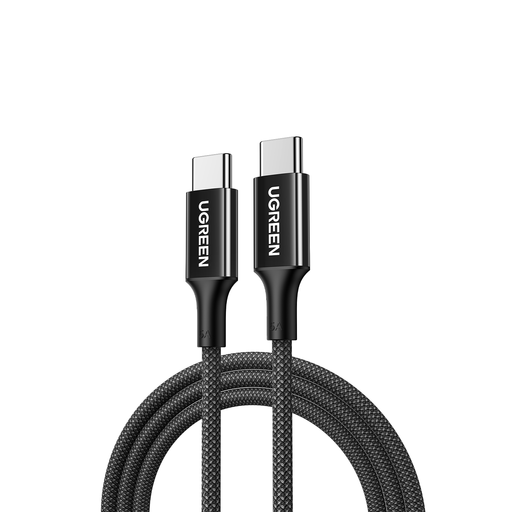
Its Strong Suit: The high-power all-rounder. Capable of delivering up to 100?W, it will power nearly any USB-C device without breaking a sweat, including the most power-hungry laptops.
Advantages:
Who is it for?: Professionals and students with a USB-C laptop (like a MacBook Pro or similar) who want a single cable to charge everything at full speed.
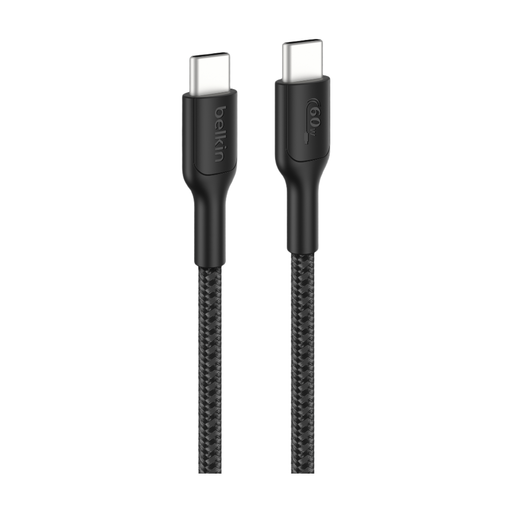
Its Strong Suit: Belkin focuses on robustness and eco-responsibility here. This cable is not only designed to last but also incorporates recycled materials.
Advantages:
Who is it for?: Users conscious of the environmental impact and durability of their purchases, families (and their sometimes-careless children), and gamers looking for a reliable cable for long gaming sessions.
Our selection covers common needs, but the USB-C cable market is vast. Length, colour, specific features… there's no shortage of options.
? Explore our full range of USB phone cables to find the perfect model for you.
The required power depends on the device you're charging. For a smartphone, a 30?W cable is plenty. For a tablet or a compact laptop, aim for 60?W. For a powerful laptop, a 100?W USB-C cable is essential for optimal charging. Make sure your wall charger delivers at least an equivalent amount of power.
In theory, yes, a longer cable can cause a minuscule loss of power. However, with a quality 2 or 3-metre cable, this loss is completely unnoticeable in practice. The quality of the materials and the diameter of the internal copper wires are much more important factors than the length.
Absolutely not. For the fast-charging magic to happen, the trio of device (smartphone, PC, etc.), charger, and cable must all be compatible. A low-end or non-certified Power Delivery (PD) cable will act as a bottleneck: it will be unable to negotiate a high wattage and will throttle the charging speed, even with the best charger in the world.