
Livraison le jour même ou le lendemain

Qualité garantie

Débloquez vos offres de bienvenue: Livraison GRATUITE | Jusqu'à -80 % | 30 jours d'essai gratuits à JoyPlus
Téléchargez l'application
USB-C might be everywhere, from smartphones to laptops, but not all cables are created equal. The wrong model can lead to a world of frustration: endless charging times, sluggish data transfers, and even premature wear and tear. Between watts, Power Delivery, and amps, it's easy to get lost in the details.
This guide is here to demystify the technical jargon, walk you through the criteria that truly matter, and help you find the perfect USB-C cable for your devices.
Before you buy, a quick overview of the technical specs is essential to find the fast-charging USB-C cable that won't let you down.
The heart of the matter for fast charging is power, measured in watts (W). Your cable must be able to handle the maximum power output of your USB-C fast charger.
Rest assured, you can't go wrong with more power: a higher-wattage cable can be used on a less demanding device without any risk. The Power Delivery protocol keeps a watchful eye, ensuring the device only "draws" the power it needs.
The standard one-meter cable included in the box is often too short. A 2m USB-C cable offers far more welcome freedom, whether at your desk or on your nightstand.
Don't overlook durability, either. The weak point is almost always at the connectors. A braided nylon USB-C cable withstands bending and fraying much better than basic plastic models, guaranteeing a longer lifespan.
Check that the cable is compatible with your devices' proprietary fast-charging protocols, like "Super Fast Charging" for a Samsung charger cable. Most charging cables are USB-C to USB-C and are limited to the USB 2.0 transfer standard (480 Mbps), which is more than enough for syncing photos or music.
Here are a few top picks that caught our attention for their performance, reliability, and excellent value.
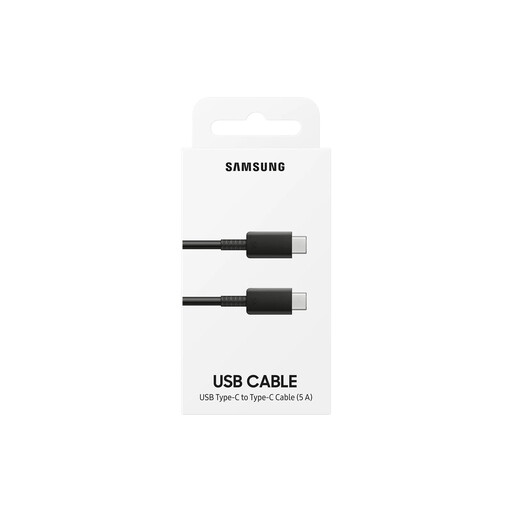
Why it stands out: This is the go-to choice for users in the Samsung ecosystem. As an official cable, it guarantees perfect compatibility with the brand's "Super Fast Charging" technology, provided you use it with a compatible charger.
Pros:
Who is it for? For owners of Samsung smartphones and tablets who want a reliable, hassle-free fast-charging solution.
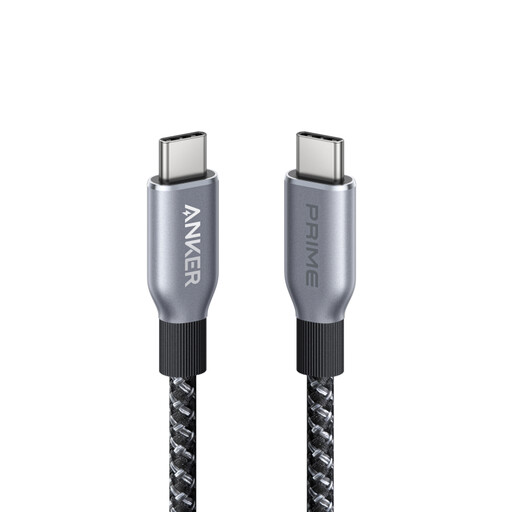
Why it stands out: With its 240W power capacity, this cable is ready for today and tomorrow. Its recycled braided nylon design makes it a choice that is both durable and more environmentally friendly for powering the most demanding devices.
Pros:
Who is it for? For users of powerful laptops (MacBook Pro, workstations) and anyone who wants to invest in a cable that can keep up with technological advancements.
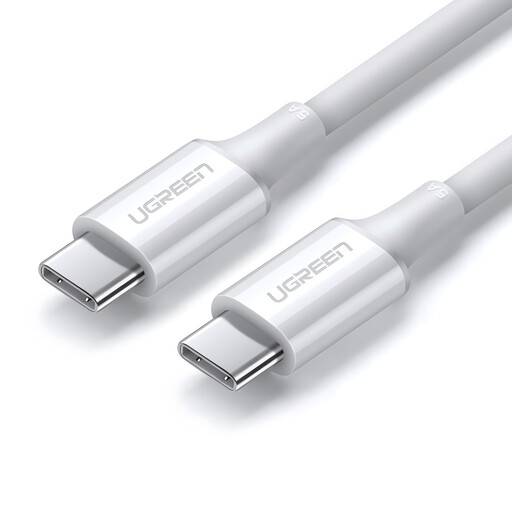
Why it stands out: This is the champion of balance, offering a great mix of power, length, and versatility. Its 2-meter length provides unmatched convenience, while its 100W power rating makes it compatible with a myriad of devices, including most laptops.
Pros:
Who is it for? Ideal for those looking for a do-it-all 2m USB-C cable capable of charging a laptop at the office, a tablet on the couch, or a smartphone far from the outlet.
If these models don't check all your boxes—whether in terms of length, colour, or specs—many other options are available.
To discover a wider range, feel free to explore our complete category of Type-C 2.0 M-M Cables.
The difference mainly lies in the quality of the internal conductors and the presence of an electronic chip (known as an "e-marker"). A fast-charging USB-C cable is designed to handle much higher current and voltage. This chip communicates its capabilities (e.g., 100W or 240W) to the charger and the device to enable safe, full-speed charging.
No risk at all. The Power Delivery (PD) protocol is an intelligent communication system: the charger, cable, and device "negotiate" the charging power. Your device will only request and receive the maximum power it can safely accept, even if the cable and charger are capable of delivering much more.
Far from it. Beyond charging power, they differ in their data transfer speeds (USB 2.0, USB 3.2, Thunderbolt) and their ability to carry a video signal (via DisplayPort Alternate Mode). The cables featured in this guide are optimised for fast charging and offer USB 2.0 speeds, which is the standard and remains more than sufficient for everyday use.