
Livraison le jour même ou le lendemain

Qualité garantie

Débloquez vos offres de bienvenue: Livraison GRATUITE | Jusqu'à -80 % | 30 jours d'essai gratuits à JoyPlus
Téléchargez l'application
Does your smartphone take forever to charge? Is your laptop's original cable already fraying after just a few months? It's a common problem. With the mass adoption of USB-C across nearly all our devices, from the upcoming iPhone 16 to the MacBook Pro, finding a reliable and high-performance fast-charging USB-C cable has become crucial.
The market is flooded with options, and it's easy to get lost in a jungle of promises about power, durability, and compatibility. This guide is here to help you see things more clearly and make the right choice based on simple, concrete criteria. We'll then present a selection of cables that tick all the boxes, whether you're looking for raw power, absolute versatility, or unbeatable durability.
You don't need to be an engineer to choose a cable, but understanding three key technical features will make a world of difference in your daily life.
Power, measured in watts (W), directly determines your device's charging speed. While a basic cable often maxes out at 15W, high-performance models can reach 60W, 100W, and even up to 240W for the most ambitious ones.
Be aware that power isn't everything! To benefit from it, your fast USB-C charger must be compatible with the cable's power rating. The weakest link in the chain dictates the final speed.
A cable travels, gets bent, and gets jammed in a bag... in short, it takes a beating. Its sturdiness is therefore an essential criterion to avoid having to replace it every six months.
Warning: not all USB-C cables are created equal, especially when Apple is involved.
Here are the models that caught our eye, chosen for their technical specs and relevance to today's needs.
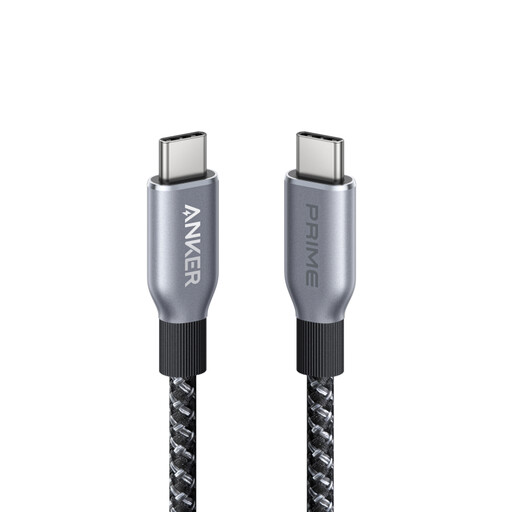
Why it stands out? This cable is built for pure performance and durability. With 240W on the spec sheet, it's ready to power the most demanding devices, like a MacBook Pro, at their maximum speed, while already being compatible with the technologies of tomorrow.
Key features:
Who is it for? For pros, creatives, and all demanding users who want maximum charging power for their laptops and other power-hungry devices. A decidedly future-proof choice.
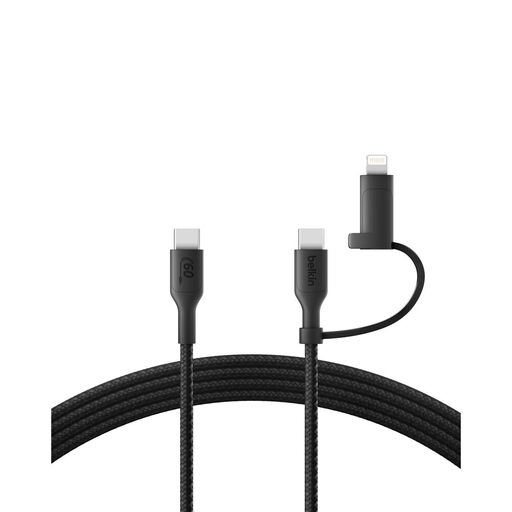
Why it stands out? It's the Swiss Army knife of cables. Thanks to its attached Lightning adapter, it switches between the two connectors in a snap. The ideal solution for managing a mix of different devices.
Key features:
Who is it for? For those who juggle between recent (USB-C) and older (Lightning) Apple devices, or for families who share the same chargers. It's the smart cable par excellence.
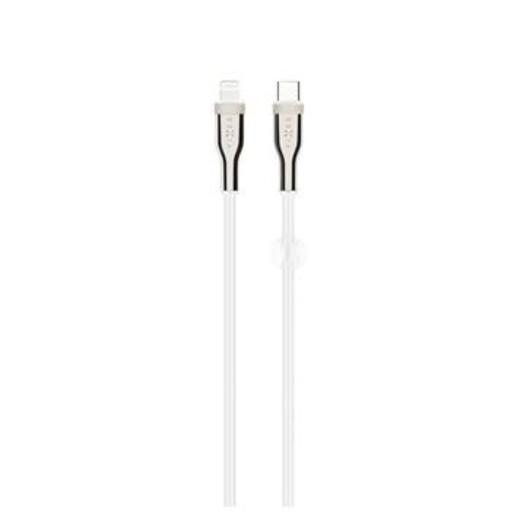
Why it stands out? Its mission is simple and clear: to provide a reliable and robust connection between a modern USB-C charger and a Lightning-equipped Apple device. Its MFi certification and meticulous construction make it a safe bet.
Key features:
Who is it for? For owners of Apple devices with a Lightning port (iPhone 14 and earlier, certain iPads and AirPods) who are looking for a quality replacement that's more durable than the original cable.
Our selection is, of course, just a snapshot. If durability is your number one priority, many other models are worth a look. We invite you to explore our full category to find the model that's right for you.
? See our entire selection of braided USB cables
It all depends on the device you need to charge. For a smartphone, a cable that supports between 30W and 60W is perfect for fast charging. For a laptop like a MacBook Air or Pro, a 60W to 100W model is recommended. A 240W cable, on the other hand, ensures maximum compatibility with absolutely all USB-C devices, even the most power-hungry ones.
Yes, and the difference is often striking. The braided sheath (made of nylon or another fibre) provides much better protection for the internal wires against wear, twisting, and fraying. It's a small upfront cost, but a real long-term saving for an item that's handled every day.
No. MFi (Made for iPhone/iPad) certification only applies to accessories with the Lightning connector. Since the iPhone 15, and therefore for the upcoming iPhone 16, Apple has adopted the USB-C standard. For these models, MFi certification does not exist. The important thing is to choose a well-made USB-C cable, preferably one that is USB-IF certified, which guarantees compliance with power and data transfer standards.