
Livraison le jour même ou le lendemain

Qualité garantie

Débloquez vos offres de bienvenue: Livraison GRATUITE | Jusqu'à -80 % | 30 jours d'essai gratuits à JoyPlus
Téléchargez l'application
Frayed cables, painfully slow charging, a tangled mess of wires to power your devices... Sound familiar? USB-C promised to unify everything, but the reality feels more like a jungle where it's become impossible to separate the wheat from the chaff.
This guide is here to help you cut through the clutter. As the Head of Product Recommendations at Joybuy, my role is to decode the market for you. The goal: to give you clear, practical advice to find the fast-charging USB-C cable you need, without drowning you in technical jargon.
Before we get to our top picks, here are the key points to check to ensure you make the right choice.
The first and most important criterion is the charging power, measured in watts?(W). To enjoy truly fast charging, your cable, charger, and device must all support a common protocol, the most widespread being USB Power Delivery (PD).
Always check the recommended wattage for your device, which is usually printed on its original charger.
A cable's longevity is a decisive purchasing factor. A braided USB-C cable made of nylon or synthetic fibres will withstand daily wear and tear, twisting, and repeated bending much better than a basic plastic model. A reinforced cable at the connector points is also an excellent sign of durability, as this is precisely where breaks occur.
Most needs today are covered by a USB-C to USB-C cable. However, if you juggle multiple ecosystems, especially with Apple products, a USB-C cable with a Lightning adapter will quickly prove indispensable. For iPhone, iPad, or AirPods owners, insist on MFi (Made for iPhone/iPad/iPod) certification. This label guarantees perfect compatibility and safety, saving you from pesky error messages and the risk of overheating.
Here are a few models that stand out for their performance and relevance for today's needs.
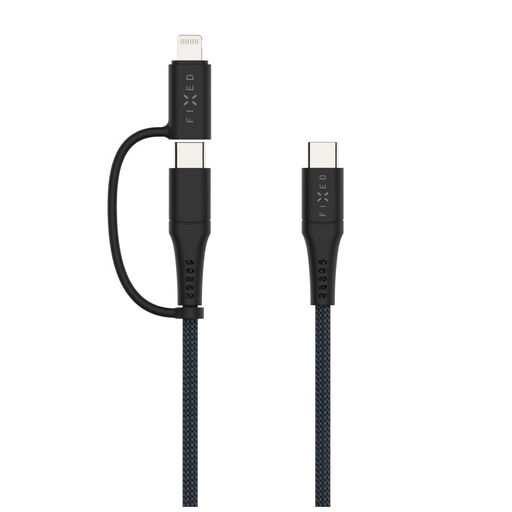
Key feature: Versatility. This smart cable combines a USB-C connector with an MFi-certified Lightning adapter, making it a formidable all-in-one solution.
Advantages:
Who is it for? For those who juggle between Apple and Android/Windows worlds and want to travel light with a single cable for everything. The perfect solution for the office, home, or on the go.
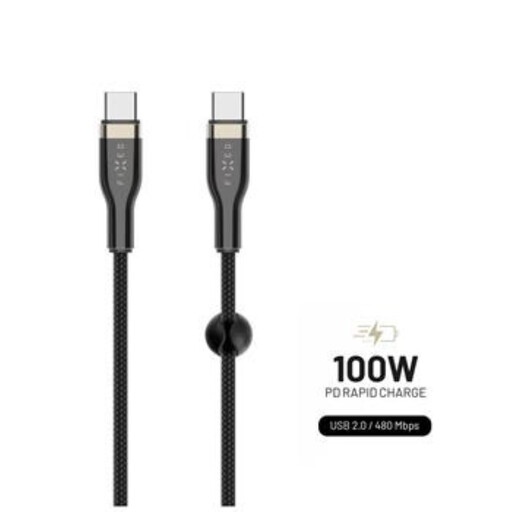
Key feature: The perfect balance of power and durability. With its 100?W output, it powers most laptops while boasting a design that's built to last.
Advantages:
Who is it for? The ideal cable for professionals and students who rely heavily on their laptops and need a reliable, powerful companion, whether at the office, university, or home.
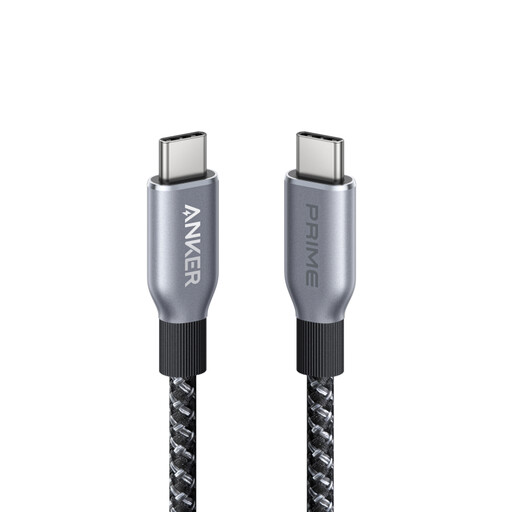
Key feature: Raw power. Designed for absolute performance, this 240?W cable is ready for the new USB-C standard and can power the most energy-hungry devices on the market.
Advantages:
Who is it for? For tech enthusiasts, creators, and gamers with heavy-duty hardware (16-inch laptops, workstations) who demand charging speeds without any compromise.
Our selection covers the most common needs. If you can't find a cable that perfectly matches your requirements for length, colour, or specifications, other models are waiting for you.
Explore Our Entire Collection of Fast-Charging USB-C Cables
The required power depends on your device. As a general rule:
To be absolutely sure, check the wattage indicated on your device's original charger. Don't worry, choosing a cable that is more powerful than necessary poses no risk.
Yes, without a doubt. The braided sheath, made of nylon or another composite material, protects the internal wires from damage caused by repeated bending and friction. It's a smart choice if you're often on the move or tend to wear out your cables prematurely.
No. For the fast-charging magic to happen, three components must "speak the same language": the device, the wall charger (or power bank), and the cable. A basic cable that isn't Power Delivery compatible will limit the power (making it impossible to reach 100?W or 240?W), even with the best charger in the world. That's why it's crucial to choose a model explicitly designed for fast charging.