
Livraison le jour même ou le lendemain

Qualité garantie

Débloquez vos offres de bienvenue: Livraison GRATUITE | Jusqu'à -80 % | 30 jours d'essai gratuits à JoyPlus
Téléchargez l'application
The days when every device required its own proprietary charger are well and truly over. Today, USB-C has established itself as the universal connector, promising to simplify our digital lives. But be warned, not all cables are created equal. An unsuitable model can not only throttle the charging speed of your laptop or smartphone but also wear out far too quickly.
Faced with an overwhelming number of options, it's hard to know where to start. This guide is here to break down the key features of a good fast-charging USB-C (PD) cable and present a selection of reliable models. The goal: to help you make the right choice, one that truly fits your devices and your needs.
Before diving into our selection, let's review the few technical points you should check to ensure your future cable is up to the task.
The purpose of a USB-C PD cable is its ability to carry high charging power. Expressed in watts (W), this determines how quickly your devices, especially the most power-hungry ones, will recharge.
Our advice: always check the maximum power supported by your device and the power delivered by your wall charger. For optimal performance, the cable must be compatible with the higher of the two power ratings.
A cable is put through significant daily wear and tear, so its build quality is an essential criterion. A braided nylon USB-C cable will offer much better resistance to fraying, twisting, and tangling than a standard plastic (TPE) model. Also, pay attention to the connectors: reinforced joints between the cable and the plug prevent fraying, which is the weak point of many entry-level models.
A good Power Delivery cable includes an electronic chip, or "E-Marker." This chip communicates with the charger and the device to negotiate the optimal charging voltage and current. It's an essential safety feature to protect your devices from overvoltage or overheating, ensuring a charge that is both fast and risk-free.
We have scoured the market to bring you models that stand out for their performance, reliability, and value for money.
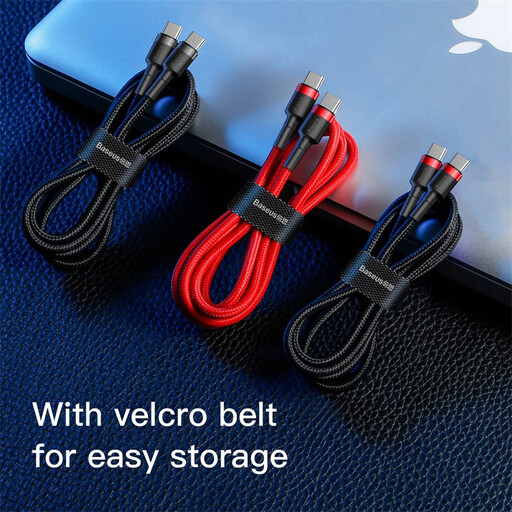
Why We Chose It
The Baseus Cafule cable is an excellent choice, both versatile and robust. Its 2-meter length provides great freedom of movement, whether at the office or at home. Its braided sheath and aluminium connectors give it excellent durability for daily use.
Key Features
Who It's For Ideal for owners of smartphones, tablets, and ultra-portable laptops (like the MacBook Air) who are looking for a long, durable, and reliable cable for everyday charging and data transfer.
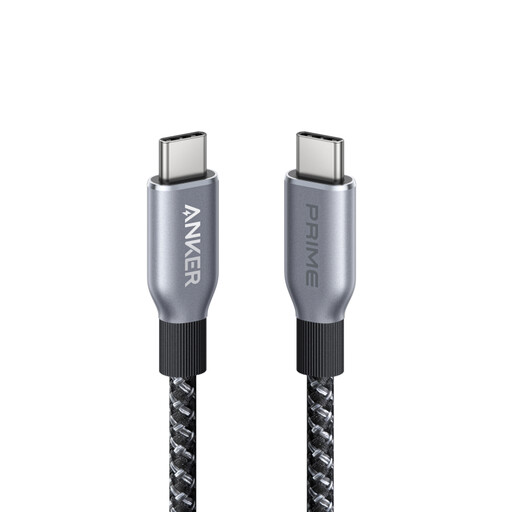
Why We Chose It
This Anker cable is aimed at the most demanding users. With its 240W capacity, it is ready for the most powerful devices on the market, both current and future. Anker highlights a design engineered for extreme durability, which incorporates recycled materials—a plus for the environment.
Key Features
Who It's For For professionals, creators, and gamers equipped with a high-powered laptop (e.g., MacBook Pro M3, Dell XPS 17, gaming PC) who want to ensure they get the maximum charging speed.
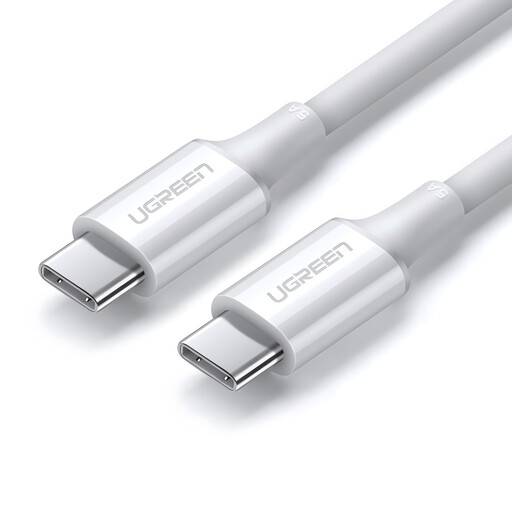
Why We Chose It
The UGREEN cable strikes the perfect balance. Its 100W power rating makes it the ideal companion for the vast majority of laptops on the market, including many USB-C cables for MacBook Pro models. It delivers solid performance in a straightforward and effective package.
Key Features
Who It's For Perfect for professionals and students whose laptops require up to 100W of power. A pragmatic, no-frills choice that covers most fast-charging needs.
Our selection highlights highly versatile models, but the world of USB-C to USB-C cables is vast. If you're looking for a different length, a specific colour, or other features, feel free to explore our full catalogue.
Explore our full collection of USB 2.0 Type-C Cables
1. What is the difference between a standard USB-C cable and a Power Delivery (PD) cable? A standard USB-C cable is often limited in power (typically 15W) and offers basic data transfer speeds. A Power Delivery cable, on the other hand, is designed to handle much higher power levels (up to 240W), allowing it to quickly charge power-hungry devices like laptops. It includes the crucial E-Marker chip to secure communication between the charger and the device.
2. Can a 100W or 240W cable damage my phone that only requires 25W? No, there is absolutely no risk. Thanks to the Power Delivery protocol and the E-Marker chip, the cable, charger, and your phone "negotiate" to determine the maximum power the phone can safely accept. The system will only deliver the necessary 25W, even if the cable can handle much more.
3. Are all braided USB-C cables the same? No, and the quality can vary dramatically. A good braided cable is more than just its nylon sheath. It must also have solid connectors and reinforced joints to withstand wear and tear. Opting for brands known for their quality accessories is often a guarantee of reliability.