
Livraison le jour même ou le lendemain

Qualité garantie

Débloquez vos offres de bienvenue: Livraison GRATUITE | Jusqu'à -80 % | 30 jours d'essai gratuits à JoyPlus
Téléchargez l'application
A phone that drops below 20% before the day is done, a laptop demanding its own adapter, or a cable that’s too short for the desk – fast charging accessories cover a wide range of needs. But not all of them suit every setup.
Before buying a portable charger, power bank or USB-C charger, it’s best to avoid three common pitfalls:
Measured in watts, power indicates how much energy the accessory can supply under certain conditions. For a smartphone, a charger compatible with USB Power Delivery (PD) can provide fast charging via USB-C. The PD 3.0 protocol equips many chargers and power banks designed for compatible phones, tablets and laptops.
Mentions of QC 3.0, QC4+ or PD 3.0 alone don’t guarantee the same charging speed for all devices. The phone, cable and charger must all support the relevant protocol. For a MacBook charger, also check the power your computer recommends: a 100W GaN wall charger may suit some models, but how the power is distributed between ports remains crucial.
A USB-C charger with multiple outputs lets you plug in a smartphone, earphones and a tablet from a single block. However, be aware: the maximum power is sometimes only available when a single port is in use.
Check the specification sheet to see:
This check is particularly relevant for an iPhone charger, a Samsung charger or a model intended for a laptop.
A 10,000mAh power bank strikes a good balance for commutes, public transport or a day out and about. A 20,000mAh model offers more reserve for powering several devices, but its size and weight can be noticeably greater.
For regular use, also look for:
In the UK and European Union, check for regulatory information, the manufacturer’s name or the responsible person in the EU, as well as recycling instructions. On a plane, a power bank must generally be carried in cabin baggage, not in checked luggage: always refer to your airline’s rules.
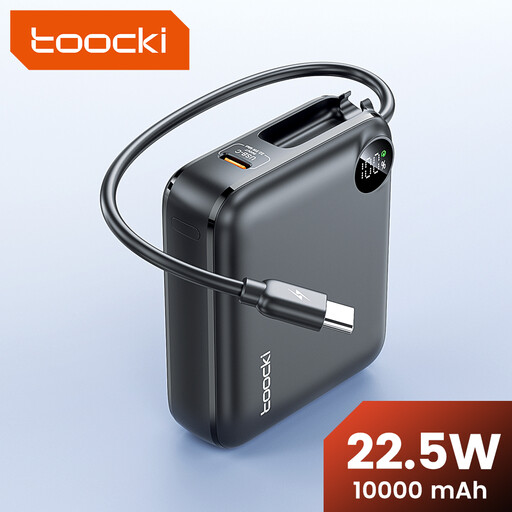
Why this pick suits this profile: With its 10,000mAh and bidirectional USB-C port, this power bank covers the everyday needs of a smartphone, earphones or a tablet during daily travel.
The capacity and PD3.0 and QC4+ protocols are shown in the product name, so you can compare them with your device’s requirements before ordering.
10,000mAh, bidirectional USB-C port and advertised power of 22.5W.
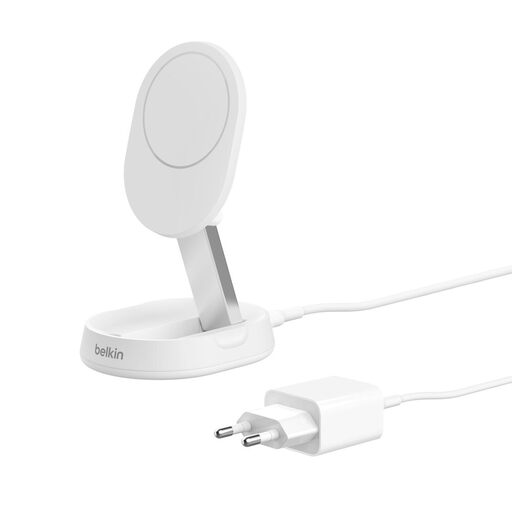
Why this pick suits this profile: It will easily find its place on a desk or bedside table, with its magnetic alignment and adjustable stand that lets you keep the screen in view.
The Qi2 certification and MagSafe compatibility are clearly stated. The 20W adapter and 1.5m USB-C cable are included.
Qi2 15W charging, foldable design, adjustable tilt and mains adapter included.
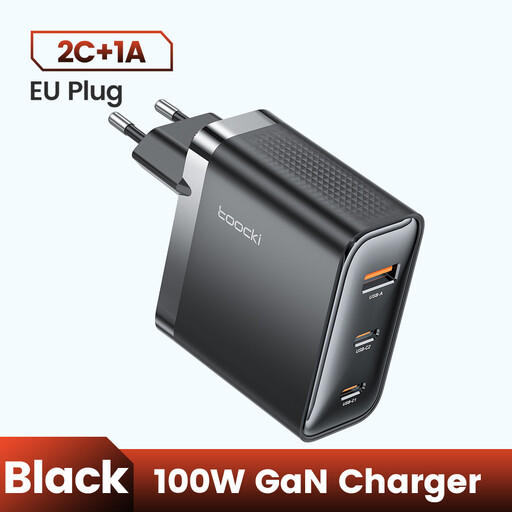
Why this pick suits this profile: It’s aimed at those who charge a laptop, phone and another accessory simultaneously, whether at the office or while travelling.
The spec lists three ports, GaN technology and PD3.0/QC3.0 compatibility. However, keep an eye on how the 100W is distributed depending on the number of devices plugged in.
Advertised 100W, three ports and foldable plug to save space in a bag.
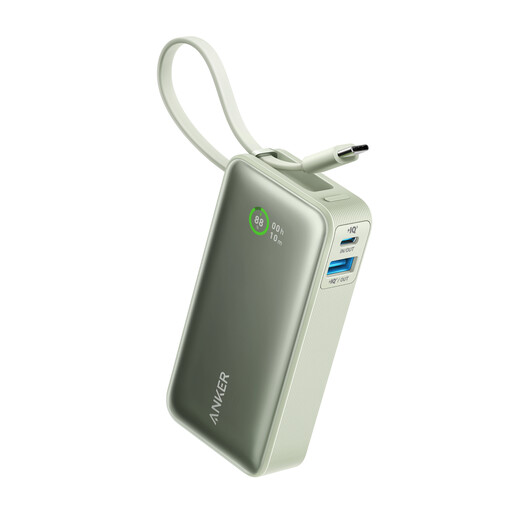
Why this pick suits this profile: Its built-in USB-C cable prevents forgetfulness and is handy for frequent trips with a phone, tablet or certain portable devices.
The capacity, maximum power of 30W and dimensions of 104 × 52.3 × 26mm are stated, making it easy to compare with the space available in your bag.
Built-in USB-C cable, additional USB-A port and advertised bidirectional charging at 30W.
We’ve put together a comprehensive, real-time updated selection of products that meet these demanding criteria and European safety regulations.
For an older iPhone with a Lightning port, pair a USB-C to Lightning cable with a USB-C Power Delivery charger. With newer devices that have a USB-C port, go for a USB-C to USB-C cable capable of handling the power your charger delivers.
A 4-in-1 cable can be useful in a household where several types of ports coexist. The Toocki model, advertised as compatible with USB-A, USB-C and Lightning, measures 6.6 feet, roughly 2 metres. Before ordering, though, check your device’s connector and the power it actually accepts.
Consumption depends mainly on the device being charged, its battery level and how long it’s plugged in. The advertised maximum power doesn’t mean the charger draws it constantly. Remember to unplug unused adapters and avoid leaving a power bank connected for no reason.
Its lifespan varies depending on how often it’s used, exposure to heat, knocks and storage conditions. Keep it in a dry place at a moderate temperature, and stop using it immediately if it swells, leaks, emits smoke or becomes unusually hot. Also follow the manufacturer’s recommendations for charging and disposal.
It depends on the phone and the accessory. The Belkin Qi2 15W wireless charger is advertised as compatible with Qi2 and MagSafe, and provides magnetic alignment with compatible devices. Check your smartphone’s exact model and the thickness of its case before choosing a MagSafe-compatible charger.