
Livraison le jour même ou le lendemain

Qualité garantie

Débloquez vos offres de bienvenue: Livraison GRATUITE | Jusqu'à -80 % | 30 jours d'essai gratuits à JoyPlus
Téléchargez l'application
With our bags and desks overflowing with electronic devices, finding a fast charger that is both powerful and reliable has become essential. The problem? The market is flooded with often misleading marketing promises. A slow, incompatible, or—worse—dangerous charger isn't just a source of frustration: it can outright damage your precious devices.
As the Head of Product Recommendations at Joybuy, my mission is to help you cut through the noise. Let's skip the technical jargon and get straight to the point: here are the pitfalls to avoid to make a truly informed choice.
Before we get into the technical details, let's review the common mistakes that lead straight to disappointment.
To avoid these traps, here are the key points that truly separate a good power adapter from a bad one.
Power, measured in watts (W), determines charging speed. Here are some benchmarks to guide you:
But the number one criterion remains compatibility with the Power Delivery (PD) standard. This is the universal fast-charging standard adopted by nearly all modern devices (Apple, Samsung, Google...). A PD-compatible USB-C charger communicates with your device to deliver the right amount of power, safely.
The era of the single-port charger is well and truly over. A good multi-port charger is the key to decluttering your desk or nightstand. Look for models that intelligently combine:
The crucial point: check how power is distributed when multiple ports are in use. A quality charger will maintain a decent output on each port, even during simultaneous use.
GaN (Gallium Nitride) technology is a small revolution. This new semiconductor material makes it possible to design chargers that are significantly more compact and lightweight than their silicon-based predecessors, while also being more efficient and generating less heat. It's the key advantage for a good travel charger or for anyone looking to lighten their bag.
To move from theory to practice, here are three models that check all the right boxes and meet specific needs.
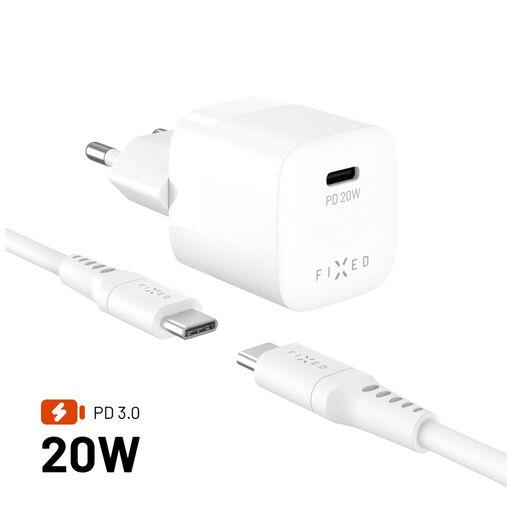
Why we chose it: The simple, effective, and safe solution for charging your smartphone daily without breaking the bank. Its 20W output is perfectly calibrated for fast-charging iPhones and most Android models.
CE certified, it includes all the necessary protections against overheating and overvoltage. Its Power Delivery 3.0 compatibility ensures fast and completely safe charging for compatible devices.
Its ultra-compact size and feather-light weight (just 44g) make it the perfect everyday companion, easy to slip into any bag.
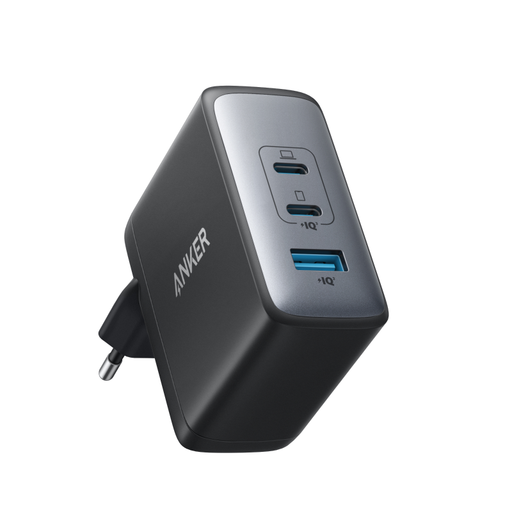
Why we chose it: The perfect solution for those who juggle a laptop, a smartphone, and a tablet. It replaces three bulky chargers with a single, powerful yet compact unit, ideal for the office or travel.
It bypasses the shared-power trap by delivering up to 100W on a single USB-C port, enough to power a MacBook Pro at full speed. Its GaN II technology intelligently manages power distribution between the three ports when used simultaneously.
The real feat: 100W of power in a format 34% smaller than Apple's original 96W charger (according to manufacturer Anker's data).
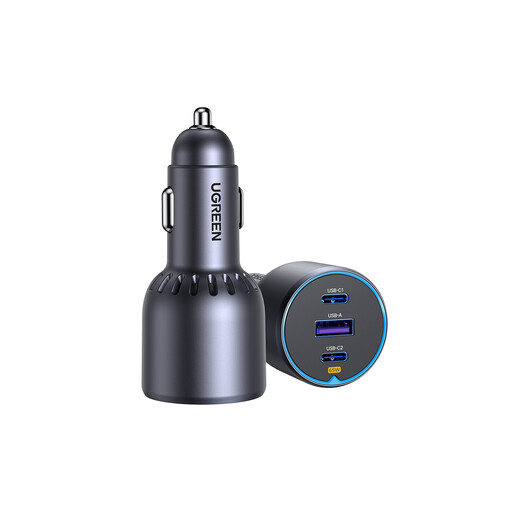
Why we chose it: Essential for those who spend time on the road and need to quickly charge multiple devices, including a laptop. This car charger turns your car's cabin into a true mobile charging station.
It offers high, well-managed power: up to 65W on a single USB-C port, enough for most ultrabooks. Its three ports allow you to charge the driver's smartphone and the passengers' tablets at the same time.
Its great versatility, with two USB-C ports and one USB-A port, makes it compatible with almost everything, from the newest devices to the oldest.
We have selected a full range of products for you that meet our demanding selection criteria and European safety standards.
Can a fast charger damage my phone's battery? No, as long as you use a certified and compatible charger. Modern devices have built-in protection systems that regulate power to prevent overheating or overcharging. The charger and the phone communicate constantly to adjust the speed, which gradually decreases as the battery approaches 100%.
What wattage should I choose for my laptop? The golden rule: check the wattage (in W) of the charger that came with your computer. An ultrabook is often fine with 45W or 65W. A more powerful model, for gaming or creative work, will require 100W or more. Be careful, using a charger that's less powerful than the original can not only slow down charging but may even cause the battery to drain if you're using the computer at the same time.
Is GaN technology really worth it? Yes, without a doubt, especially if compactness is your priority. For the same power output, a GaN charger is significantly smaller and lighter than a traditional model. It also generates less heat, which improves its efficiency and lifespan. For a travel charger or simply to lighten your everyday bag, the investment is fully justified.