
Livraison le jour même ou le lendemain

Qualité garantie

Débloquez vos offres de bienvenue: Livraison GRATUITE | Jusqu'à -80 % | 30 jours d'essai gratuits à JoyPlus
Téléchargez l'application
Navigating the charger jungle has become a real headache. Between promises of “?ultra-fast?” charging and an avalanche of technical standards, the risk of ending up with an ineffective, or even dangerous, product for your devices is very real. As the head of product selection at Joybuy, my mission is to give you the keys to making the right choice, without falling for marketing traps.
Before you jump on the first model you see, let's review the three most common mistakes that often cost users dearly?:
To avoid these setbacks, a few technical specifications are non-negotiable. These are what guarantee the true performance and reliability of a USB power adapter.
Power, measured in watts (W), is the name of the game?: it determines charging speed. A standard phone charger tops out at 5?W. To get faster speeds, your needs will vary by device?:
The Power Delivery (PD) protocol has become the go-to standard for fast charging over USB-C. It allows the charger and the device to “?negotiate?” to safely deliver the optimal amount of power. Make sure the charger you're considering is compatible with PD 3.0 or a newer version.
The GaN charger represents a small revolution. Gallium nitride is a semiconductor material that replaces traditional silicon. The user benefits are immediate?:
Gone are the days when every device had its own charger?! Today, a good multi-port charger must offer versatile connectivity?:
Rather than just giving you a laundry list, we've matched specific models to real-world use cases.
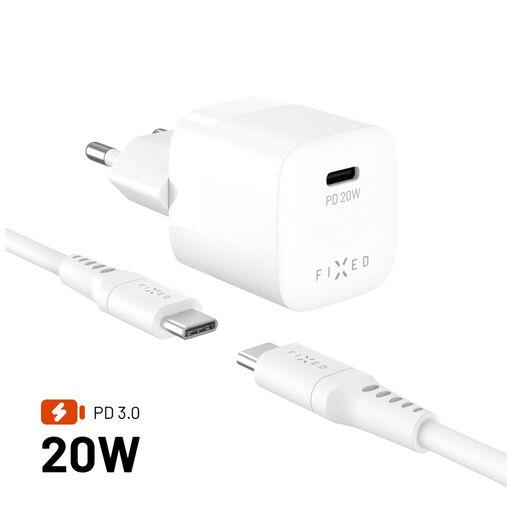
Why we chose it : Perfect for quickly charging a smartphone or tablet. Its ultra-compact size and feather-light weight (44 g) make it a discreet companion at home, in the office, or in your bag.
There's no ambiguity here : the 20 W of power is clearly dedicated to the single port via Power Delivery 3.0. The CE certification is your guarantee of safety against overheating and overvoltage.
Its diminutive size and PD 3.0 compatibility make it the ultimate hassle-free solution for fast-charging today's mobile devices.
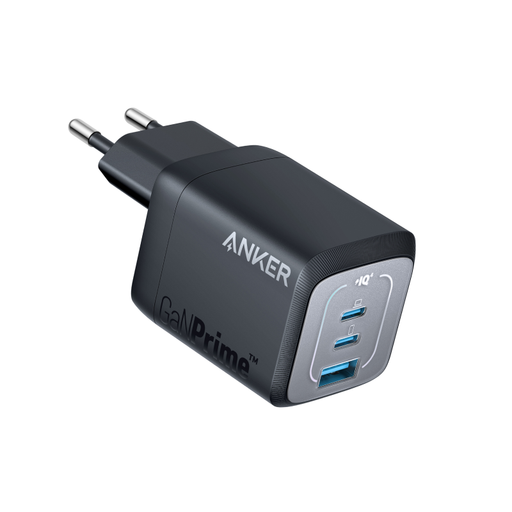
Why we chose it : Designed for those who are constantly juggling a laptop, smartphone, and tablet. It can effortlessly power a MacBook Air or Pro with its 67 W from a single port, while still charging other devices.
GaN technology allows it to pack high power into a compact, foldable design without the risk of overheating. Most importantly, its power distribution is transparent, which prevents any unpleasant surprises.
Incredible versatility with 2 USB-C ports and 1 USB-A port. Its 67 W output and pocket-friendly size make it the ultimate productivity tool for life on the go.
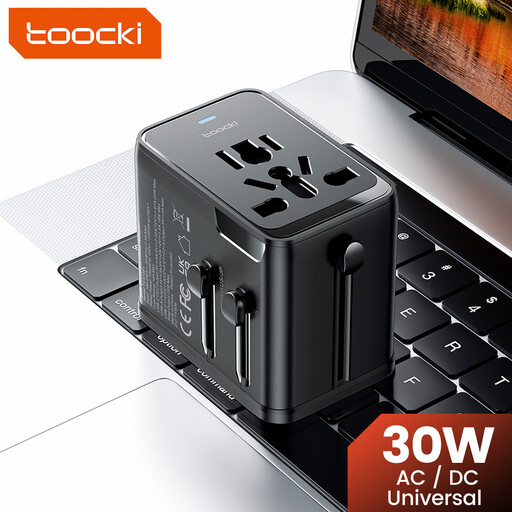
Why we chose it : This is the Swiss Army knife for travellers. It serves as both a plug adapter (compatible with EU, UK, US, AUS) and a 30 W PD fast charger with multiple ports (2 USB-C, 1 USB-A).
It tackles a double headache : international plug compatibility and fast charging. No more risky “ adapter + charger ” setups, which are a source of bad connections and safety hazards.
Its all-in-one design is unbeatable for travel. It integrates 30 W PD fast charging, perfect for smartphones and tablets, into a single unit that's ready to take on the world.
Discover our full selection of products that meet our criteria for performance and safety.
For most recent smartphones (Apple, Samsung, Google, etc.), a 20 to 30?W charger compatible with Power Delivery (PD) is the sweet spot. It's enough to get about 50% battery back in half an hour, without breaking the bank on an overpowered model.
Yes, and significantly so. At the same wattage, a GaN charger isn't intrinsically “?faster,?” but its advantages lie elsewhere?: it's much more compact, lighter, and runs significantly cooler than a traditional silicon-based model. This efficiency gain makes it more reliable and far more convenient to carry, especially when dealing with high-power chargers (65?W and up) or travel models.
Yes, absolutely. In fact, that's the whole point of modern, certified chargers, especially those compatible with Power Delivery. The charger and the device “?negotiate?” to determine the maximum power the device can safely receive. So, plugging a phone that only accepts 20?W into a 100?W charger poses no danger?: the charger will automatically limit its output.