
Livraison le jour même ou le lendemain

Qualité garantie

Débloquez vos offres de bienvenue: Livraison GRATUITE | Jusqu'à -80 % | 30 jours d'essai gratuits à JoyPlus
Téléchargez l'application
Only 5% battery left and you have to leave in ten minutes? Are your laptop, tablet, and headphones also crying out for a power boost? This scene is all too familiar. Rest assured, you're not alone. With the growing number of devices we own, finding a fast charger that is both powerful and reliable has become a real headache.
The problem? The market is flooded with confusing marketing promises. Between advertised power outputs and real-world performance, vague safety standards, and compatibility issues, it's easy to make the wrong choice. Before you buy, here are the most common pitfalls to avoid.
To avoid these disappointments, a few key technical points are worth checking. They will help you select a charger that truly meets your needs, whether for the office, home, or on the go.
Power, measured in watts (W), determines charging speed. A modern smartphone typically requires between 20W and 45W for a fast charge, while a laptop like a MacBook may need anywhere from 65W to over 100W.
Two things to watch for:
If you see the term GaN charger, it's an excellent sign of modern design and efficiency. Gallium nitride is a semiconductor material that is replacing traditional silicon.
For you, the benefits are clear:
How many devices do you charge at once? A charging station with multiple ports can declutter your desk or nightstand.
A good multi-port charger should clearly indicate how power is distributed when multiple ports are used simultaneously.
To each user, their ideal charger. Here are a few recommended options, selected for their relevance and their ability to navigate the classic pitfalls.
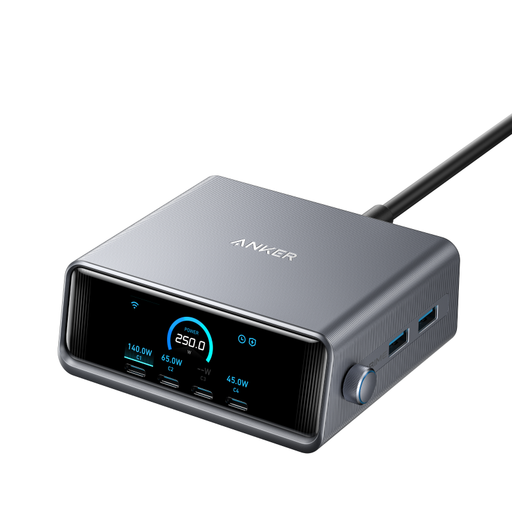
Why it's the right choice: Perfect for those who juggle a powerful laptop, a smartphone, a tablet, and a myriad of accessories. This station centralises all your charging needs, frees up outlets, and declutters your workspace.
It sidesteps the shared power pitfall with its 250W total capacity and intelligent distribution. The first USB-C port can deliver up to 140W, even with other devices plugged in, ensuring a fast charge for a MacBook Pro.
Its LCD screen displays the real-time power output for each port. Total transparency so you know exactly what's happening.
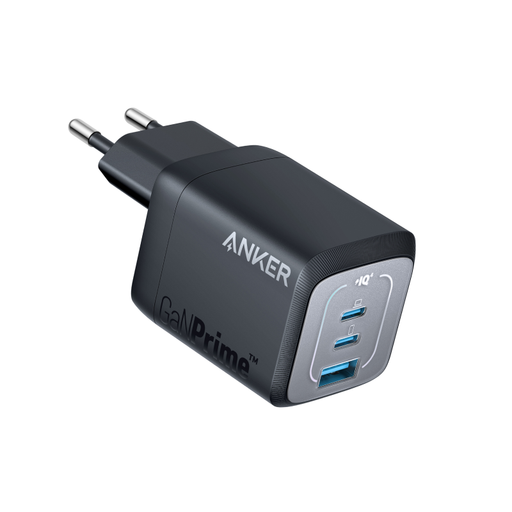
Why it's the right choice: For those who travel light but make no compromises on performance. This single charger powers a laptop, smartphone, and tablet... while still fitting in your pocket.
Thanks to GaN technology, it's 51% more compact than Apple's 67W charger. No more bulky power bricks. Its foldable prongs protect your other belongings in your bag.
Its versatility: 2 USB-C ports, 1 USB-A port, and 67W of power on a single port, enough to power most ultrabooks.
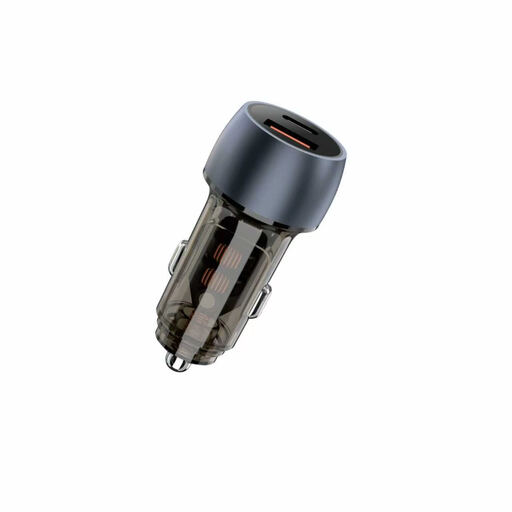
Why it's the right choice: For professionals on the move or families who need to quickly charge multiple devices in the car, including a laptop. This **car charger** transforms your vehicle's cabin into a true mobile office.
It shatters the limits of traditional car chargers, which are often stuck at 10-15W. With one USB-C port hitting 100W and a second at 20W (PD), it delivers a power level that's still rare in a vehicle.
Simultaneously charge a laptop at full speed and a smartphone on fast charge: perfect for staying productive between appointments.
Our guide also caters to electric vehicle owners, with solutions like the portable Feyree 22kW EV charging station, which combines installation flexibility with app-based control.
We have curated a complete range of products that meet these demanding criteria as well as European safety standards.
No, it's not essential, but it is highly recommended. A non-GaN charger can be just as powerful and safe if it's well-designed. However, for the same wattage, a GaN charger will almost always be more compact, lighter, and run cooler. It's the modern and practical choice, especially for travel.
Yes, completely safely. A modern, Power Delivery (PD) certified charger is smart. It communicates with the connected device to deliver precisely the amount of power it can accept, never exceeding it. The charger will therefore only supply the 20W your phone requires, not the full 100W it has in reserve. Using an overpowered charger will never damage your device.
Check these three points: