
Livraison le jour même ou le lendemain

Qualité garantie

Débloquez vos offres de bienvenue: Livraison GRATUITE | Jusqu'à -80 % | 30 jours d'essai gratuits à JoyPlus
Téléchargez l'application
In an age where our lives are dominated by screens, juggling a smartphone, laptop, tablet, and other gadgets is part of our daily routine. Yet, one small detail can bring this well-oiled machine to a grinding halt: a slow, bulky, or incompatible charger. The fast charger market is flooded with promises, but behind the numbers and marketing jargon often lie disappointments that can make you bitterly regret your purchase.
As Head of Product Selection at Joybuy, my mission is to cut through the noise and help you make an informed choice. Let's forget the marketing hype and focus on what truly matters. Here are the most common mistakes to avoid and the key criteria for finding the charger that will genuinely simplify your life.
Before you jump on the first model that boasts an impressive wattage, beware of these three classic traps:
iPhone charger or Samsung charger.To make the right choice, you just need to focus on a few essential technical specifications. Here are the non-negotiable points to check before you head to the checkout.
Power, measured in watts (W), determines charging speed. But be careful—it's crucial to distinguish between the total output and the maximum output per port.
MacBook charger, for example, a single port capable of supplying at least 65W is essential.Before buying a multi-port charger, always check the power distribution. A good charger must be able to maintain a high output on at least one port, even when the others are in use.
These standards enable smart communication between the charger and your device to adjust power in real time.
A charger worth its salt today must support Power Delivery 3.0 at a minimum to ensure broad compatibility and maximum efficiency.
A GaN charger uses components made of Gallium Nitride instead of traditional silicon. The advantages are immediate:
Whether you want to lighten your bag or declutter your desk, GaN technology is a game-changer.
Rather than an endless list, we've matched specific products to clear user profiles. Each selected model meets our strict requirements for performance and safety.
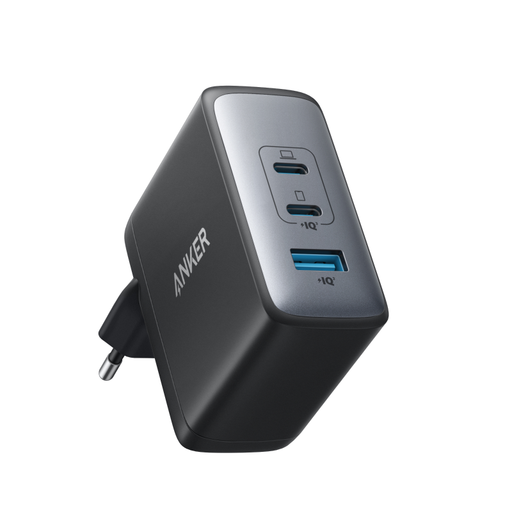
Why it's the right choice: Ideal for those juggling a laptop (MacBook, Dell XPS), a smartphone, and accessories. This single charger replaces three bulky adapters on your power strip or in your bag.
With its 100W output and smart power distribution, it can power a laptop at full speed via a USB-C port, even when the other ports are in use. It completely avoids the diluted power trap.
GaN II Technology: Compact and high-performance, it runs very cool. Port Versatility: Two USB-C ports and one USB-A port for maximum compatibility.
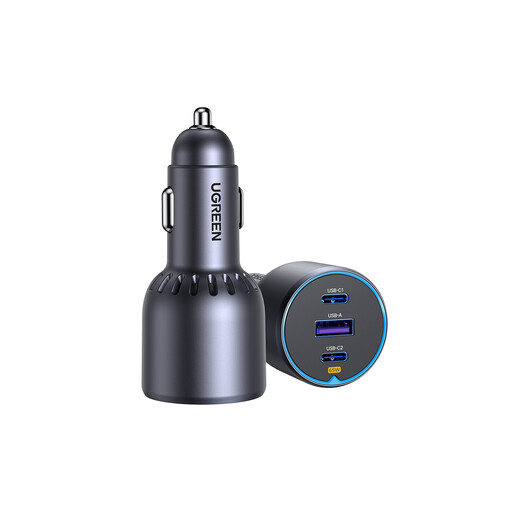
Why it's the right choice: Perfect for long trips or road warriors. It can fully charge a laptop, a phone, and a passenger's device, turning your car into a true mobile charging station.
This car charger doesn't just offer a high total output. Its main USB-C port can deliver up to 65W—enough for a laptop—while the other ports remain fully functional.
65W Output on a Single Port: A rarity for car chargers, capable of powering the most demanding devices. Three Ports: Two USB-C and one USB-A for total flexibility.
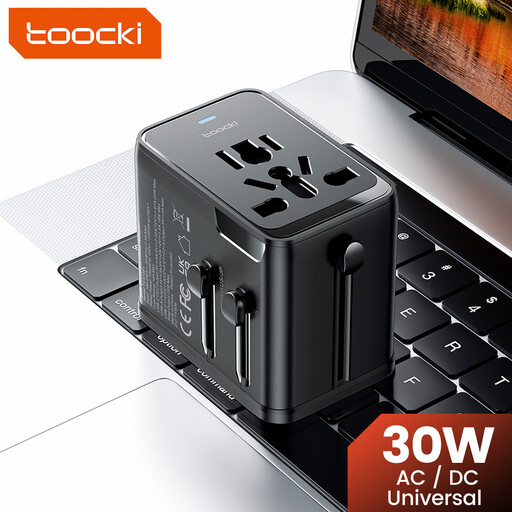
Why it's the right choice: The essential accessory for travellers. This all-in-one travel adapter replaces an entire pouch of chargers and converters. It's compatible with EU, UK, US, and AUS outlets.
It integrates fast charging (30W PD) directly into a universal format. No more sacrificing speed for outlet compatibility—a frustrating compromise with basic adapters.
All-in-one Solution: A socket adapter and multi-port fast charger (2 USB-C, 1 USB-A) in a single unit. 30W PD Fast Charging: Powerful enough to quickly charge a smartphone, tablet, or even a MacBook Air.
We have curated a complete selection of products that meet our performance criteria and European safety standards.
No, a certified fast charger will never damage your device's battery. Modern smartphones and laptops have built-in protection circuits. Thanks to protocols like Power Delivery, the charger and the device "communicate" to adjust the power in real time, ensuring a safe and optimal charge. The speed automatically decreases as the battery approaches 100% to preserve its health.
GaN (Gallium Nitride) technology replaces traditional silicon to create chargers that are smaller, lighter, and run cooler. It's not essential for a small charger, but it becomes a real advantage for a powerful wall charger or a multi-port charger, as the space savings and heat reduction are significant.
Yes, absolutely. You can safely use a 100W charger to charge a smartphone that only requires 20W. Smart charging protocols (like Power Delivery) ensure that the charger will only deliver the power requested by the device, never more. This guarantees a future-proof purchase that is compatible with your devices today and tomorrow.