
Livraison le jour même ou le lendemain

Qualité garantie

Débloquez vos offres de bienvenue: Livraison GRATUITE | Jusqu'à -80 % | 30 jours d'essai gratuits à JoyPlus
Téléchargez l'application
Running out of battery in the middle of the day? It's a universal nightmare. The fast charger market promises to save the day, but navigating the confusing tech specs and marketing promises can be tough. The wrong choice means double disappointment: painfully slow charging and wasted money. As product experts at Joybuy, our mission is to clear things up for you. Let's break down the pitfalls to avoid and the criteria that really matter to make the right choice.
Before you even start comparing spec sheets, let's review the common mistakes that lead straight to disappointment.
To avoid these issues, there are three technical points you absolutely must check.
Power, measured in watts (W), is the name of the game: it dictates the charging speed. A modern smartphone typically requires between 20W and 45W, while a laptop might need 65W or more. Always check the maximum power your devices can handle.
But power isn't everything; protocols are crucial:
Also, consider GaN charger (Gallium Nitride) technology. It allows for chargers that are more compact, lighter, and run cooler, even at high power. A real game-changer for portability.
Smartphone, smartwatch, earbuds... Is your digital arsenal growing? A multi-port USB charger combining USB-C ports (for modern fast charging) and USB-A ports (for older devices or accessories) is the ideal solution to free up your outlets. However, be sure to check how the power is distributed when multiple ports are used simultaneously.
We can't stress this enough: the cable is not just an accessory. To take full advantage of a 65W or 100W fast charger, you need a USB-C cable explicitly certified for that power level. This information is always specified on the packaging or product page. A braided model is often a sign of better durability.
Because every user is different, here are our recommendations for various needs.
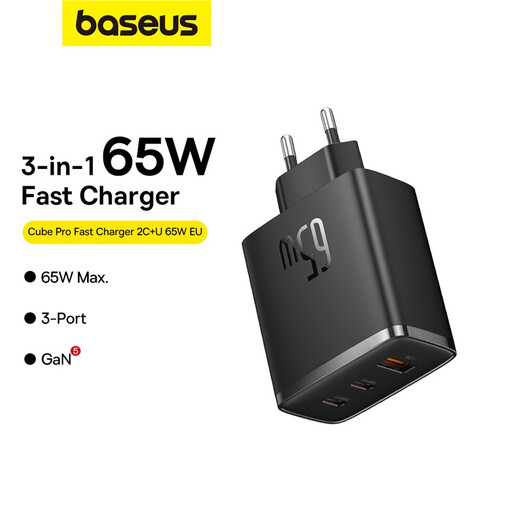
Why it's a great choice: Perfect for those who juggle a laptop, smartphone, and various accessories. Its 65W output on a single USB-C port powers most ultrabooks, and its three ports let you centralise everything into one compact block.
The spec sheet is transparent about power distribution (e.g., 45W + 20W). No nasty surprises—you know exactly what to expect when multiple devices are plugged in.
GaN charger technology for an ultra-compact design. High versatility thanks to its 2 USB-C ports and 1 USB-A port.
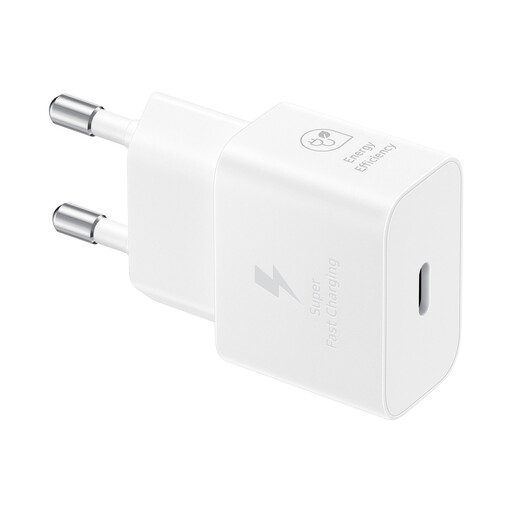
Why it's a great choice: For owners of recent Galaxy smartphones, nothing beats an official charger for guaranteeing optimal performance and safety. This model is tailor-made for the Samsung ecosystem.
No risk of protocol mismatch. It natively supports Super Fast Charging (SFC) and PPS, which are essential for enabling ultra-fast charging on the brand's latest flagships.
Perfect compatibility and maximum charging speed for Samsung devices. Comes with a quality USB-C to USB-C cable.
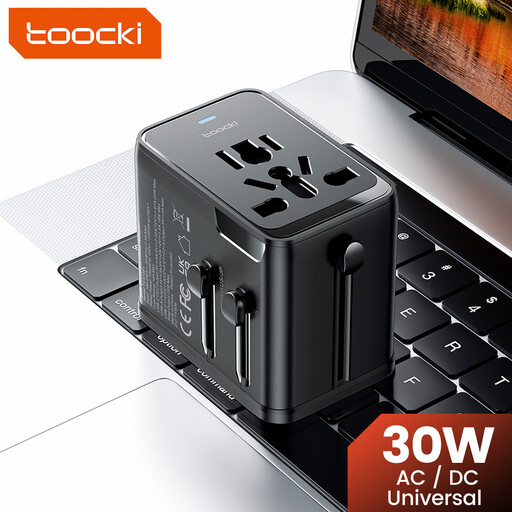
Why it's a great choice: The ultimate accessory for travellers. It combines plugs for the EU, UK, US, and Australia into a single block, while also integrating USB charging ports.
No more juggling a universal travel adapter and a charger. This all-in-one model handles plug compatibility and includes 30W PD fast charging.
Ultra-compact all-in-one solution for travelling light. Maximum versatility with 2 USB-C ports and 1 USB-A port.
And for an on-the-go backup solution, an external battery (or power bank) like the Anker 5000mAh Nano Power Bank with its built-in USB-C connector is an option that's as clever as it is convenient.
Discover our full selection of chargers that meet our performance criteria and European safety standards.
GaN (Gallium Nitride) is a next-generation semiconductor that replaces traditional silicon. In practical terms, it allows for the creation of chargers that are much smaller, lighter, and more energy-efficient at the same power level. If compactness is an important criterion for you (for travel, for example) or if you're looking for a powerful multi-port charger, then yes, a GaN charger is an excellent investment.
No, this is a common but unfounded fear. A modern, certified charger cannot damage your device. Your smartphone (or any other device) has a management chip that "communicates" with the charger to request only the amount of power it can safely handle. So, plugging a 65W charger into a phone that only supports 25W is completely safe: it will simply charge at its maximum speed, which is 25W.
This is a crucial point. For high power levels (60W and above), a USB-C cable must include an electronic chip (an "E-Marker") that communicates its capability to the charger and the device. Without it, the power will be limited. To be sure, look for cables whose spec sheet explicitly mentions "100W" or "5A" compatibility. Investing in a quality cable, like the UGREEN USB 2.0 100W Braided Cable, is essential to get the most out of a high-performance charger.