
Livraison le jour même ou le lendemain

Qualité garantie

Débloquez vos offres de bienvenue: Livraison GRATUITE | Jusqu'à -80 % | 30 jours d'essai gratuits à JoyPlus
Téléchargez l'application
By Joybuy, your high-tech expertPublished: August 26, 2026
Just got a new smartphone, but it seems to take forever to charge with your old adapter? Are you juggling multiple chargers for your laptop, tablet, and earbuds? The fast charger market has become a jungle of technical terms and marketing promises.
Before you take the plunge, it's best to know the common traps that too often turn a purchase into a disappointment, or even a risk to your devices. Our mission? To help you see things more clearly and make the right choice.
To avoid these disappointments, a few technical specifications need close attention. They are your guarantee of performance, safety, and longevity for your future charger.
The power, expressed in watts (W), must match your devices' needs. There's no need to aim for 100W if you're only charging a smartphone.
Pair this power with the right protocols:
You've surely come across the term GaN charger. This acronym stands for gallium nitride, a semiconductor material that is replacing traditional silicon. The advantages are very real:
Think about your daily use. Do you need to charge multiple devices at the same time?
To help you make a decision, here is a selection of models that meet specific needs, all validated against our performance and safety criteria.
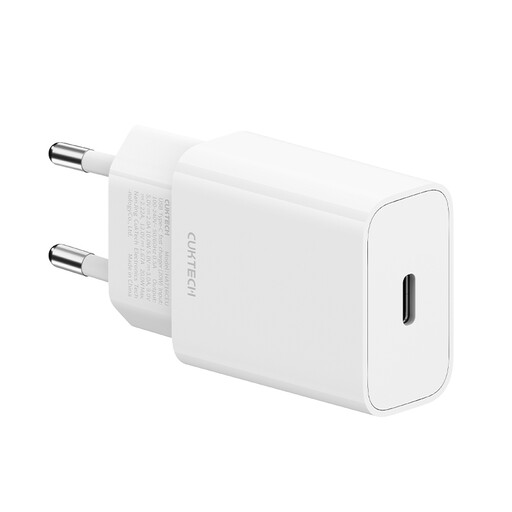
Why it's perfect for this profile: Ultra-compact thanks to GaN technology, it slips into any pocket. It's the ideal travel companion for giving your smartphone (iPhone or Android) a quick boost at the office or on a weekend trip.
It's designed for one job and does it perfectly: delivering 20W through its single USB-C port, without the headache of shared power on multi-port models.
Its pocket-sized form factor and excellent energy efficiency (thanks to GaN!) make it a choice that's as practical as it is modern.
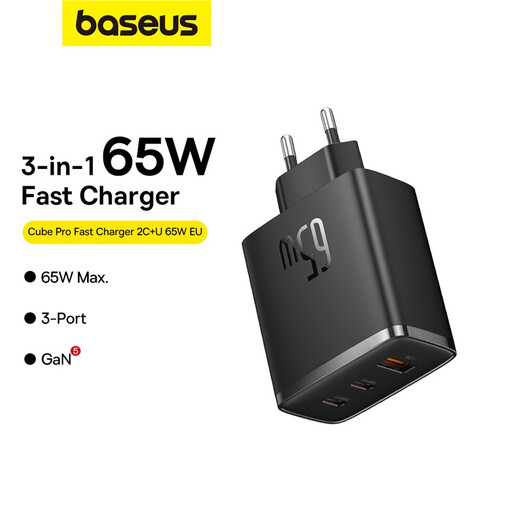
Why it's perfect for this profile: With 65W and three ports (2x USB-C, 1x USB-A), it can simultaneously power a laptop (like a MacBook Air), a smartphone, and earbuds. It's the ultimate all-in-one charging station for a finally clutter-free desk.
Its spec sheet is transparent and details the power distribution (e.g., 45W + 18W). No unpleasant surprises: you know what to expect when multiple devices are plugged in.
Its extreme versatility. It can power an entire ecosystem of devices with a single **power adapter**.
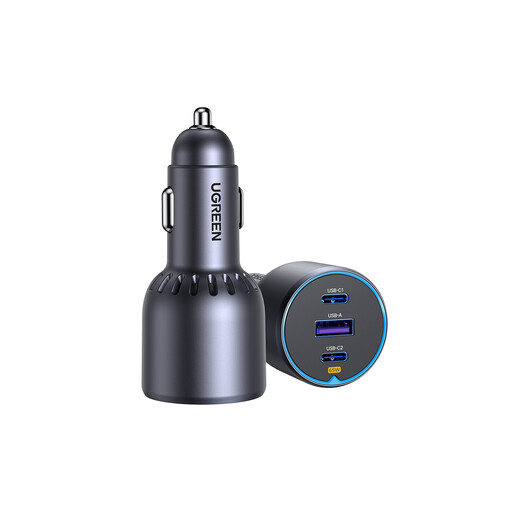
Why it's perfect for this profile: It transforms the often-neglected cigarette lighter socket into a true charging powerhouse. With 75W and three ports, both the driver and passengers can quickly charge all their devices, including a tablet or an ultraportable laptop.
Unlike low-end car chargers, it handles high power and distributes it intelligently, ensuring a fast charge for everyone, even when all three ports are in use.
An impressive power output for a **car charger**, and wide compatibility thanks to its support for both PD and QC protocols.
Discover our complete selection of next-generation chargers, all rigorously tested to meet our high standards for performance and safety.
A standard charger provides a fixed, low power output (often 5W, or 5V/1A). A USB-C charger with Power Delivery (PD) is smart: it communicates with your device to negotiate the optimal voltage and current, allowing for much faster and safer charging.
Absolutely not. A modern, certified charger (especially one with Power Delivery) is designed to deliver only the maximum power your device can safely accept. The charger and the device "talk" to each other to agree on the right amount of power to supply. Therefore, there is no risk to your battery.
Not necessarily, but it is crucial to use a high-quality cable that is rated for the wattage you want to achieve. A cable designed for 20W will limit the speed of a 65W charger and could overheat. For high power levels (60W and above), it is recommended to choose a cable with an integrated "E-Marker" chip, which guarantees its ability to carry the current safely. The PAVAREAL Q51CTC 100W cable, for example, is specifically designed for these high-performance applications.