
Livraison le jour même ou le lendemain

Qualité garantie

Débloquez vos offres de bienvenue: Livraison GRATUITE | Jusqu'à -80 % | 30 jours d'essai gratuits à JoyPlus
Téléchargez l'application
Does your adult dog tend to gain weight, struggle to digest certain recipes or have a dull coat? The Farmina N&D Quinoa for dogs range includes several formulas tailored to your pet’s size, activity level and nutritional needs. However, bear in mind that a recipe described as “grain-free” or “functional” will not necessarily suit every dog.
Before buying Farmina N&D Quinoa dog food, take the time to examine the full ingredient list, analytical constituents and whether the recipe you choose matches your companion’s actual profile.
A recipe without wheat, maize or rice may suit some dogs, but that does not automatically guarantee easy digestion. Grains are sometimes replaced with peas, pea starch or sweet potato. These ingredients also deserve your attention if your pet has a sensitive stomach.
The proportion of quinoa varies from one Farmina recipe to another. Simply seeing the word “quinoa” on the bag is therefore not enough: check its position in the ingredients list, as well as the main source of protein.
The needs of a Chihuahua, a beagle and a German Shepherd are far from identical. Kibble size, energy density and feeding recommendations may differ between a small breed recipe and a medium and large breed formula.
Kibble that is too large will be impractical for a small dog. Conversely, a formula intended for miniature dogs will not necessarily meet the needs of a large dog.
Weight control depends on the total daily allowance, activity level and treats. A lower-calorie recipe will not work miracles if portions remain too generous. You should therefore monitor your dog’s weight regularly and, in cases of significant excess weight or a specific issue, seek advice from a vet.
For an adult dog, look for the wording complete food corresponding to its life stage. This indicates that the product is designed to make up its main diet, in accordance with the regulatory information shown on the packaging.
Also check the size category indicated: mini, medium/maxi or small breed. Dog food for sterilised dogs should be given with particular attention to quantities, as energy needs may change after sterilisation.
Analytical constituents make it possible to compare recipes more objectively:
These figures do not identify one universally suitable recipe. They are primarily useful for comparing the composition with your dog’s lifestyle: a less active pet, a sterilised dog, an athletic companion or one prone to weight gain.
Lamb, duck, quail, venison or herring: each recipe has a different profile. If you suspect an intolerance, do not rely solely on the name of the meat highlighted on the packaging. Some recipes may also contain chicken fat, hydrolysed fish or other animal proteins.
For example, the quail formula for medium/maxi dogs lists quail, but also hydrolysed pork liver, herring oil and ingredients of porcine origin. Always read the entire label and seek advice from an animal health professional in the event of an adverse reaction.
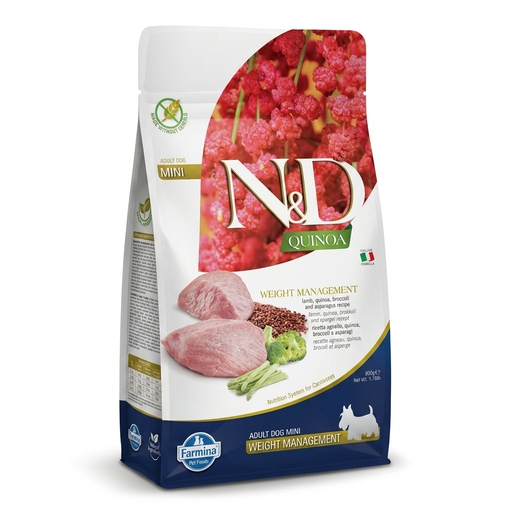
Why this choice suits this profile : The 800 g bag allows you to gradually try an adult dog food for small breeds without immediately buying a large quantity.
The stated values — 28% protein, 8% fat and 8.2% fibre — allow you to check the “weight management” positioning in practical terms, rather than relying solely on the marketing claims.
The recipe contains 8% quinoa, pea fibre, psyllium, glucosamine and chondroitin. It is intended for adult small-breed dogs.
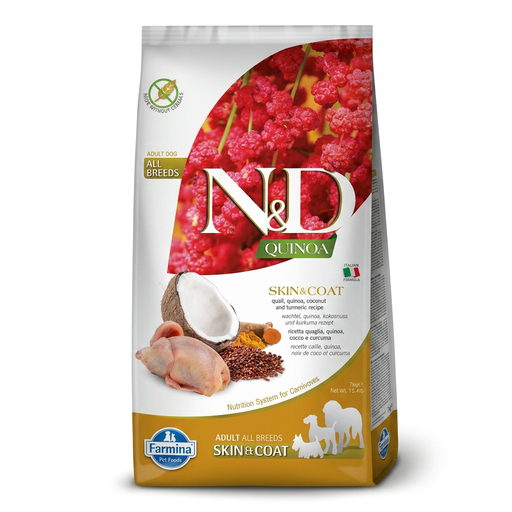
Why this choice suits this profile : Its 7 kg bag is suitable for households looking for a recipe designed for medium- to large-breed adult dogs, while reducing the need to change products frequently.
The detailed composition prevents you from basing your choice solely on the “skin and coat” claim: it specifies the presence of quail, herring oil, linseed and quinoa, along with the main nutritional values.
The recipe contains 30% protein, 16% fat and 0.40% omega-3. It also contains glucosamine and chondroitin.
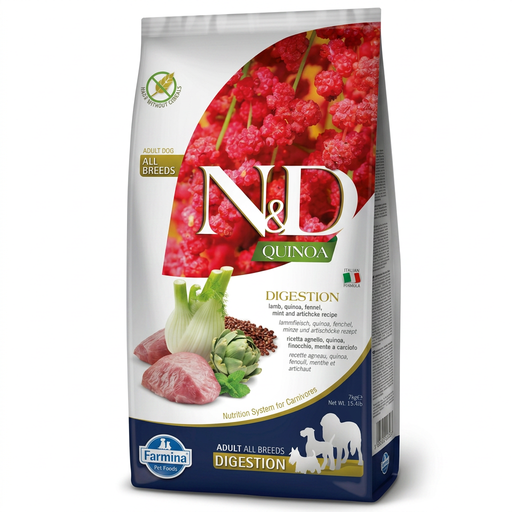
Why this choice suits this profile : This product is intended for medium- or large-breed adult dogs whose owners are looking for a lamb- and quinoa-based recipe containing ingredients associated with digestive comfort.
The selection takes the dog’s size and the ingredients list into account. It also highlights that a “digestion” formula is not a substitute for a diagnosis when problems persist.
The composition includes lamb, quinoa, fennel, mint, inulin, fructo-oligosaccharides and psyllium.
We have put together a complete, real-time updated list of products that meet these strict selection criteria and European safety regulations.
No. The range includes formulas for small, medium and large breeds, as well as recipes dedicated to weight management, digestion, or skin and coat care. Your choice should take your dog’s size, activity level and any sensitivities into account.
A formula lower in fat and higher in fibre may be considered depending on the dog’s needs, but the quantity given remains decisive. With dog food for sterilised dogs, monitor your dog’s weight every week and adjust portions with the help of a professional if necessary.
A gradual transition over 7 to 10 days is generally preferable to an abrupt change. Start with a small proportion of the new kibble, then increase it gradually while monitoring your dog’s appetite and stools.