
Livraison le jour même ou le lendemain

Qualité garantie

Débloquez vos offres de bienvenue: Livraison GRATUITE | Jusqu'à -80 % | 30 jours d'essai gratuits à JoyPlus
Téléchargez l'application
Neutering is a major life change for a dog, leading to significant metabolic shifts. The risk of weight gain is a real concern if their diet isn't adjusted quickly. As an owner, you're naturally looking for a nutritional solution that meets these new challenges, featuring premium ingredients.
The Farmina N&D Quinoa range is a frequent topic of discussion among dedicated owners concerned about their companion's well-being. We've analysed the specifics of these recipes for you, particularly those designed for neutered dogs, to help you understand the options and make the best choice.
Weight management becomes the top priority, without sacrificing your companion's vitality. Here are the key points to look for.
After the procedure, a dog's energy requirements can drop by nearly 30%, while their appetite tends to increase sharply. A food for neutered dogs must therefore have a moderate calorie content. Opt for a formula with reduced fat, often marketed as light dog food. The presence of ingredients like L-carnitine is an added benefit, as it helps to metabolise fat.
Choosing a grain-free food for neutered dogs is often an excellent strategy, especially for sensitive pets or for better glycaemic control. The Farmina N&D Quinoa range stands out for its use of quinoa, a low-glycaemic index pseudo-cereal rich in fibre, amino acids, and antioxidants. The recipe is enhanced with "superfoods" like broccoli and asparagus, which provide targeted nutrients for overall well-being.
Even on a reduced-calorie diet, preserving your dog's muscle mass is crucial. A superior quality food should include a majority of highly digestible animal-based proteins. Duck, for example, is a particularly popular protein source. The Farmina Quinoa Duck formula was specifically developed with this in mind, ensuring sufficient protein intake to maintain muscle tone.
Let's review the formulas in the Farmina Quinoa range that are perfectly suited to the needs of neutered dogs.
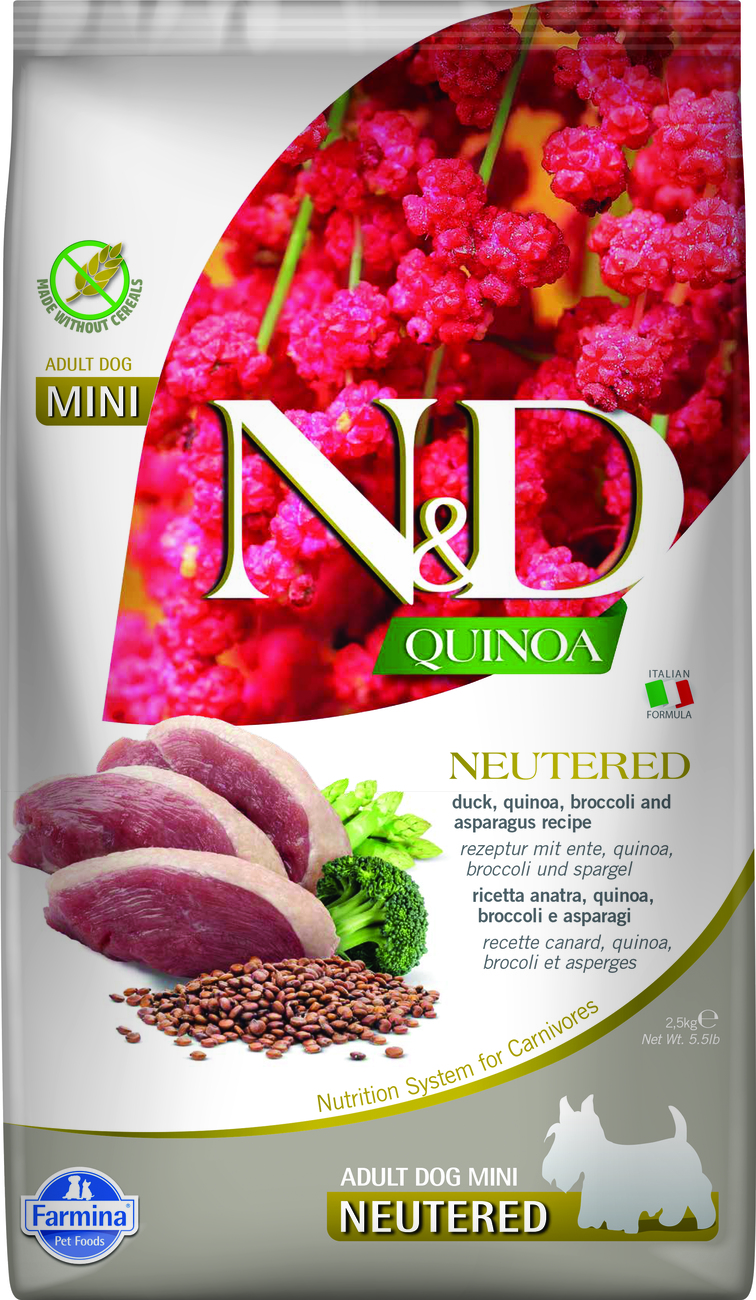
Specially designed for neutered small-breed adult dogs, this recipe tackles the dual challenge of weight management and maintaining vitality. It combines a high-quality protein (duck) with the recognised benefits of quinoa and functional vegetables.
Key Features:
Who is it for? Ideal for owners of neutered small-breed dogs who demand a complete and perfectly balanced diet to prevent weight gain while supporting their pet's overall health.
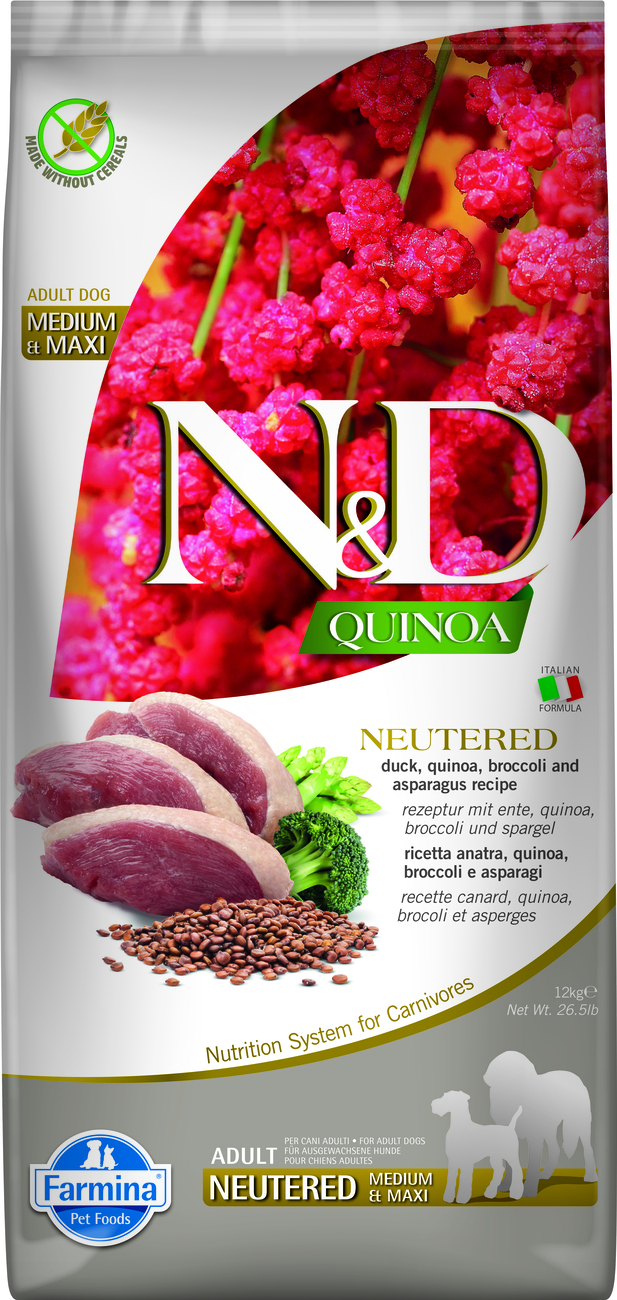
This formula adopts the same excellent principles as the small-breed version but adapts them to the specific needs of medium and large dogs. The kibble size is designed to encourage chewing, while the nutritional profile is adjusted for their different metabolism and bone structure.
Key Features:
Who is it for? Intended for owners of neutered medium or large breed dogs who need a specific diet in a format suited to their companion's appetite.
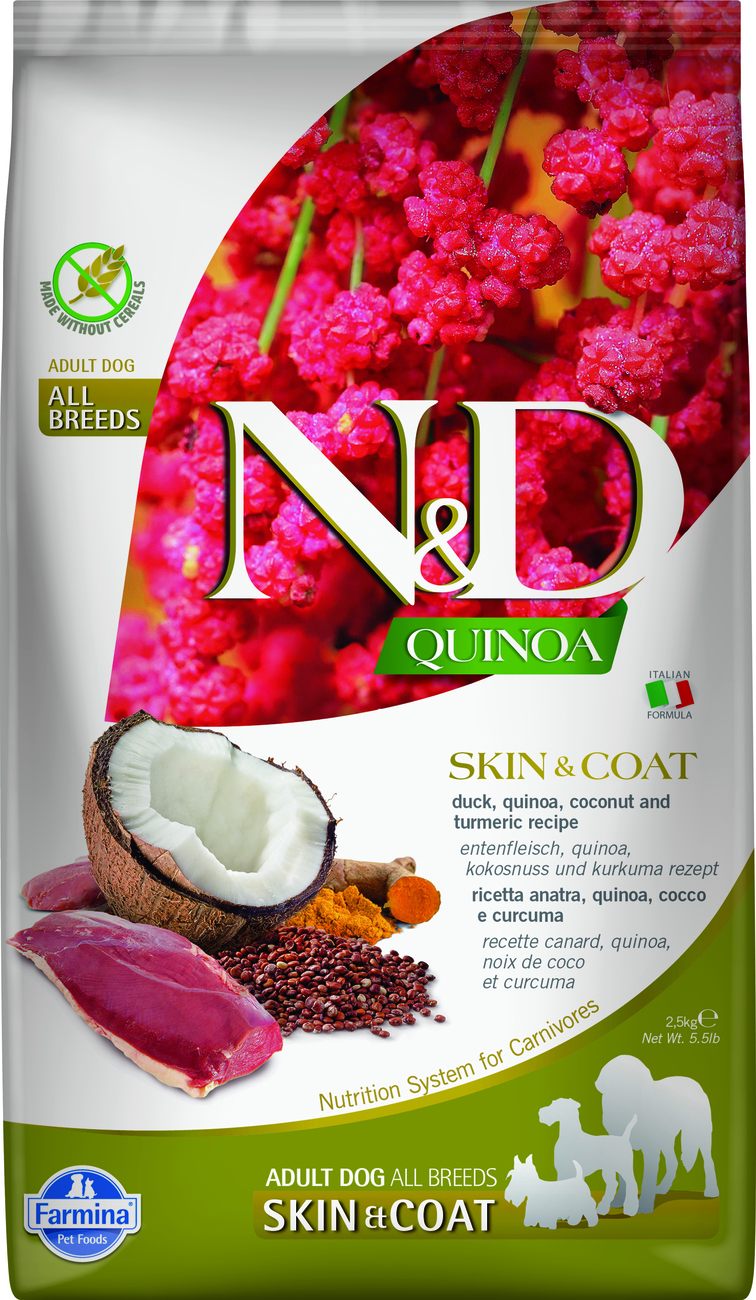
Although it isn't explicitly labelled "Sterilised", this recipe is a compelling alternative. Designed for small-breed dogs with sensitive skin or a dull coat, it relies on coconut and turmeric to strengthen the skin barrier and restore shine. Its controlled nutritional profile makes it perfectly suitable for the needs of some less active neutered dogs.
Key Features:
Who is it for? For owners of small-breed dogs, whether neutered or not, who want to focus on skin health and coat beauty while keeping an eye on the scales.
The Farmina range is extensive, and every dog is unique. If these products don't perfectly match what you're looking for, or if you want to discover other brands with a similar positioning, feel free to browse our complete selection.
? Explore our category of veterinarian-recommended dry dog foods to find the most suitable diet for your companion.
The Farmina N&D Quinoa range is specially designed for dogs with specific nutritional needs. For a neutered pet, its advantages are clear: a low glycaemic index (thanks to quinoa) to limit fat storage, controlled calorie intake, high-quality proteins to preserve muscle mass, and superfoods (vegetables, fruits) for a cocktail of benefits.
Not necessarily, but it's often an excellent idea. Traditional grains (like wheat and corn) have a high glycaemic index that can encourage weight gain. Alternatives like quinoa or sweet potato allow for better blood sugar regulation, a key factor in managing weight after neutering.
To avoid digestive upset, the transition must be gradual. The secret? Mix the new kibble with the old over a period of 7 to 10 days. Slowly increase the proportion of the new food until it completely replaces the old one. Patience is the key to a successful transition!