
Livraison le jour même ou le lendemain

Qualité garantie

Débloquez vos offres de bienvenue: Livraison GRATUITE | Jusqu'à -80 % | 30 jours d'essai gratuits à JoyPlus
Téléchargez l'application
Choosing Farmina N&D puppy kibble isn’t just about spotting the words “premium”, “grain-free” or “high in protein”. Your puppy’s expected adult weight, the actual ingredients, the kibble size, the bag format and the feeding recommendations all play a part in making the right purchase.
To help you avoid unnecessary spending, here are the key points to consider before choosing puppy food for a small, medium or large breed.
Grain-free puppy kibble typically replaces wheat, maize or rice with peas, chickpeas, potato or sweet potato. This may suit a dietary preference, but it isn’t enough to judge the overall nutritional balance of the food.
Take the time to check the ingredient list, the nutritional additives, the protein content and the age and size recommendations. A grain-free recipe isn’t automatically right for every puppy.
A claim like “96% of protein from animal sources” refers to a compositional detail that’s emphasised on certain products. However, on its own, it doesn’t tell you about the daily feeding amount, the energy density or whether it’s suitable for your dog’s adult size.
When comparing kibble that’s high in animal protein, also look at the first protein sources in the list – for example, fresh chicken, dehydrated chicken, lamb, herring or egg.
A 12 kg bag can be practical for a medium or large breed puppy, a multi-dog household or a regular repeat purchase. On the other hand, a 2.5 kg or 800 g format reduces the risk of being stuck with a recipe your puppy refuses or struggles to digest.
Kibble size also matters for small jaws. So it’s important to distinguish between Mini, Medium/Maxi formulas and recipes designed for all breeds.
A Farmina N&D Puppy formula should be chosen based on your puppy’s estimated adult weight, not its current weight. The Mini range is for small breeds, while Medium/Maxi recipes suit medium or large breed puppies.
If it’s hard to estimate the adult size, check the manufacturer’s guidelines and ask your vet for advice, especially if your puppy is growing quickly or has specific needs.
For chicken puppy kibble, check whether chicken appears in both fresh and dehydrated forms, and where it sits in the ingredient list. For lamb puppy kibble, also see if the recipe contains chicken, fish or egg.
The recipes shown here often combine a main animal source with ingredients like pumpkin, sweet potato, peas or chickpeas. Pumpkin, fibre and prebiotics are formulation elements – on their own, they don’t guarantee digestive effectiveness.
Compare the price per kilogram, but also the recommended daily amount based on your puppy’s weight and age. A larger portion size can quickly reduce the apparent saving from a cheaper bag.
After opening, store the kibble in a cool, dry place away from light. Seal the bag carefully or transfer the contents to a clean, airtight container. The best-before date, batch number and storage instructions are on the packaging.
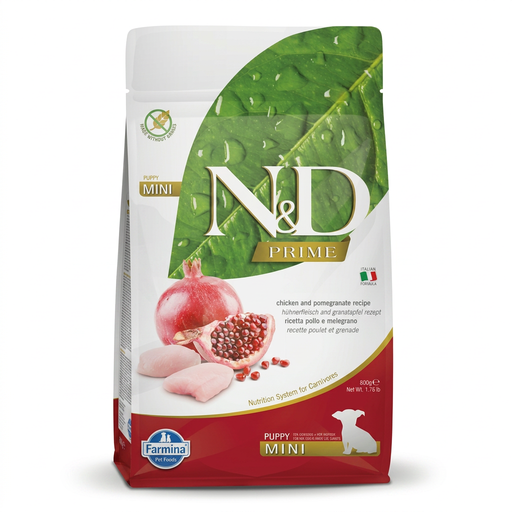
Why this suits this profile: This small format lets you try a chicken recipe designed for small breeds without committing to a large bag straight away.
At 800 g, this format reduces the risk of waste if the kibble size or palatability doesn’t suit your puppy.
A chicken recipe, a grain-free formula according to the product sheet, DHA stated at 0.70% and an ideal size for a trial.
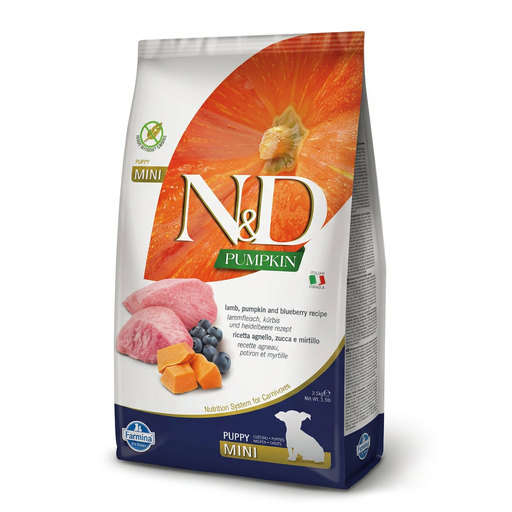
Why this suits this profile: This product is aimed at owners of small dogs who want a detailed composition based on lamb and animal proteins.
The composition details the proportions of fresh and dehydrated lamb rather than relying on a general promise.
24% fresh lamb, 24% dehydrated lamb, 5% dried pumpkin and a format suited to small breeds.
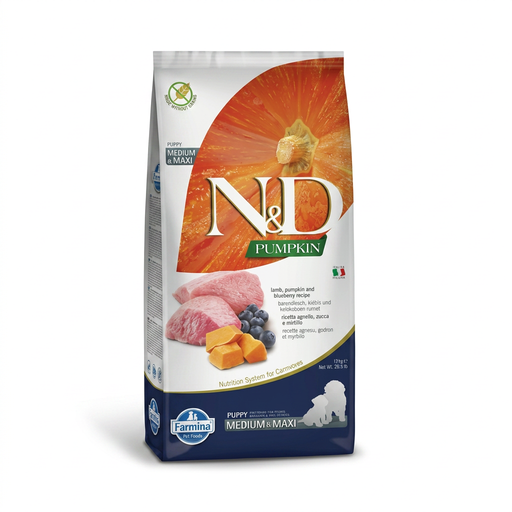
Why this suits this profile: The 12 kg bag is ideal for medium and large breed puppies, multi-dog households or regular repeat purchases.
The feeding table covers several weights, making it easy to adjust portions accurately rather than guessing.
A lamb and pumpkin recipe, a grain-free formulation according to the product sheet, 1,400 mg/kg of glucosamine and 1,100 mg/kg of chondroitin stated.
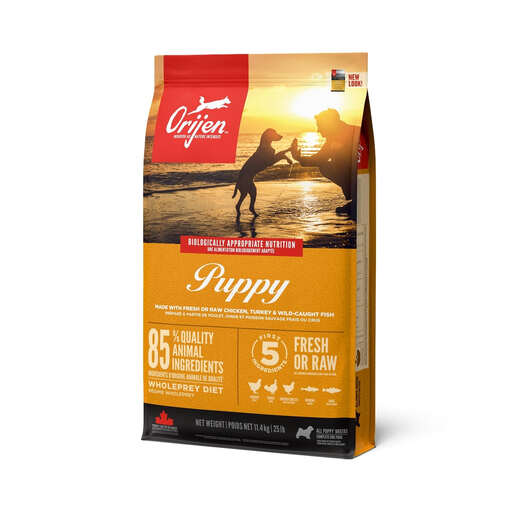
Why this suits this profile: This alternative is aimed at households that want to buy a large bag and have a recipe suitable for puppies of different sizes.
The product sheet states the net weight, transition guidelines and a feeding amount to adjust based on age, weight and size.
85% animal ingredients stated, at least 38% crude protein according to the product sheet and an 11.4 kg bag.
We’ve put together a comprehensive, real-time updated selection of products that meet these demanding criteria and European safety standards.
The amount depends on your puppy’s age, estimated adult weight, activity level and the chosen recipe. Use the feeding table printed on the bag, weigh the portions with scales and split them into several meals when your puppy is still very young. If your puppy’s body condition changes, adjust the quantities and ask your vet for advice if needed.
Introduce the new kibble gradually over about a week. Start with mostly the old food, then slowly increase the proportion of Farmina N&D Puppy until you reach the full amount. If your puppy has a sensitive stomach, a slower transition may be better. In any case, avoid making sudden changes to their diet.
Not necessarily. Compare the price per kilogram, but also the recommended daily amount for the specific formula. A 12 kg bag can be good value for a large puppy or a multi-dog household. However, a smaller format limits waste if the recipe doesn’t suit your puppy. After opening, also make sure to follow the storage instructions on the packaging.