
Livraison le jour même ou le lendemain

Qualité garantie

Débloquez vos offres de bienvenue: Livraison GRATUITE | Jusqu'à -80 % | 30 jours d'essai gratuits à JoyPlus
Téléchargez l'application
Choosing Farmina N&D puppy kibble isn’t just about spotting “grain-free” or “high-protein” on the packet. The expected adult weight, the actual ingredients, the bag size, and how well your puppy can digest the recipe all matter just as much.
For a UK household, a few mistakes can quickly add up:
The Farmina N&D Puppy range includes Mini and Medi/Maxi formulas. For a small dog, smaller kibble will generally be easier to pick up and chew. For a medium or large breed, the recipe must match the growth stage shown on the label.
Don’t just go by your puppy’s current weight. Instead, check:
A formula labelled as suitable for large breeds doesn’t replace monitoring your puppy’s growth curve. Quantities should be adjusted according to age, activity level and body condition.
A complete puppy food must be able to cover the daily ration when fed according to the manufacturer’s guidelines. Check the legal name on the packaging, as well as the nutritional additives, especially vitamins and minerals.
In the recipes we’ve looked at, chicken, lamb, herring or dehydrated animal proteins appear among the first ingredients. Some product pages claim a high proportion of animal protein, but this figure should be considered alongside the full nutritional analysis, not interpreted in isolation.
Chicken puppy kibble can suit households looking for a familiar animal protein source. Lamb puppy kibble offers a different flavour option, though this doesn’t mean it will be better tolerated by every dog.
The 2.5 kg puppy kibble size is handy for a first trial and limits how long the food is stored after opening. It also works well for small dogs, whose daily ration is modest.
The 12 kg puppy kibble size can lower the price per kilo when consumption is high. However, it requires:
Switching to a new food should generally be done gradually, over about seven to ten days, to avoid a sudden digestive upset.
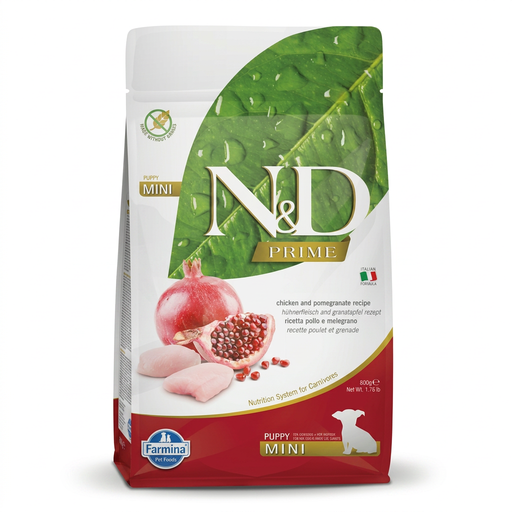
Why this choice suits this profile: The small pack size lets you start with a limited amount and check how much your puppy likes it before moving to a larger bag. The recipe combines chicken and pomegranate in a grain-free formula.
The 800 g size stops you from having a large bag sitting around for weeks and lets you check the kibble size and your puppy’s reaction.
Chicken and dehydrated chicken are among the first ingredients; the product page also mentions DHA from herring oil.
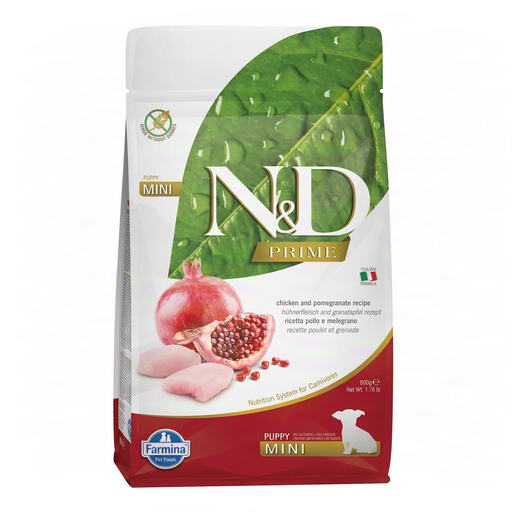
Why this choice suits this profile: This formula is designed for small-breed puppies and combines fresh chicken, dehydrated chicken, herring, eggs and legumes in a grain-free recipe.
The Mini label reduces the risk of choosing a recipe designed for a different size, while the 2.5 kg bag is still easy to handle and store at home.
The listed ingredients show 26 % fresh chicken and 24 % dehydrated chicken; the product page also mentions 1,000 mg/kg of added taurine.
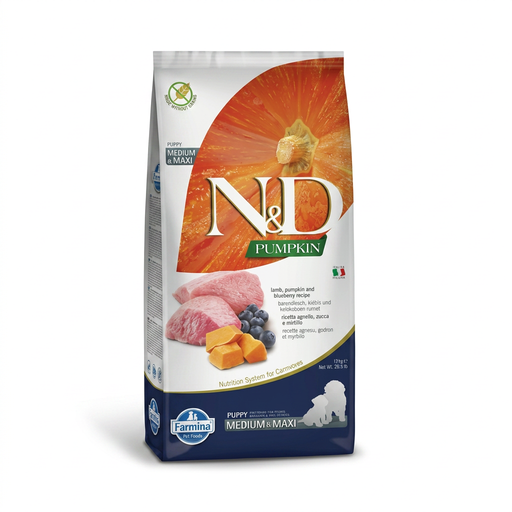
Why this choice suits this profile: This large pack is aimed at medium or large-breed puppies, breeders and households with multiple dogs, provided you have suitable storage space.
The Medi/Maxi label and the weight-based feeding guide help you avoid picking a Mini formula that wouldn’t suit the expected adult size.
A lamb recipe with dried pumpkin, herring and egg; the product page also notes the presence of glucosamine and chondroitin sulphate.
We’ve put together a full, real-time selection of products that meet these exacting criteria while complying with European safety regulations.
Several recipes in this selection are labelled grain-free. They contain ingredients such as peas, chickpeas, pea starch or sweet potato. “Grain-free” does not mean “carbohydrate-free”. Check the full ingredient list and ask your vet for advice if your puppy is on a special diet.
The daily ration depends on current weight, estimated adult weight, age and activity level. Refer to the feeding guide printed on the bag, weigh the portions and split them into several meals according to your puppy’s age. Treats and any supplementary foods should also be included in the daily allowance.
The shelf life depends on the manufacturer’s instructions and storage conditions. Seal the bag carefully or transfer the kibble to an airtight container, kept away from moisture and heat. For a small puppy, the 2.5 kg size can be more practical than a large bag. The 12 kg size is best suited when consumption is regular and high.