
Livraison le jour même ou le lendemain

Qualité garantie

Débloquez vos offres de bienvenue: Livraison GRATUITE | Jusqu'à -80 % | 30 jours d'essai gratuits à JoyPlus
Téléchargez l'application
As a cat owner, you're likely faced with an overwhelming array of pet foods. Discerning a high-quality diet tailored to your companion's needs amidst all the marketing claims can be complex. The goal of this guide is to provide you with objective criteria to help you make an informed decision, focusing on the Farmina N&D Prime kibble range.
Before diving into a specific product, a few basic principles, in line with industry standards, can help you better understand what you're feeding your pet.
Decoding the Ingredient List: Regulations require ingredients to be listed in descending order by pre-cooking weight. Look for clearly identified animal protein sources (e.g., "fresh boneless chicken," "dehydrated lamb") rather than vague terms like "meat and animal derivatives." A short, understandable list is often a good sign.
Understanding the Benefits of a Grain-Free Formula: Cats are obligate carnivores. Their digestive system is naturally adapted to a diet rich in animal protein. Grain-free cat kibble aims to mimic this diet by replacing grains (like wheat and corn) with alternative carbohydrate sources such as peas or potatoes. This approach can be particularly beneficial for cats with sensitive digestion.
Analysing the Guaranteed Analysis: This chart, mandatory on all packaging, details the percentages of crude protein, fat, fibre, and ash. For a high-protein cat food, a crude protein level above 35% is a key criterion to consider, as it supports the animal's muscle mass and energy levels.
The Farmina N&D Prime range is positioned in the grain-free segment with a high content of animal-based protein. Here is an analysis of three popular formulas to help you compare.
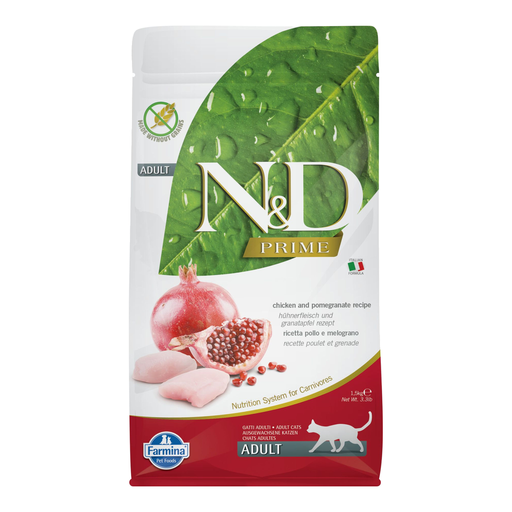
Why this formula stands out: This formula is based on chicken, a highly palatable protein source that is generally well-digested by cats. The composition highlights a significant portion of fresh meat, supplemented with eggs and herring for a complete amino acid profile. The manufacturer states that 98% of the protein is of animal origin, which aligns with a carnivore's needs.
Highlights:
Who is this product for: This formula is suitable for adult cat owners looking for a high-protein, grain-free poultry diet for daily maintenance. It's a solid option for starting out with the Farmina N&D cat food range.
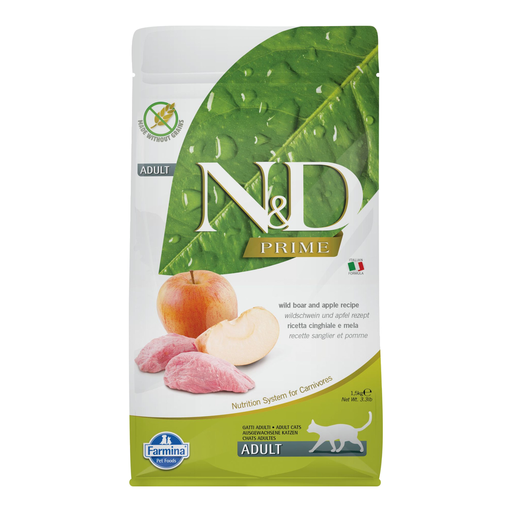
Why this formula stands out: Using wild boar as the primary protein source is an interesting choice. It is a "novel" or less common protein, which can be an advantage for cats with food sensitivities to more traditional meats like chicken or beef. The protein (38%) and fat (22%) content is slightly higher than the chicken version.
Highlights:
Who is this product for: Ideal for cat owners who want to vary protein sources or for those whose pets show signs of intolerance to more traditional meats. It's a relevant choice for a rotational diet.
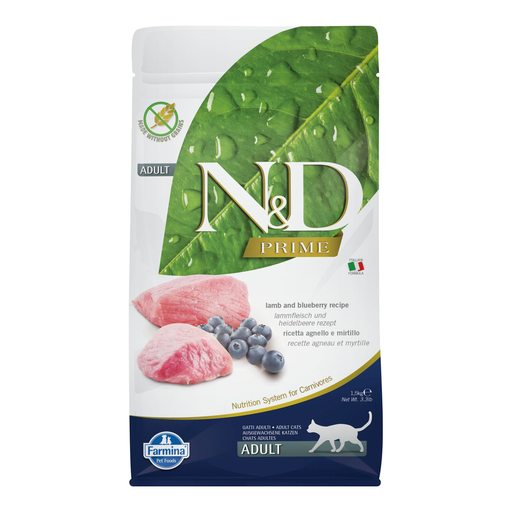
Why this formula stands out: With 42% crude protein, the Farmina N&D lamb formula is the most protein-rich in this selection. Lamb is a red meat known for its digestibility and richness in essential nutrients. The composition also includes additives like glucosamine and chondroitin, which are known for their role in supporting joint health.
Highlights:
Who is this product for: This option is particularly suitable for active cats, cats with high energy needs, or owners wishing to provide preventative support for their pet's joints, especially for certain predisposed breeds.
The nutritional needs of a growing kitten are different from those of an adult cat. They require higher levels of energy, protein, and certain minerals for optimal bone and muscle development. The N&D Prime range is formulated for adult cats. For owners of young cats, it may be worth exploring ranges specifically formulated for their growth, such as our selection of Dry Kitten Food.
Thanks to its grain-free formulation and the use of high-quality protein sources, many owners report good digestive tolerance. However, every cat is unique. In cases of known sensitive digestion, it is always advisable to introduce any new food very gradually over a period of 7 to 10 days and to consult a veterinarian if issues persist.
Beyond taste, the main difference lies in the nature of the protein. Chicken is a classic and effective base. Wild boar offers an alternative for cats sensitive to common proteins. Lamb, in this range, stands out for its very high protein content and the addition of nutrients for joint support. Varying the flavours can also help prevent the development of food fatigue or long-term sensitivities.
To avoid any digestive upset, a smooth transition is recommended. The manufacturer suggests a period of at least 7 days.