
Livraison le jour même ou le lendemain

Qualité garantie

Débloquez vos offres de bienvenue: Livraison GRATUITE | Jusqu'à -80 % | 30 jours d'essai gratuits à JoyPlus
Téléchargez l'application
Choosing Farmina N&D dog food isn't just about comparing the price of the bag or spotting the words "grain-free". Your dog's age, adult weight, breed size, protein source and any specific needs should all guide your decision.
However, some marketing claims can be confusing. A high-protein recipe isn't necessarily right for every dog. Likewise, a grain-free diet isn't automatically a hypoallergenic dog food. Here are the key criteria to consider before you order.
Grain-free dog food usually replaces wheat, maize or rice with legumes, potato, sweet potato or quinoa. This feature alone isn't enough to rule out the risk of intolerance: your dog may react to an animal protein or another ingredient in the recipe.
If your dog suffers from persistent digestive or skin issues, a specific diet should be discussed with a vet. The Farmina Vet Life range includes formulas with hydrolysed protein or fish-based recipes, but it should not be used as a treatment without professional guidance.
Dog food designed for small breeds doesn't necessarily have the same kibble size, energy density or feeding guidelines as food made for medium or large breeds. A puppy also has specific needs, particularly during growth.
Always check for the "puppy", "adult" or "all life stages" label, as well as the target weight stated on the packaging.
The nutritional profile should be looked at as a whole: protein, fat, fibre, ash, moisture and nutritional additives. The ingredients list also helps you identify the main protein sources.
For example, the Farmina N&D Pumpkin recipes we've looked at contain chicken or lamb, combined with herring, pumpkin, peas and chickpeas. The presence of multiple protein sources deserves close attention if your dog is on an elimination diet.
For an adult dog, choose a product suited to its size and activity level. The feeding tables on product pages are a good starting point, but they should be adjusted based on your dog's weight and body condition over time.
For a puppy, opt for a formula specifically designed for growth. The Farmina N&D Pumpkin Lamb Puppy Medi/Maxi product is intended for medium and large breed puppies and provides recommendations based on age and weight.
Chicken, lamb, quail, fish or hydrolysed protein: the choice depends on your dog's current diet and tolerance. A recipe based on a single animal protein can make it easier to observe your dog's reaction to food, but it doesn't guarantee it's allergy-free.
The Farmina N&D Quinoa Skin & Coat Adult Medi/Maxi Quail recipe lists quail as the main protein and doesn't mention any chicken protein in its declared ingredients. However, the product page also shows some ingredients of porcine and marine origin, so take the time to read the full list.
A sudden change can cause loose stools or a temporary loss of appetite. Plan a gradual transition over 7 to 10 days, slowly increasing the proportion of the new food.
Store the kibble in a cool, dry place away from light. Seal the bag carefully after each use and make sure fresh water is always available. For Ziwi Peak wet dog food, place the opened can in the fridge and follow the storage time stated on the packaging.
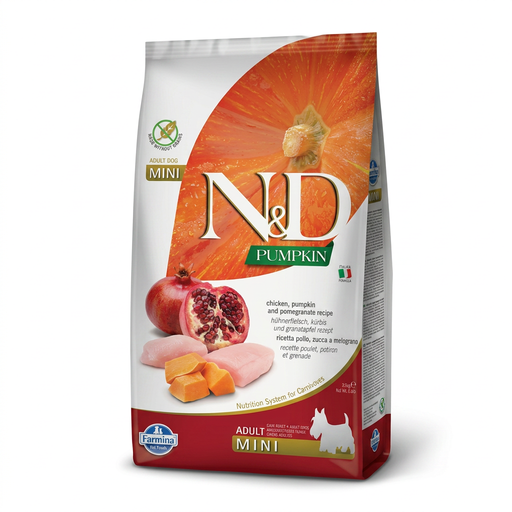
Why this choice suits this profile: At 2.5 kg, this size lets you try a Farmina diet designed for small dogs without committing to a large bag straight away.
The product clearly states it is for adult small breed dogs and details a recipe based on chicken, herring and pumpkin.
A grain-free recipe with fresh and dehydrated chicken, pumpkin, peas and chickpeas.
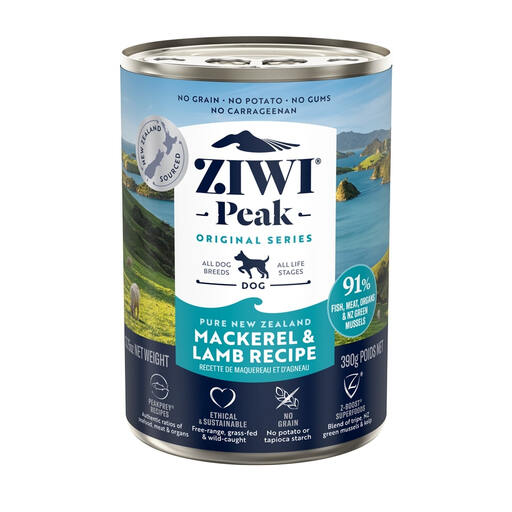
Why this choice suits this profile: This wet food may suit owners looking for a complete formula to serve on its own or as a supplement, following the manufacturer's recommendations.
The product page clearly distinguishes the complete wet food, its ingredients and storage instructions after opening.
The recipe contains mackerel, lamb and New Zealand green-lipped mussels, with a stated moisture content of 78%.
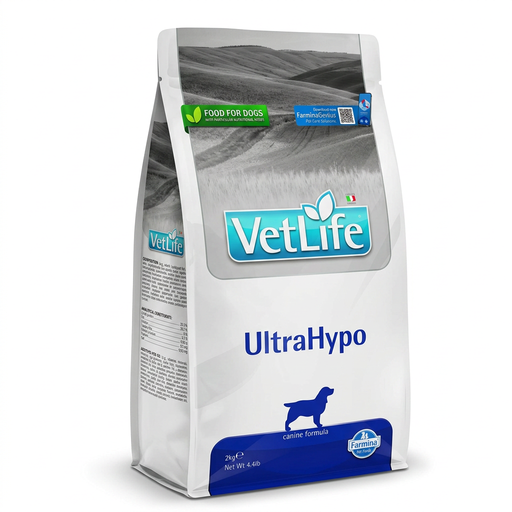
Why this choice suits this profile: This veterinary formula is designed for adult dogs that need a limited ingredient composition as part of a supervised dietary plan.
The product page lists hydrolysed fish protein and rice starch, rather than a long list of protein sources.
A detailed analytical profile, with 18% protein, 15% fat and 3993 kcal/kg of metabolisable energy, according to the product page.
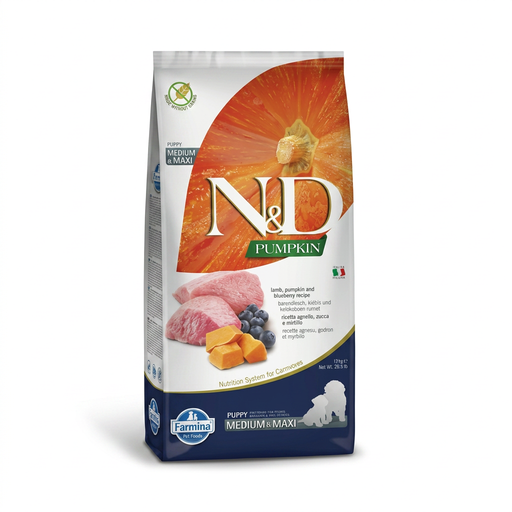
Why this choice suits this profile: The 12 kg bag is suitable for regular feeding and the formula is stated as complete for medium and large breed puppies.
Its feeding table separates several age and weight ranges, so you don't give the same amount to every puppy.
A lamb and pumpkin formula, stated as grain-free, with DHA, EPA, glucosamine and chondroitin.
We've selected a complete, real-time updated list of products that meet these demanding criteria and European safety regulations.
No. A grain-free recipe may suit certain dietary choices, but it doesn't automatically treat an allergy or intolerance. Look at the proteins used and ask your vet for advice if symptoms persist.
Allow 7 to 10 days in general. Mix the old and new food together, gradually increasing the proportion of the new one. If digestive issues appear or persist, stop the transition and consult your vet.
Kibble is easy to measure and store, while wet food provides more moisture and adds variety to meals. In both cases, a complete diet should follow the feeding guidelines. The choice depends on your dog's profile, preferences and the advice of the professional looking after its health.