
Livraison le jour même ou le lendemain

Qualité garantie

Débloquez vos offres de bienvenue: Livraison GRATUITE | Jusqu'à -80 % | 30 jours d'essai gratuits à JoyPlus
Téléchargez l'application
Does your dog have a delicate digestion, sensitive skin or a tendency to gain weight since being neutered? Farmina grain-free dog food may seem like an appealing option, but the label and nutritional profile matter more than the marketing claims. A recipe without wheat or rice won’t necessarily suit every dog.
Here are the main things to check before you buy, along with a selection of Farmina, Vet Life and Orijen formulas for different needs.
Grain-free dog food can contain peas, potatoes, sweet potatoes or pea starch. These ingredients generally replace grains as a source of carbohydrates, but they won’t necessarily suit every dog with sensitivities.
Tolerance depends on the recipe as a whole: animal proteins, fats, fibre and the amount fed. If your dog has persistent itching or digestive problems, it’s best to ask a vet for advice before changing their diet.
A high protein percentage isn’t enough to assess a food. You also need to identify its source and check the fat, fibre and mineral content, as well as the nutritional additives.
For example, Farmina Quinoa Digestive Aid Lamb contains 28% crude protein, 8% fat and 8.2% crude fibre. These figures make it easier to compare recipes objectively than the claim “high in protein” alone.
A recipe for an adult dog won’t necessarily suit a growing puppy. Likewise, a small dog has different needs from a medium or large-breed dog.
Always check:
In France and the European Union, look for the words complete pet food and check that it’s intended for your dog’s life stage. The feeding guide on the bag is a starting point. You’ll need to adjust it based on your dog’s weight, activity level and changes in body condition.
A formula for a neutered adult dog may have a different energy density and fat content from a standard recipe. Farmina N&D Quinoa for neutered adult dogs includes duck, quinoa, pea fibre, broccoli and asparagus. Check the product’s analytical constituents before deciding on the daily amount to feed.
Whether you’re looking for duck, game, quail, lamb or fish dog food, read the full ingredients list. The first ingredients give you an initial idea of what’s in the recipe, but they’re no substitute for the analytical constituents.
Dog food for skin and coat may contain herring oil, fish oil or linseed. These ingredients provide fatty acids, but they don’t guarantee medical benefits. If your dog has a skin problem, a vet can help rule out parasitic, environmental or dietary causes.
“Hypoallergenic dog food” sold as everyday food shouldn’t be confused with veterinary food for dogs with allergies. Vet Life UltraHypo and Vet Life Hypoallergenic are designed for situations that call for a controlled diet. Discuss their use with a vet, particularly as part of an elimination diet.
The Vet Life UltraHypo formula featured here contains hydrolysed fish protein and rice starch. According to its product information, Vet Life Hypoallergenic Fish & Potato is based on fish and potato, with no specific animal protein source or grains listed. Always check the label on the product you receive, follow your vet’s advice and check for any contraindications.
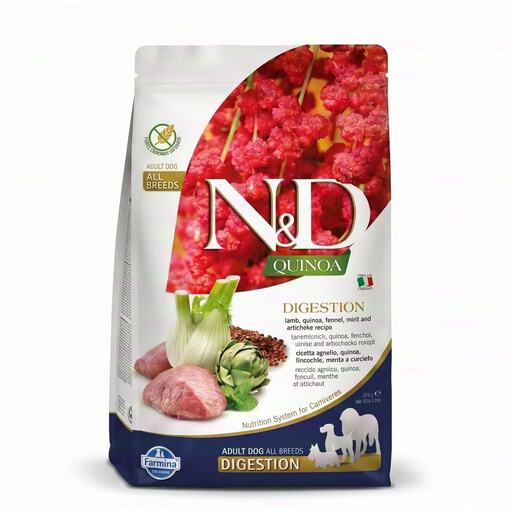
Why it suits this dog: This 2.5 kg bag lets you introduce an adult dog to a recipe made with lamb, quinoa and fibre without committing to a larger size straight away.
The product information gives the protein, fat and fibre percentages, so you can look beyond the simple “ grain-free ” claim.
20 % lamb, 20 % dehydrated lamb protein, 8 % quinoa extract and psyllium.
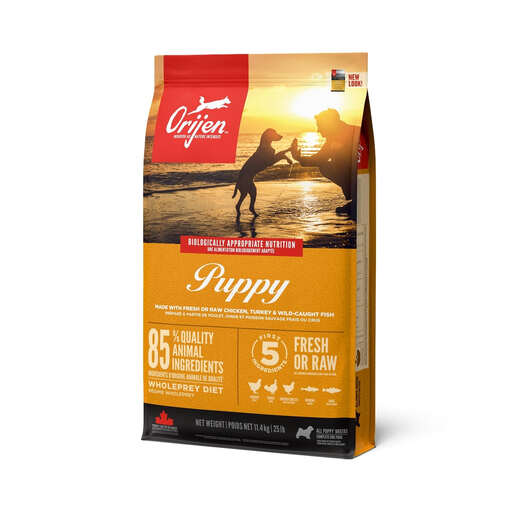
Why it suits this dog: In an 11.4 kg bag, this formula is better suited to households with a large-breed puppy or several dogs, and enough space to store it properly.
The recipe is specifically intended for puppies of all breeds, so it shouldn’t be the default choice for an adult dog.
The product information lists 38 % crude protein, 18 % fat and a feeding amount to be divided according to age.
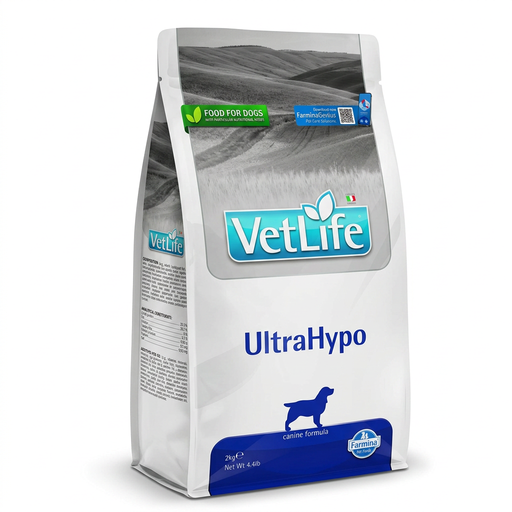
Why it suits this dog: This 2 kg veterinary formula may be suitable as part of a controlled diet, but only after discussing it with the professional caring for your dog.
It doesn’t present a general-purpose recipe as a one-size-fits-all solution: it’s intended for use as part of a specific dietary protocol.
The listed ingredients are limited to hydrolysed fish protein, rice starch and fish oil.
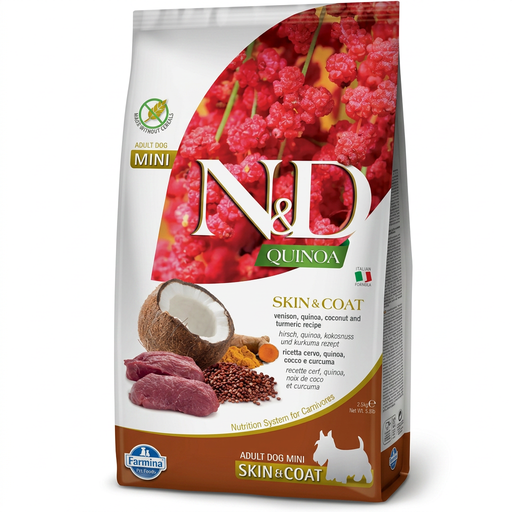
Why it suits this dog: This food for small adult dogs combines venison, quinoa, herring oil and linseed in a 2.5 kg bag.
The size and “ small breed ” label help you avoid accidentally choosing a formula for medium or large breeds without considering your dog’s size.
Venison and dehydrated venison are listed among the main ingredients, alongside herring oil, linseed, taurine and L-carnitine.
We’ve brought together a comprehensive selection of products that meet these exacting criteria, updated in real time and in line with European safety regulations.
No. The absence of grains alone doesn’t determine the quality or tolerance of a recipe. You also need to consider the protein source, the carbohydrates used, your dog’s age and weight, and their health.
A suspected allergy will generally need a vet-supervised protocol. Vet Life Hypoallergenic or UltraHypo formulas may be considered on your vet’s advice, particularly during an elimination period. Standard duck, fish or game dog food doesn’t automatically replace veterinary food.
This depends on the date on the packaging, storage conditions and how much your dog eats each day. Reseal the bag after each use and choose a size you’ll use regularly, rather than a very large bag that may not be stored properly.