
Livraison le jour même ou le lendemain

Qualité garantie

Débloquez vos offres de bienvenue: Livraison GRATUITE | Jusqu'à -80 % | 30 jours d'essai gratuits à JoyPlus
Téléchargez l'application
As a cat owner, choosing the right food is a crucial decision. The market is flooded with promises, and it can be difficult to distinguish marketing claims from real nutritional benefits. My role, as Head of Product Curation at Joybuy, is to help you make sense of it all by analysing the available information to offer objective options tailored to your companion's needs.
Today, we're taking a closer look at the Farmina grain-free cat kibble range, an option often considered by owners looking for high-protein cat food that's suitable for specific sensitivities.
Before we look at the products, here are a few key points to guide your choice, in line with consumer information standards.
Analyse the ingredient list: European regulations require ingredients to be listed in descending order by weight. Look for a quality animal protein source (like lamb, chicken, or fish) at the top of the list. This indicates that meat is the main component, which is consistent with a cat's carnivorous diet.
Understand the term 'grain-free': A grain-free formula replaces wheat, corn, or rice with other carbohydrate sources like peas, lentils, or sweet potato. These alternatives often have a lower glycemic index. This is a relevant criterion for food for cats with sensitive digestion or for pets with known intolerances.
Tailor the formula to specific needs: A neutered cat has different needs than a kitten or an overweight cat. Formulas for neutered cat kibble are generally adjusted in fat and minerals to help maintain a healthy weight and support urinary health. Similarly, a formula for overweight cat kibble will contain more fibre and fewer calories.
With these criteria in mind, here is a selection of products from the Farmina N&D range that meet distinct needs.
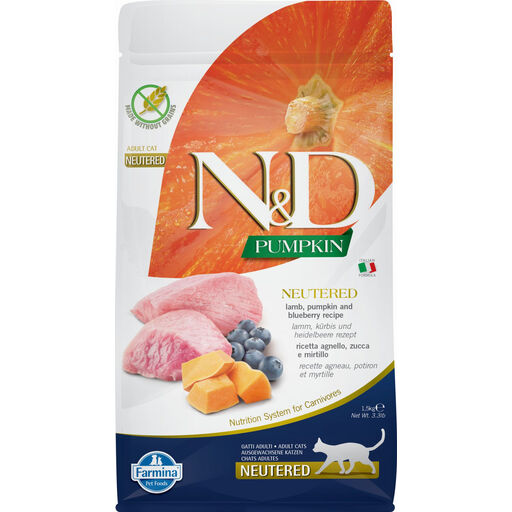
Why we recommend it: This formula is specifically designed for neutered or spayed cats. Its nutritional profile is adapted to address the metabolic changes that follow sterilisation. The recipe features a high protein content (46%) to maintain muscle mass and a controlled fat content (11%) to aid in weight management. The addition of pumpkin, a source of fibre, contributes to healthy digestion.
Benefits:
Who is this product for: For owners of adult neutered cats who are looking for a high-protein, fat-controlled diet to maintain an optimal body weight.
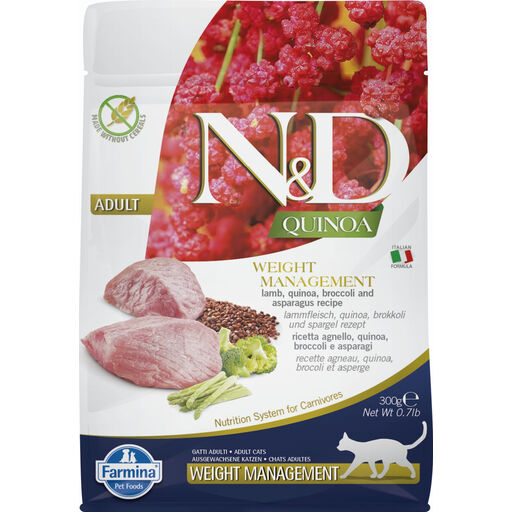
Why we recommend it: This recipe from the Farmina N&D cat range is an excellent option for cats that need to maintain or reach their ideal weight. It combines a moderate fat content (12%) with a higher fibre level (4%) to promote satiety. Quinoa is used as a high-quality complex carbohydrate source.
Benefits:
Who is this product for: For adult cats with a tendency to be overweight or those requiring a calorie-controlled diet to maintain their ideal weight.
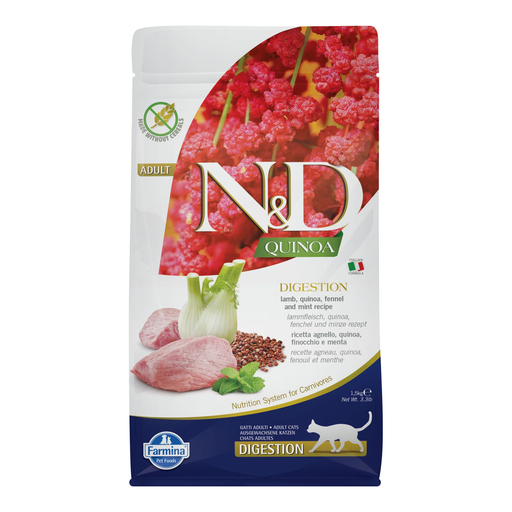
Why we recommend it: Designed for cats with digestive sensitivity, this formula is part of Farmina's functional line. It is formulated without grains for easier digestion and contains ingredients selected for their high digestibility. Lamb, often considered a highly digestible protein, is the key ingredient here.
Benefits:
Who is this product for: For owners of adult cats with sensitive digestion who are looking for a food for sensitive digestion based on lamb cat kibble.
If lamb is your preferred ingredient for your cat, whether for taste preferences or tolerance issues, many other options are available. To discover a wider selection of products, you can browse our dedicated category for Lamb Dry Cat Food.
Grain-free kibble is formulated to more closely mimic a cat's natural diet, as they are strict carnivores. The absence of grains like wheat or corn can aid digestion in some cats, especially those with sensitivities. These foods are often richer in animal protein and have a lower glycemic index, which can help regulate blood sugar and maintain a stable weight.
Farmina is an Italian brand that focuses on a research-based nutritional approach, which it develops in collaboration with university entities. Their ranges, such as N&D (Natural & Delicious), are characterised by a high content of animal-based protein, the use of regionally sourced ingredients, and grain-free or low-glycemic index formulas. Whether this brand is the right choice will depend on how well it meets your cat's specific needs and preferences.
A change in diet should always be gradual to avoid digestive upset. It is recommended to transition over a 7 to 10-day period. Start by mixing about 25% of the new food with 75% of the old food, then gradually increase the proportion of the new kibble every two to three days until you reach 100%. Always ensure your cat has fresh water available at all times.