
Livraison le jour même ou le lendemain

Qualité garantie

Débloquez vos offres de bienvenue: Livraison GRATUITE | Jusqu'à -80 % | 30 jours d'essai gratuits à JoyPlus
Téléchargez l'application
A fan can cool a bedroom, improve air circulation in a living room or help distribute heat from a wood-burning stove more effectively. But a rushed purchase can often lead to unpleasant surprises: an appliance that is too noisy, uneven airflow, disappointing battery life or an installation that is not practical for the room.
Before comparing models, start by identifying your needs: occasional ventilation, continuous air circulation, portability, supplementary heating or distributing heat from a stove.
Higher electrical power does not guarantee a more pleasant airflow. A well-designed 35 W appliance may be perfectly suitable for a bedroom or home office, while a more powerful model could become intrusive if it is oversized or too noisy.
For everyday use, the blade diameter, oscillation and number of adjustable speeds often matter more than the stated power alone.
The word “quiet” should be treated with caution: it does not necessarily mean that the appliance is completely inaudible. Instead, check for a night mode, a reduced speed, a direct-current motor and, where available, the noise level expressed in decibels.
In a bedroom, home office or room used in the evening, a timer and remote control also mean you do not have to keep getting up.
A ceiling fan must be attached to a sufficiently sturdy support, at a suitable height and in accordance with the manufacturer’s instructions. In a room with a low ceiling, a pedestal or desk fan will often be easier to install and use.
Blades and grilles quickly collect dust. A grille that is difficult to remove or a non-replaceable battery can make maintenance more complicated over time. For a cordless or rechargeable fan, also check the charging time, stated battery life and the instructions relating to the lithium battery.
A model offering 5 speeds or more allows you to adapt the airflow to the room temperature and your distance from the fan. “Breeze” or “night” modes generally adjust the operation to avoid a uniform, continuous airflow.
Oscillation widens the ventilated area, but it does not replace careful positioning. Place the appliance on a stable surface, taking care not to block the air inlets or outlets.
To compare running costs, look at the power in watts and the operating time. A 35 W fan used for 5 hours consumes approximately 0.175 kWh, excluding any potential losses associated with recharging. The actual cost depends on the tariff charged by your electricity supplier.
For a rechargeable appliance, check the battery capacity, charging time and whether a suitable charger is included. Never dismantle a lithium battery and do not leave the appliance charging near flammable materials.
For a heated appliance, check the protection features against overheating, tipping and frost, as well as the stated protection rating. An IPX1 rating does not make the appliance waterproof: avoid direct splashes and any immersion.
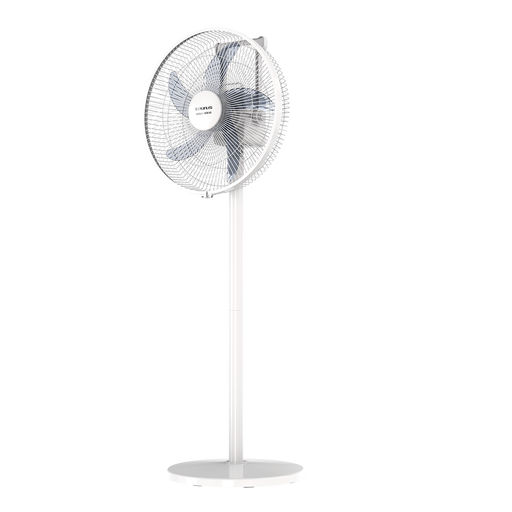
Why this choice suits this profile : This versatile fan is ideal for anyone looking for a portable appliance that can be used on the floor or a table, as a tower fan or mounted on the wall.
The product details specify 5 speeds, three modes, automatic oscillation and an 8-hour timer, providing far more precise control than a simple two-position switch.
Direct-current motor, stated battery life of up to 8 hours, remote control and 35 W power.
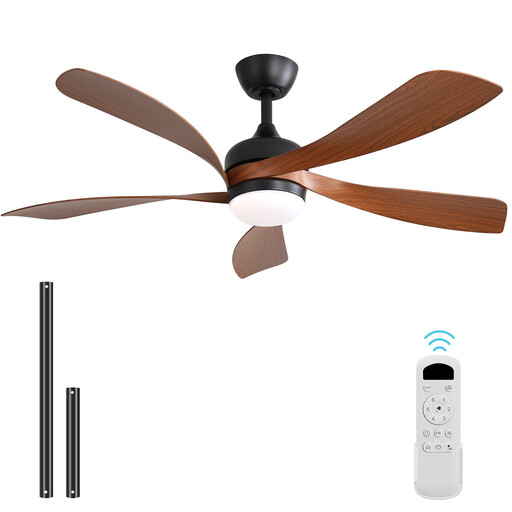
Why this choice suits this profile : This ceiling fan with integrated lighting is designed for those who want a fixed installation combining light, air circulation and remote controls.
The product details specify the length of the downrods, a possible tilt of up to 15 degrees and recommended use in rooms measuring up to 6.1 m × 6.1 m.
Six speeds, remote control, lighting with adjustable colour temperature and a reversible function, according to the product details.
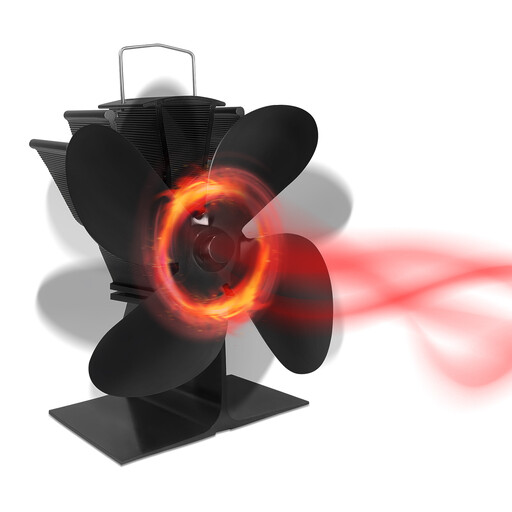
Why this choice suits this profile : This wood-burning stove fan is designed for households that want to distribute warm air more effectively around a stove or fireplace, without adding a power cable.
Its stated electricity-free operation means you do not need to install a conventional fan with an extension lead near the stove.
A format suitable for stoves and warm-air circulation without mains connection. Always observe the temperature range specified by the manufacturer.
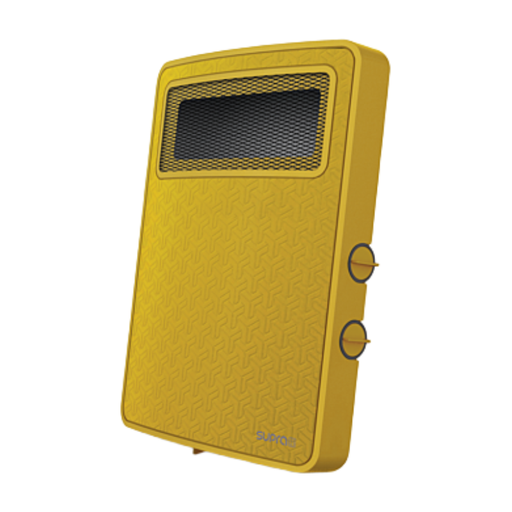
Why this choice suits this profile : This portable fan heater is suitable for occasional use in a home office, bedroom or room advertised as being up to 40 m², according to the product details.
Two heat settings of 1 000 W and 2 000 W help limit power consumption when the heating requirement is moderate.
Advertised features include a mechanical thermostat, washable filter, overheat protection and an anti-tip device.
Position it to create air circulation, without directing the airflow straight at anyone for an extended period. Placed near a window, it can help remove warm air when the outdoor temperature drops. Always check that the base remains stable and that the grilles are not obstructed.
It depends entirely on the appliance’s power and how long it is used. To estimate the cost, multiply the power in kilowatts by the number of operating hours, then multiply that figure by the kilowatt-hour price stated in your contract. A 35 W fan uses less energy per hour than a 2,000 W fan heater, but the two appliances obviously serve different purposes.
This varies according to build quality, frequency of use, maintenance and storage conditions. Regularly dust the blades and grilles, unplug the appliance before cleaning it and avoid exposing it to moisture if the model is not designed for this. For a rechargeable appliance, follow the manufacturer’s recommendations for the battery and charger.