Households that make porridge regularly
If you regularly serve porridge to two or more people, it’s worth comparing a 1 kg pack with smaller options. However, it’s best suited to households that use oats regularly and can store them somewhere dry.


If you often make porridge for the family, a 1 kg pack means fewer trips to restock, provided you can keep the oats dry and use them regularly. A 500 g pack lets you try a new routine without building up too much stock, while 800 g is a mid-sized option. Whatever the pack size, the ingredients and allergen information matter more than the weight if they need to meet a particular household requirement.
If you regularly serve porridge to two or more people, it’s worth comparing a 1 kg pack with smaller options. However, it’s best suited to households that use oats regularly and can store them somewhere dry.
If you’re trying a new recipe or aren’t yet sure how much your household will use, a 500 g pack means less to store while you give it a go.
If you need to check for allergens, a ‘gluten-free’ claim or organic certification, start with the information on the specific pack rather than relying on its brand or size.
When choosing oats for sharing, start with how often you make porridge, then check that the recipe and pack information suit your household.
| What to consider | What to check | Who is it for? |
|---|---|---|
| Amount to store | Compare the net weight with how often you make porridge, and make sure you can store the pack somewhere dry. | If porridge is on the menu several mornings a week for two or more people, I want to avoid having to buy oats too often; around 44% of consumers put having enough stock at the top of their list. |
| Ingredients and uses | Read the ingredients to tell plain oats apart from granola or a prepared porridge mix. | If I plan to use the same pack for porridge and other recipes, I look for a plain base so I can choose what to add; around 33% of consumers prioritise this versatility. |
| Food labelling | Check allergens and ‘may contain’ information, as well as any ‘gluten-free’ claim or organic certification relevant to your needs. | Before choosing a pack size, I need to know whether its labelling meets my household’s dietary requirements; around 23% of consumers say this is their top priority. |
Auchan lists 25 portions of 40 g for its 1 kg pack and 13 for its 500 g pack. These portion sizes are a useful guide for those products, but the amount you use will vary depending on the recipe and how many people you’re serving.
Work out how much your household actually uses before choosing between 500 g, 800 g and 1 kg.
Oat aisles include a range of different products. At Auchan, the Jordans products mentioned are granolas with added ingredients, while Auchan’s plain oats list only wholegrain oats.
Check the ingredients if you want a plain base to which you can add other foods yourself.
Carrefour’s 800 g Quaker product is labelled ‘may contain: wheat, barley’. So, the fact that a product is made from oats doesn’t mean it meets strict gluten-free requirements.
Check the ‘gluten-free’ claim, allergens and ‘may contain’ information on the pack you’re buying.
Auchan and Terres et Céréales advise keeping their oats away from heat and moisture once opened.
Before buying a larger pack, make sure you have somewhere dry to store it, and check the storage instructions and date on the packaging.
Carrefour sells Quaker oats in an 800 g pack, making it a mid-sized option between the 500 g and 1 kg packs.
Auchan sells plain wholegrain oats in 500 g and 1 kg packs.
E.Leclerc sells Grainea oats in 500 g and 1 kg packs.
Auchan sells a 1 kg pack of organic wholegrain oats from Terres et Céréales.
In Auchan’s oat range, the Jordans products mentioned are granolas and oat-based cereals sold in 400 g packs.
If you’re trying a porridge routine, the first three products are 500 g packs of oats. The two 838 g Family Whole mixes are prepared recipes, so their weight doesn’t make them equivalent to a large pack of plain oats.
 Image unavailable
This 500 g pack lets you try oats for porridge without immediately stocking up on a kilo. If anyone in your household has specific dietary requirements, check the pack information before choosing this product.
 Image unavailable
The 500 g pack is a good option if you’re trying a porridge routine or only use a moderate amount. Don’t confuse it with the 800 g Quaker product sold by Carrefour, and check the gluten information on this specific product.
 Image unavailable
This 500 g pack keeps your initial stock small while you see how porridge fits into your household’s breakfasts. If you need to consider gluten or other allergens, read the pack information before buying.
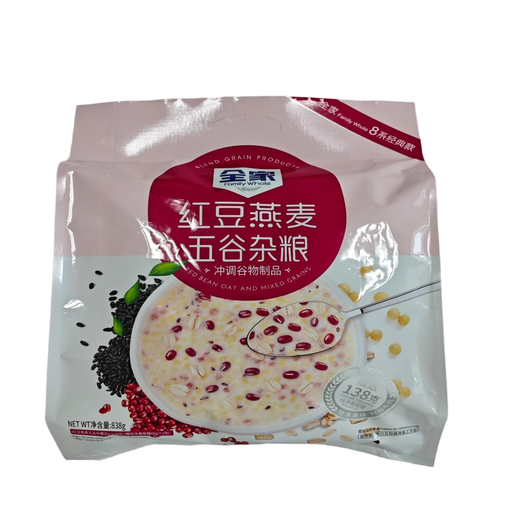 Image unavailable
This prepared recipe is for a different use from a pack of plain oats that you can customise. The stated weight is 838 g; check the ingredients, allergens and how much you’ll need for a shared breakfast.
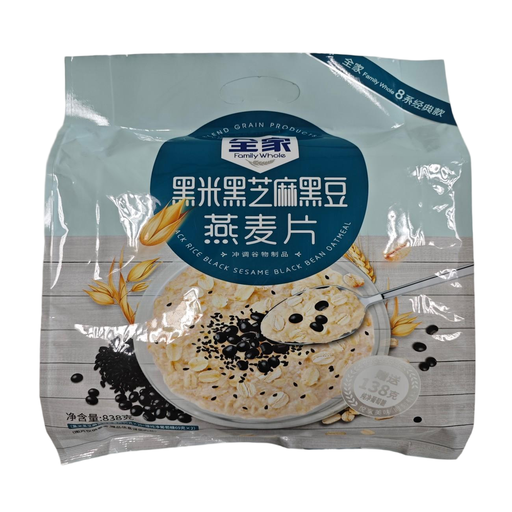 Image unavailable
This 838 g prepared mix is for anyone looking for this particular recipe rather than a base of plain oats. Check its ingredients and allergens, then make sure the quantity is right for everyone sharing breakfast.
No. It’s most practical if your household makes porridge often and can keep the oats somewhere dry. Auchan lists 25 portions of 40 g for its 1 kg product, compared with 13 for its 500 g one. These figures don’t dictate how much each person should have.
No. If you need a gluten-free product, look for that claim on the pack you’re buying and check the allergen and ‘may contain’ information too. Carrefour’s 800 g Quaker product, for example, says it may contain wheat and barley.
Check the net weight, ingredients, allergens, nutritional information, date and storage instructions. France’s Directorate-General for Competition, Consumer Affairs and Fraud Control lists these among the details to check on the labels of pre-packed foods sold in France.
Reseal the pack and follow its storage instructions. Auchan and Terres et Céréales advise keeping their products away from heat and moisture, so bear this in mind before choosing a 1 kg pack.