Which criteria should you prioritise?
Start with the size of the loads you wash most often, then check that the model will fit in your home and compare how it performs in use. A large capacity and low consumption on the Eco 40-60 programme do not, on their own, answer the question of how the machine handles small loads.
| Criterion |
What to check |
Who this matters to |
| Capacity for bulky laundry |
Compare the kilograms of dry laundry with your usual loads. For a duvet, also check the limits in the instruction manual. |
If I often wash duvets or large throws, I want to avoid splitting the same load across several cycles. Around 36% of consumers prioritise this capacity. |
| Alternating load sizes |
Check the kWh per 100 cycles and litres per cycle on the Eco 40-60 label, then look for test results for the model with a partial load. |
When small loads follow large ones, I want to use a large drum without relying on a simple promise that the machine will adjust. This matters to around 29% of consumers. |
| Dimensions and access |
Measure the installation space and access route; check the model’s depth and the clearance needed with the door open. |
A machine that blocks access or whose door cannot open wide enough is not right for my home, whatever its capacity. Around 21% of consumers prioritise installation. |
| Energy use and lifespan |
Compare the energy label, spin performance and noise level; check the durability rating displayed in France and the service terms. |
If I plan to keep the machine for a long time, I look beyond drum size, particularly at energy use and repair options. Around 14% of consumers prioritise these aspects first. |
Brands to consider
These examples of ranges and models can help you compare capacities and formats. Manufacturer-advertised features are no substitute for comparable test results.
Bosch
Worth considering when comparing 10 kg front-loading machines, particularly if you want to look at detergent dosing and water adjustment features.
- Bosch lists the WGG254FAFR as a 10 kg front-loading machine, with a spin speed of 1,400 rpm and a depth of 588 mm.
- Bosch offers i-DOS and ActiveWater Plus on certain models or ranges; their presence does not prove that the WGG254FAFR saves energy on small loads.
LG
An example of an 11 kg front-loading machine to consider if both laundry volume and available depth matter.
- LG lists an 11 kg capacity, a depth of 565 mm, load sensing and a duvet programme for the F14R31WHSA.
- These features do not tell you how much energy it uses on a half load or whether it is suitable for every duvet.
Haier
A 13 kg capacity may be worth considering if you regularly wash very bulky items and have enough space.
- Haier lists the X5 HW130-BP14357U1 with a 13 kg capacity and a depth of 661 mm.
- Smart AI’s automatic adjustment of settings is a feature advertised by Haier, not a comparative energy-use measurement. Remember to allow enough clearance for installation, too.
Samsung
A brand to look at if you want a 10 kg front-loading machine rather than an extra-large capacity model.
- Samsung’s French range includes 10 kg washing machines.
- Compare the dimensions, energy label and features on the page for the specific model. A range page does not show how well a machine handles small loads.
Miele
A 10 kg model to consider if you want to compare the energy-label figures for a specific machine.
- Miele lists an A energy rating, 52 kWh per 100 cycles and 52 L per cycle for the WCK360 WCS PWash&10kg.
- These label figures alone do not show how the machine performs with small loads; check the warranty and service terms separately.
Large-capacity washing machines on Joybuy
These 10 or 11 kg front-loading machines are worth considering if you need a larger drum for frequent family laundry. Before choosing, compare the capacity with the washing limits for your textiles, the space available and the energy-label details for the model sold in France.
 Image unavailable
Haier X Series 11 HW100-BD14397PGU1, 10 kg
Worth considering for regular large loads, with a stated capacity of 10 kg. The product name also indicates 1,400 rpm and an A energy rating. Check the label for the version sold in France and allow enough clearance in front of the door.
View on Joybuy
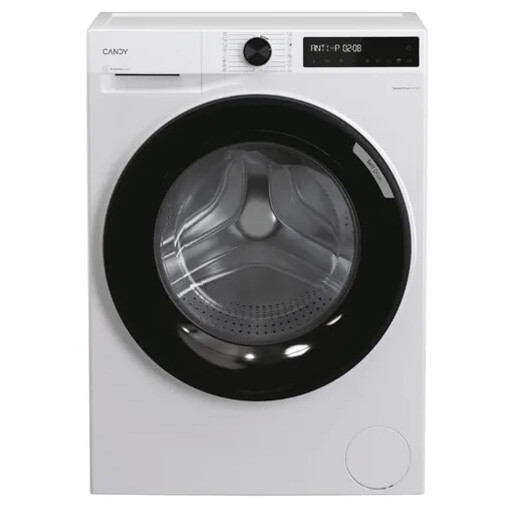 Image unavailable
Candy BR 411BL9-S, 11 kg
Its stated capacity of 11 kg is worth comparing with the size of the loads you wash most often. Check the dimensions with the door open and the energy-label figures for the model on offer before making your choice.
View on Joybuy
 Image unavailable
Electrolux EWF1410N2, 10 kg
This 10 kg front-loading machine is worth considering if you often wash bulky items. A Duvet programme is listed for this model. Check the instruction manual for the permitted duvet weight and type, and allow enough space to open the door.
View on Joybuy
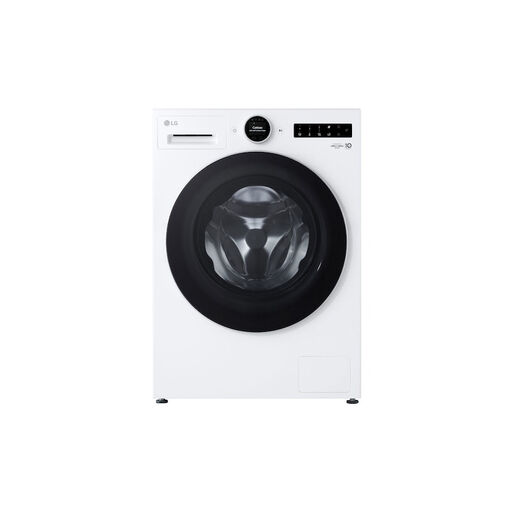 Image unavailable
LG F4WX851Y, 11 kg
Its stated capacity of 11 kg could suit you if you are looking for a larger drum. If you alternate between large and small loads, compare energy-use test results for the exact model. Also check its dimensions and safety information before buying.
View on Joybuy
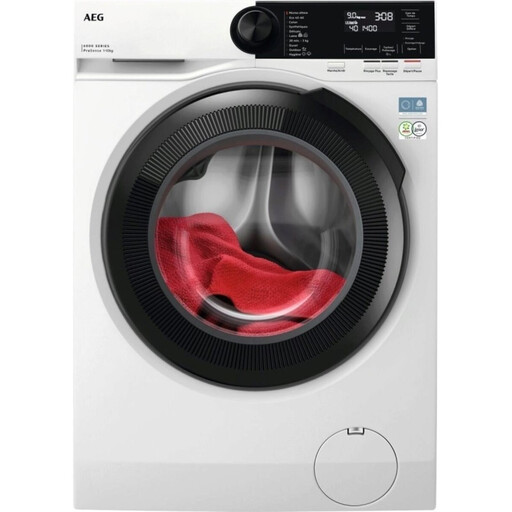 Image unavailable
AEG LFR62E114S, 10 kg
Compare this 10 kg front-loading machine with the family loads you actually wash. Its name indicates 1,400 rpm and an A energy rating; check the full label for energy-use figures and measure the clearance needed for installation.
View on Joybuy
Frequently asked questions
What capacity should I choose for a family’s large loads?
Choose based on how often you wash and the size of your loads, not just the number of people in your household. UFC-Que Choisir generally puts the needs of a three- to four-person household at around 8–9 kg, and considers 10–12 kg more suitable if you do several loads in a row. Always check the instruction manual’s limits before washing a duvet.
Is a top-loading washing machine suitable for large duvets?
It may suit some loads, but its capacity could limit your options for a large duvet. UFC-Que Choisir’s report says that top-loading models do not exceed 8 kg. In every case, check the washing limits for both the machine and the duvet.
How can I assess a large washing machine’s energy use with a small load?
Look for test results for the specific model with a partial load rather than relying on the name of an automatic feature. The energy label lets you compare figures for the Eco 40-60 programme, but it is not enough to establish the energy use for a small load or a different programme.
What should I look for on a washing machine’s energy label?
Compare the energy used per 100 cycles, water per cycle, Eco 40-60 programme duration, spin performance and noise level for the models you are considering. ADEME notes that the label’s QR code links to the product information registered in EPREL. Check these details against the exact model reference before deciding.
Is a high spin speed useful for family laundry?
It can leave less moisture in textiles that can withstand that spin speed, but speed alone does not tell you how well the machine performs. UFC-Que Choisir mentions 1,400–1,600 rpm as a way to reduce reliance on a tumble dryer. Also compare the model’s spin-drying efficiency class and noise level.


