For frequent family washes, choose a capacity that suits the loads of dry laundry you typically wash. ADEME says that 7 kg is often enough, while UFC-Que Choisir generally puts the needs of families with children and bulky laundry at 8 to 10 kg. A large-capacity front-loader will only save you extra cycles if you regularly fill its drum. If you prefer a top-loader, check that it can handle your usual laundry volumes. Also compare the spin performance, noise, cycle duration and consumption of the Eco 40-60 programme, as well as the washing and rinsing results for the model you’re considering.
Who is this guide for?
Families with regularly full laundry baskets
If clothes, sheets and towels often make up large loads, choosing a suitable capacity can help you avoid splitting them up. UFC-Que Choisir suggests 8 to 10 kg for families with children, taking care to consider the loads you actually wash.
Households that sort laundry into smaller loads
Frequent washing doesn’t always mean large loads. If you often separate colours and fabrics, check the load limits for synthetic, wool and delicate programmes too. The stated capacity for cotton may not apply to these cycles.
Households mindful of drying and noise
If you often dry laundry indoors or use a tumble dryer, look at the spin-drying efficiency class rather than just the maximum spin speed. Spin noise and programme duration also matter if you run several loads close to your living areas.
What should you compare?
Start with your usual loads, then compare the energy label figures with the programmes and test results for the exact model.
| Criteria | What to check | What you need |
|---|
| Capacity and design |
Compare the weight of the dry laundry you usually wash with the stated capacity for cotton or Eco 40-60. Check the load limits for other programmes too. UFC-Que Choisir says top-loaders generally have a maximum capacity of 8 kg. |
I want to avoid splitting large loads of sheets and towels, without choosing a drum that will often be underfilled. If I prefer a top-loader, I’ll check that its capacity is enough for my laundry baskets. |
| Washing and rinsing |
Look for tests of the exact model and comparable programmes. UFC-Que Choisir assesses washing and rinsing separately: the stated capacity and energy rating don’t tell you everything about these results. |
When I’m doing frequent washes, I want to compare washing and rinsing quality, not just drum size. |
| Spin performance |
Check the spin-drying efficiency class, maximum speed in tr/min and noise during the spin cycle. The stated speed alone doesn’t tell you how much moisture will remain. |
If I dry laundry indoors or use a tumble dryer, how damp it is after spinning is an important factor in my choice. |
| Water, energy and cycle duration |
On the energy label, compare kWh per 100 cycles, litres per cycle and the duration of the Eco 40-60 programme. These figures relate to a reference cycle, not every programme you’ll use day to day. |
I want to plan several washes during the week and compare consumption figures on the same basis. |
| Care and durability |
Check the model’s durability index. According to the Ministry for Ecological Transition, this score out of 10 takes factors such as spare parts, maintenance, ease of disassembly and resistance to wear into account. |
For a main appliance that gets frequent use, I also want to compare the options for care and repair. |
What should you avoid?
-
Choosing the biggest drum just to be safe
A drum that’s too small can mean more cycles, but a large drum that’s often underfilled won’t necessarily save water or electricity, as ADEME and UFC-Que Choisir point out.
For a week or two, keep an eye on the size of your dry laundry loads, including sheets and towels. Then choose a machine to suit your usual basket, rather than an unusually large load.
-
Focusing only on kilograms and tr/min
These two specifications don’t tell you about washing and rinsing results or programme duration. UFC-Que Choisir assesses these separately in its tests.
Compare the energy label and, if available, test results for the exact model before deciding how well it performs.
-
Assuming the stated capacity applies to every fabric
The maximum load for the cotton or Eco 40-60 cycle may differ from the limit for synthetics, wool or delicates.
Check the instructions for the programmes you’ll use most before settling on a capacity.
-
Overlooking maintenance and installation requirements
Easy maintenance and access to spare parts matter for a main washing machine. According to the Ministry for Ecological Transition, France’s durability index helps you assess several of these factors.
Compare the index, check delivery and installation arrangements with the seller, and keep the documents you receive when you buy.
A few popular brands and models
These examples illustrate features you can compare. They’re not a ranking of brands or an indication of availability on Joybuy.
Bosch
The WGB244A2FR from the Série 8 range is an example of a 9 kg front-loader, according to Bosch Electroménager France’s product information.
- The product information for this model lists a maximum speed of 1 400 tr/min.
- Bosch says the speed may be reduced if the load is unbalanced; these specifications don’t apply to all its washing machines.
Miele
Miele France lists the WED385 WCS as a 9 kg front-loader with a spin speed of 1 400 tr/min.
- For this model, the product information gives figures of 40 kWh per 100 cycles, 50 L per cycle and 229 minutes for Eco 40-60.
- These figures don’t replace washing and rinsing tests for the model.
Electrolux
The EW2F6812AW is an example of an 8 kg front-loader with a spin speed of 1 400 tr/min, featured by Electrolux France.
- Its product information lists an A energy rating, 47 kWh per 100 cycles and 43 L per cycle.
- These figures relate to the EW2F6812AW, not the other Electrolux models shown below.
Front-loading washing machines on Joybuy
These five 8 or 9 kg front-loaders give you a chance to consider a family-sized drum. Choose this capacity if it suits your usual loads; a top-loader or a more modest capacity may be a better fit if you have other priorities.
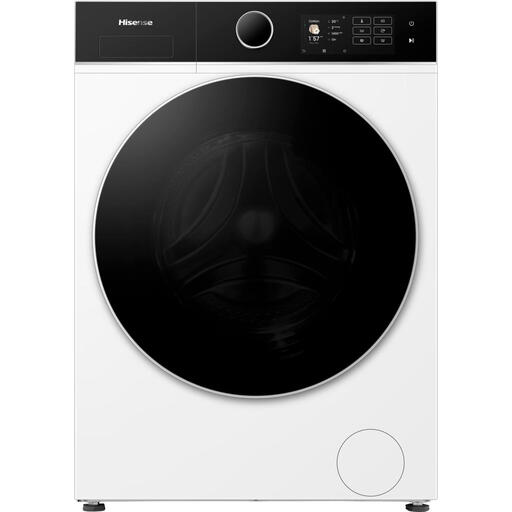 Image unavailable
Hisense WF5I8043BWF, 8 kg, 1 400 tr/min
Worth considering if your family loads regularly fill an 8 kg drum. The product name specifies an Inverter motor; check the instructions for the load limits of the programmes you use.
View on Joybuy
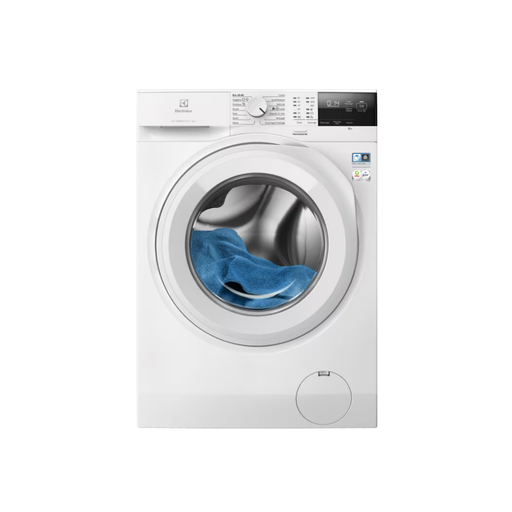 Image unavailable
Electrolux EW6FI4805AW, 8 kg, 1 400 tr/min
Another 8 kg front-loader option for regular everyday loads. The model name mentions SensiCare and Steam Hygiene, but that alone doesn’t establish washing or rinsing performance. Check the load limits for the programmes that suit your household.
View on Joybuy
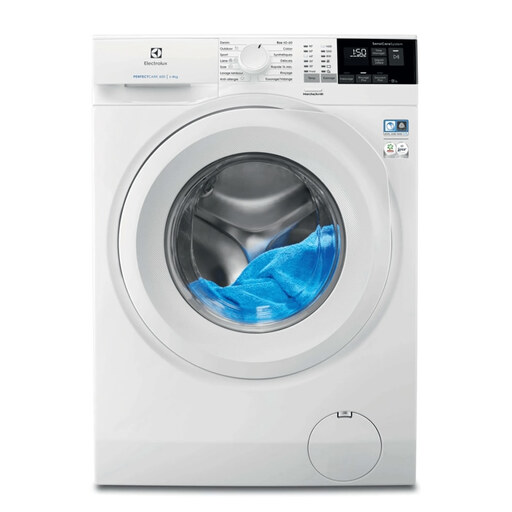 Image unavailable
Electrolux EW6F4109RA, 9 kg, 1 400 tr/min
Compare its stated 9 kg capacity with the loads you wash most often, rather than just the occasional oversized basket. The title gives an A energy rating, while the description says C. Check the label for the exact model before deciding.
View on Joybuy
 Image unavailable
Electrolux EW7FI259160V, 9 kg, 1 600 tr/min
For regularly large laundry baskets, this front-loader has a stated capacity of 9 kg and a maximum spin speed of 1 600 tr/min. If drying performance is a priority, compare the spin-drying efficiency class too: speed alone won’t tell you how much moisture remains.
View on Joybuy
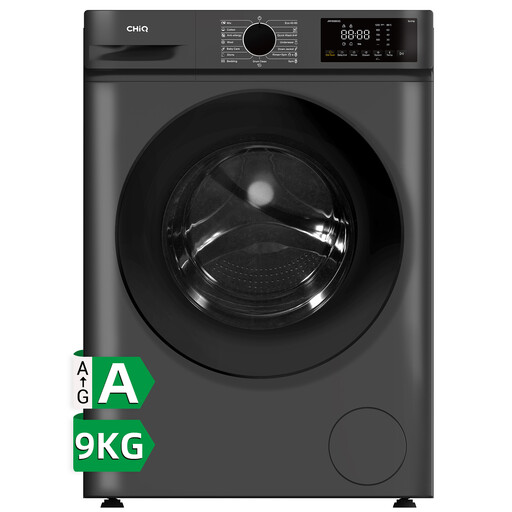 Image unavailable
CHiQ JW95883G, 9 kg, 1 400 tr/min
This 9 kg front-loader is worth considering if you regularly have large loads. Its listed dimensions are inconsistent, particularly the 465 mm measurement. Confirm the width, depth and space needed for installation before choosing it.
View on Joybuy
Frequently asked questions
Is a 9 kg washing machine always more efficient than a 7 kg model?
No. The capacity should suit your usual loads. ADEME says that 7 kg is often enough, while UFC-Que Choisir generally recommends 8 to 10 kg for families with children who regularly wash bulky items. A drum that’s too small can mean more cycles, while a larger drum that’s often underfilled won’t necessarily save energy or water.
Does the stated capacity apply to every programme?
No. The stated capacity refers to dry laundry on the cotton or Eco 40-60 programme. The load limits for synthetics, wool and delicates may be lower. If you often wash these fabrics, check the instructions for the model.
What should you compare on the energy label for frequent washes?
Compare kWh per 100 cycles, litres per cycle, the Eco 40-60 programme duration, spin-drying efficiency and noise. These figures relate to a reference cycle. To assess washing and rinsing, look for test results for the exact model too.
What is a washing machine’s durability index for?
It helps you compare factors related to the appliance’s lifespan and repairability. According to the Ministry for Ecological Transition, this score out of 10 takes factors such as spare parts, maintenance, ease of disassembly and resistance to wear into account. Consider these alongside the capacity and performance features that matter to your household.


