Which households is it for?

Households with regular large loads

You frequently wash sheets, towels, several people’s clothes or household linen, and want to reduce the number of cycles without choosing an oversized drum. UFC-Que Choisir recommends matching capacity to how often you actually wash these large loads.

Households alternating large and small loads

You sometimes have a large family load, but also run separate washes for sportswear, delicate fabrics or everyday clothes. In this case, it is worth checking whether the model you are considering has a function that adapts the cycle to the weight of the laundry.

Households restricted by limited space

You are installing the appliance in a kitchen or utility room where the width, depth, door clearance and type of opening limit your choice. A top-loading machine may make installation easier, although it generally has a smaller capacity than a front-loading model.

Buying priorities

8 to 9 kg front-loader

Choose this if: you do laundry frequently, but mostly wash everyday loads rather than thick duvets.

Trade-off: the drum will be less suitable for very bulky fabrics washed regularly.

10 to 12 kg front-loader

Choose this if: sheets, towels and household linen often make up a large load.

Trade-off: you need to allow for the model’s footprint and avoid choosing a large capacity that you will rarely use.

Compact top-loader

Choose this if: your layout requires top loading or offers limited floor width.

Trade-off: the capacity is usually more limited, making it less suitable for duvets and very large, frequent washes.

Priority What to check Your needs
Useful capacity Compare the capacity with your most frequent loads, not just the size of your household. UFC-Que Choisir states that 8 to 9 kg is generally sufficient for 3 to 4 people, while 10 to 12 kg becomes worthwhile when large loads regularly pile up. I want to combine household linen and towels without buying a drum that is too large for my usual washes.
Load adaptation Check exactly how the machine adjusts the water, programme duration or detergent dose, as well as which programmes support the function. A marketing name alone does not explain how it works. My large washes alternate with small loads of sportswear, delicate laundry or everyday clothes.
Installation Measure the height, width, depth, clearance for the door or lid, connections and delivery access. A top-loader also needs space above it for the lid to open. I need to be able to install and load the machine without obstructing a door, unit or movement around the room.
Energy label Compare kWh per 100 cycles, litres per cycle, the Eco 40-60 duration, capacity and spin noise level. ADEME recommends checking these figures to compare water use, energy consumption, spin performance and noise levels. I plan to run several cycles a week and want to take the stated noise, duration and consumption figures into account.

Mistakes to avoid

  • Choosing 12 kg or more simply because you have a large household

    A large drum is mainly worthwhile when you regularly wash large loads. An 8 to 9 kg model may already suit many households of 3 to 4 people, according to UFC-Que Choisir.

    For a few weeks, note how often you wash sheets, towels, duvets and other bulky fabrics before choosing a capacity of 10 to 12 kg.

  • Comparing only the energy-efficiency rating

    Two washing machines in the same class can differ in water consumption, programme duration or spin noise.

    Compare kWh per 100 cycles, litres per cycle, the Eco 40-60 duration, capacity and noise level on the exact model’s label.

  • Choosing a top-loader for regularly washing duvets

    A top-loader is a practical solution when space or top loading is the deciding factor, but its capacity is more limited in UFC-Que Choisir’s overview.

    Choose a top-loader for its installation configuration; if bulky laundry is a priority, also measure the available space for a front-loader with a suitable capacity.

  • Assuming load adaptation guarantees savings

    Modulation features vary between brands, programmes and usage conditions. Connected options may also require a Wi-Fi connection or user account.

    Check the function advertised for the model, its conditions of use and the energy-label data before making this option a deciding factor.

Brand guide

Bosch

The WGH254A0FR is an example of a 10 kg Bosch front-loader, listed at 1,400 rpm and measuring 845 × 598 × 590 mm, according to Bosch Électroménager France.

  • This format illustrates a 10 kg option with a depth of around 59 cm.
  • The ActiveWater Plus function mentioned by Bosch applies to another model; check the features of the exact model you choose.

Miele

The WED385 WCS is a 9 kg front-loader listed at 1,400 rpm and energy class A by Miele France.

  • Its specification sheet states 40 kWh per 100 cycles, 50 L per cycle and 72 dB during spinning on Eco 40-60, making it easier to compare with other specifications.
  • The manufacturer’s claims about speed or durability should be distinguished from the results of independent testing.

Samsung

The Bespoke AI WW11DB7B94GBU3 is an 11 kg front-loader listed at 600 × 850 × 600 mm by Samsung France.

  • It provides a reference point for a large-capacity front-loader with standard dimensions.
  • Samsung states that AI Energy mode depends in particular on the programmes, Wi-Fi and a Samsung account; also compare the label data.

Electrolux

The YW7T3713DA is a 7 kg top-loader, listed at 890 × 400 × 600 mm by Electrolux France.

  • Its 400 mm width may suit narrow spaces, while the SensiCare function is advertised as adjusting the duration to the load weight.
  • A 7 kg capacity is less suitable for thick duvets and repeated very large washes.

Joybuy products

Joybuy options for households looking for a 9 to 11 kg front-loader to handle frequent family loads, with models offering either advertised load adaptation or no such feature.

Samsung WD11DG6B85BEU3 11 kg washer-dryer

Samsung WD11DG6B85BEU3 11 kg / 6 kg washer-dryer

Worth considering for frequent large washes when the integrated drying function for smaller loads is also useful.

11 kg washing capacity and 6 kg drying capacity, class A for washing, 48 kWh/100 cycles, 54 L/cycle, 1,400 rpm, 72 dB and dimensions of 60 × 85 × 60 cm. AI Wash and automatic dosing are advertised as adapting settings to the load; Wi-Fi and SmartThings are required for remote monitoring features. The wash-and-dry cycle is listed at 7 h 32 min.

Joybuy

Haier X Series 11 HW100-BD14397PGU1 10 kg washing machine

Haier X Series 11 HW100-BD14397PGU1 10 kg washing machine

This 10 kg front-loader suits households that regularly combine household linen while alternating with smaller loads.

Class A, 41 kWh/100 cycles, 48 L/cycle, 1,400 rpm, 68 dB and dimensions of 595 × 850 × 611 mm. Smart AI, load detection and AutoDose are advertised; remote functions and some cycles require Wi-Fi, Bluetooth and the hOn app. The Eco 40-60 programme is listed at 3 h 58 min.

Joybuy
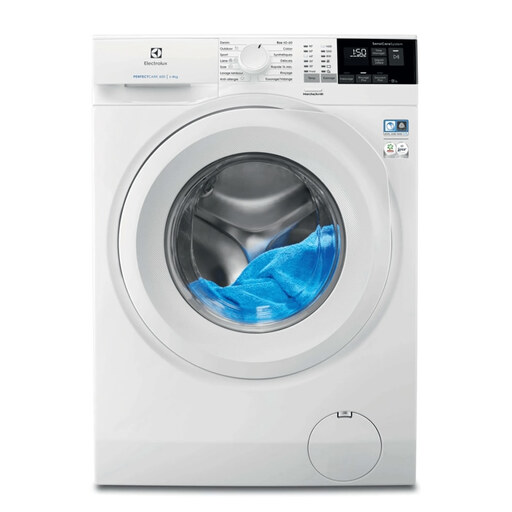
Electrolux EW6F4109RA 9 kg front-loading washing machine

Electrolux EW6F4109RA 9 kg front-loading washing machine

An option for frequent family laundry that generally stays within a 9 kg capacity.

9 kg capacity, spin speed of up to 1,400 rpm, 14 programmes and SensiCare function advertised as adjusting duration and water consumption according to the amount of laundry. Spin noise is listed at 78 dB; check the exact model’s energy label before buying.

Joybuy
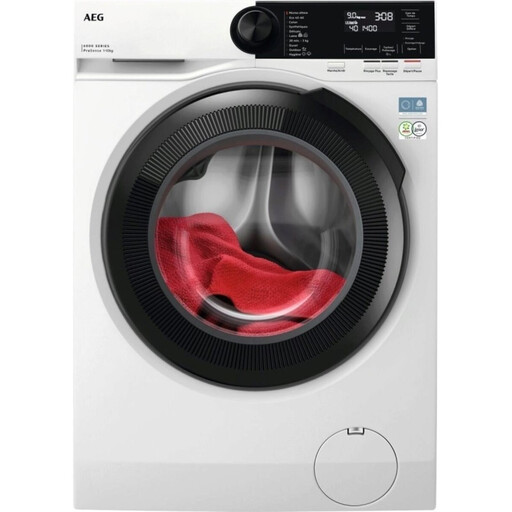
AEG LFR62E114S 10 kg front-loading washing machine

AEG LFR62E114S 10 kg front-loading washing machine

Worth considering if large loads, towels and bed linen come up regularly during the week.

10 kg capacity, energy class A and maximum spin speed listed at 1,400 rpm. Check the model’s label for water and energy consumption, the Eco 40-60 duration and spin noise, as well as the actual installation dimensions.

Joybuy
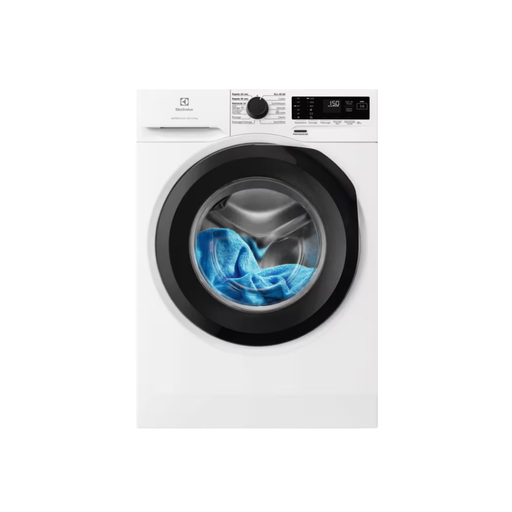
Electrolux EWF1410N2 10 kg front-loading washing machine

Electrolux EWF1410N2 10 kg front-loading washing machine

This 10 kg model is aimed at households that regularly fill a large-capacity drum.

Class A, 51 kWh/100 cycles, 52 L/cycle, spin speed of up to 1,351 rpm, 76 dB and dimensions of 847 × 597 × 658 mm. Its depth means you should measure the space, connections and door clearance; check the load-adaptation features for smaller loads if these are frequent.

Joybuy

Frequently asked questions

What capacity should you choose for a household of 3 to 4 people that does laundry frequently?

An 8 to 9 kg washing machine is generally sufficient, according to UFC-Que Choisir. Move up to 10 or 12 kg if large loads regularly pile up; reserve the very largest capacities for thick duvets, throws or very bulky fabrics washed frequently.

Does a large-capacity washing machine necessarily use less energy?

No. It can reduce the number of cycles when it is regularly filled properly, but you should compare the label figures for the model you choose. In particular, check kWh per 100 cycles, litres per cycle and the Eco 40-60 duration.

Is a top-loading washing machine suitable for large family washes?

It is mainly suitable when space requires top loading. In its overview, UFC-Que Choisir states that top-loaders do not exceed 8 kg; a 7 kg top-loader can be practical in a narrow room, but less suitable for duvets and repeated large loads.

What should you check on a washing machine’s energy label?

Check the energy class, kWh per 100 cycles, litres per cycle, capacity, Eco programme duration and spin noise. ADEME recommends consulting these figures when comparing appliances, while European requirements apply to the Eco 40-60 programme.

Does a washing machine have to display a durability index in France?

Yes. According to ADEME Infos, displaying a durability index has been compulsory in shops for washing machines since the beginning of 2025. It can complement comparisons of capacity, energy labels and appliance dimensions.