Regular family laundry
You want to match the machine’s capacity to the loads you actually wash, while also considering cycle times, spin performance and noise. ADEME recommends choosing a capacity that suits your needs.


For your household, choose a capacity that suits the loads you usually wash and the limits of individual programmes, rather than basing your choice solely on the number of people in your home. Then check the energy label, spin performance, noise levels and durability information. If you want to wash and dry in one appliance, compare its washing and drying capacities separately.
You want to match the machine’s capacity to the loads you actually wash, while also considering cycle times, spin performance and noise. ADEME recommends choosing a capacity that suits your needs.
You often wash large loads or bulky items, so you need to check the permitted load for your chosen programme—not just the maximum capacity advertised. LG France explains that the recommended capacity varies by programme.
You need both functions in the same appliance, so you’ll need to plan your laundry around its separate washing and drying capacities.
First, check that the capacities and programmes suit the loads you usually wash. Then compare energy consumption, spin performance, noise and maintenance requirements. ADEME recommends checking the energy label. A Que Choisir Ensemble survey of 4,350 newsletter subscribers, conducted from 15 to 24 May 2025, found that satisfaction was more mixed on issues including cycle length, access to the filter and noise during spinning.
| What to consider | What to check before buying | Who prioritises it |
|---|---|---|
| Capacity for your laundry | The maximum load for the relevant programme and any limits for the items you usually wash. | I want to wash the loads I actually put together, without assuming that every programme can take the maximum load. Around 29% of consumers prioritise capacity for their laundry. |
| Laundry routines and energy consumption | The duration of the programmes you’ll use and the consumption figures on the energy label. | I want to fit my regular washing around my schedule and compare how much energy the programmes use. Around 23% of consumers prioritise cycle planning and energy consumption. |
| Noise and spin performance | The noise level during spinning and the spin-drying efficiency class shown on the label. Also check the conditions for the programme. | If spin noise might disturb my household or drying depends on the spin, these factors matter when I choose a machine. Around 18% of consumers prioritise quieter, more comfortable spinning. |
| Durability, maintenance and spare parts | The durability index and its details, spare-parts availability conditions, access to the filter and the scope of the warranties. | I want to be able to maintain the appliance and understand what its warranties cover. Around 18% of consumers prioritise durability, maintenance and repairability. |
| Separate capacities in a washer-dryer | The separate washing and drying capacities, programme limits and information about the full cycle. | If I need just one appliance to wash and dry, I have to plan loads around both functions. Around 12% of consumers prioritise this option. |
The recommended load can vary by programme, so the maximum capacity advertised doesn’t guarantee that you can wash that weight of laundry on every cycle.
Check the load table in the manual for the exact model reference and the programme you plan to use.
Lower load limits may mean splitting your laundry across more cycles.
Samsung’s “up to 70%” claim is based on internal tests of a different model under specific conditions. It can’t predict how much you’ll save with this model when doing your laundry.
Compare the figures on the label for the model you’re considering, and distinguish them from marketing claims and the conditions attached to those claims.
A commercial motor warranty doesn’t describe the cover for all parts or the appliance’s lifespan. Bosch says its general spare-parts availability is subject to a condition marked with an asterisk.
Check the durability index, spare-parts conditions and the scope of each warranty separately.
The Bosch Série 6 WGG244F1FR front-loading washing machine is listed with a 9 kg capacity and a spin speed of 1,400 rpm. These specifications relate to this model, rather than being a comparative performance claim.
The Bespoke AI WW11DB7B94GEU3 is a front-loading washing machine listed with an 11 kg capacity and smart features.
The LG F164R33WRS washer-dryer is listed with a 10 kg washing capacity and a 6 kg drying capacity.
This selection features front-loading washing machines with stated capacities from 8 to 14 kg, for regular laundry or larger loads.
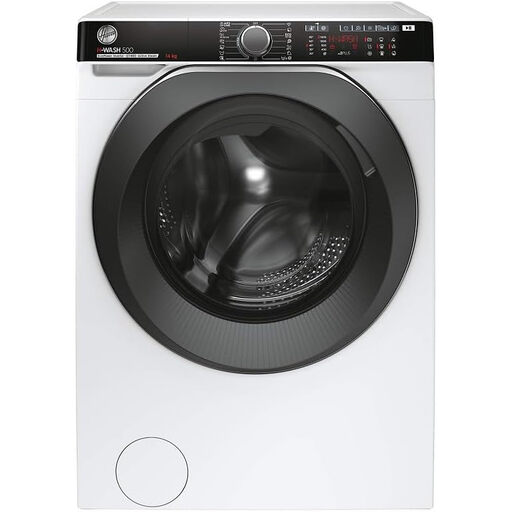 Image unavailable
Its stated capacity may suit you if you regularly wash large loads.
Stated capacity: 14 kg; maximum spin speed: 1,400 rpm; class B.
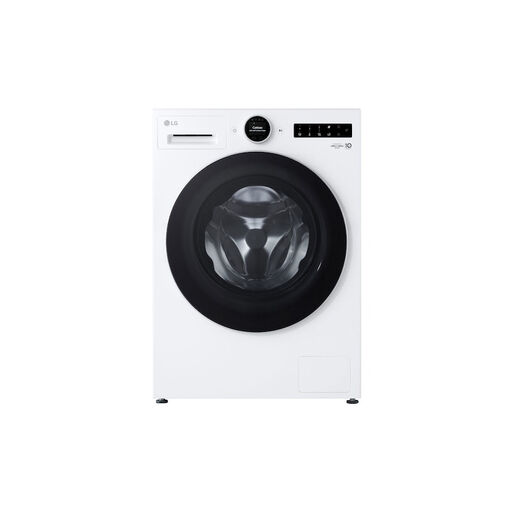 Image unavailable
This model may be worth considering if you regularly wash large loads.
Stated capacity: 11 kg; class A.
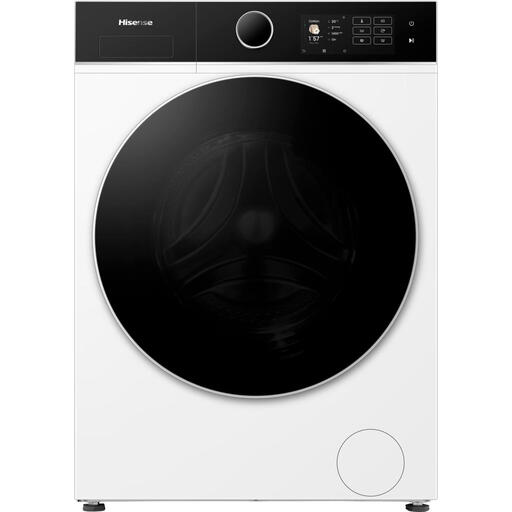 Image unavailable
Its stated 8 kg capacity may suit typical household laundry loads.
Stated capacity: 8 kg; maximum spin speed: 1,400 rpm.
 Image unavailable
Its stated capacity may be worth considering if you want to combine family laundry into larger loads.
Stated capacity: 10 kg.
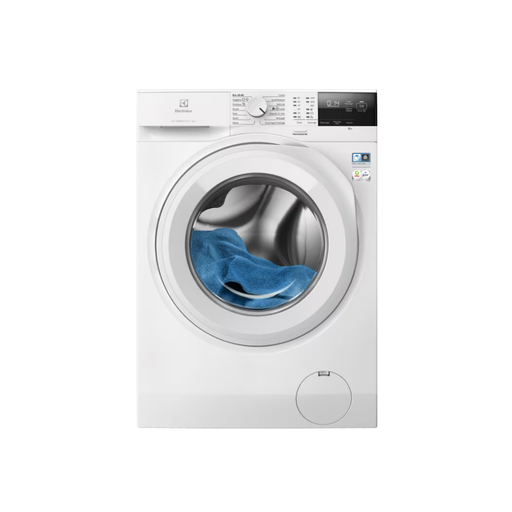 Image unavailable
Its stated capacity may suit regular, everyday-sized loads.
Stated capacity: 8 kg; maximum spin speed: 1,400 rpm.
No. ADEME recommends choosing a capacity that suits your needs and says that a 7 kg appliance is sufficient most of the time. This is a general guide, so you should still check your usual loads and the limits of individual programmes.
In particular, check how to access the filter and read the maintenance instructions for the exact model. Que Choisir Ensemble’s survey of its newsletter subscribers, conducted from 15 to 24 May 2025, highlighted access to the filter as one area where satisfaction was more mixed.
Yes. The French Ministry of the Economy says the index has applied to front-loading and top-loading washing machines since 8 April 2025. When comparing appliances, check the index and the information for each specific model.
No. Service Public distinguishes between mandatory statutory guarantees and commercial warranties, whose terms are set out in the contract. For the statutory guarantee of conformity, the fault must appear within two years of the goods being delivered. Check the scope of the advertised motor warranty separately.