Families doing frequent loads
If clothes and towels regularly fill the drum, compare your usual loads with 8–9 kg and 10–12 kg capacities. Que Choisir particularly recommends the latter range for households that regularly need to wash large loads.


For a household of three to four people, Que Choisir considers an 8–9 kg washing machine generally sufficient. A 10–12 kg model is a better fit when you regularly have large loads to wash. If your usual loads are modest, don’t choose a large drum just for the occasional duvet: check the load limits for each programme, the dimensions and the Eco 40-60 data for the model you’re considering.
If clothes and towels regularly fill the drum, compare your usual loads with 8–9 kg and 10–12 kg capacities. Que Choisir particularly recommends the latter range for households that regularly need to wash large loads.
If you regularly wash blankets or duvets at home, a larger drum may be worthwhile. However, check the manual for the permitted load on the programme you’ll use: the machine’s stated capacity alone won’t tell you whether it can handle these items.
If you also do small loads, compare the Eco 40-60 data for the exact models you’re considering, along with their cycle times at full, half and quarter loads. The consumption shown on the energy label doesn’t describe every one of your cycles individually.
Start with the size of the loads you wash most often, then look at the programmes, consumption and space needed for installation.
| Criteria | What to check | What you need |
|---|---|---|
| Capacity | Compare the weight of the dry laundry in your usual large loads with the machine’s stated capacity. Que Choisir generally puts the needs of a household of three to four people at 8–9 kg, and repeated large loads at 10–12 kg. | “The laundry baskets fill up quickly, but I want to choose based on the loads I actually wash, not an occasional duvet.” |
| Programmes | Check the manual for the maximum loads for cotton, synthetics and bulky items. Make sure the right programme is available for the items you wash regularly. | “I often wash bedding or blankets, so the relevant programme needs to handle their size and weight.” |
| Energy and water | Compare the A to G energy rating, kWh per 100 cycles and litres per cycle for the Eco 40-60 programme. According to the European Commission, the regulated energy and water figures are based on a combination of full and partial loads; also check the cycle times at different load levels for the exact model. | “Some loads don’t fill the drum, so I don’t want to assume that a larger capacity means lower consumption on every cycle.” |
| Installation and noise | Measure the space and access routes, then check the appliance dimensions, door clearance and the spin noise level stated for the model. | “The machine needs to fit all the way through to its installation space and be suitable for frequent spin cycles near living areas.” |
A high capacity is most useful for regular large loads. Que Choisir recommends matching the drum size to your laundry habits rather than automatically opting for the largest model.
Consider the size of your usual loads and how often you wash duvets or blankets before choosing between 8–9 kg and 10–12 kg.
A large drum that is often only partly full can lead to unnecessary water and electricity consumption.
The kilogram figure refers to dry laundry. It doesn’t mean that the synthetic, wool or delicates programmes can take the same load.
Check the load table in the manual for the exact model, especially for the fabrics you wash most often.
According to the European Commission, regulated data relates to the Eco 40-60 programme. The product information shows consumption based on a combination of loads, not a separate figure for every half-load wash.
Compare models on the same Eco 40-60 basis and, where available in their EPREL product information, check the cycle times at full, half and quarter loads.
Bosch France lists the WGH254A0FR as a 10 kg, front-loading washing machine with a spin speed of 1,400 rpm.
LG France lists the F24V92WHSTA, a 12 kg model rated A with a stated consumption of 57 L per cycle.
Samsung France lists the WW11BGA046AEEF, an 11 kg front-loading washing machine. The manufacturer says its SpaceMax technology provides a larger drum without increasing the machine’s external dimensions.
These 10–11 kg front-loading models are options to consider if you regularly wash large family loads. Check each model’s programmes and installation requirements before choosing.
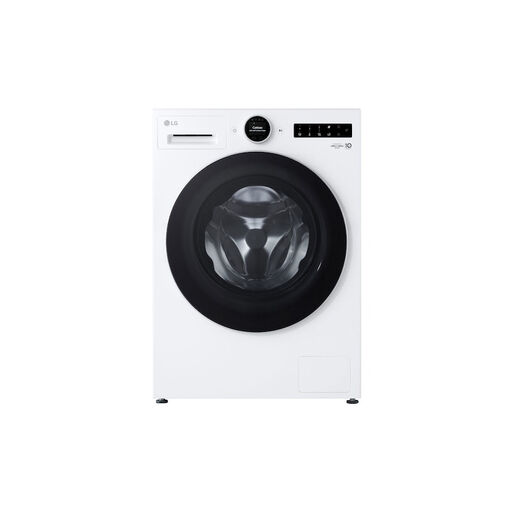 Image unavailable
Worth considering if you often have large family loads to wash. The product information gives it an A rating. For duvets, check the load limit for the relevant programme, as well as the space needed for installation.
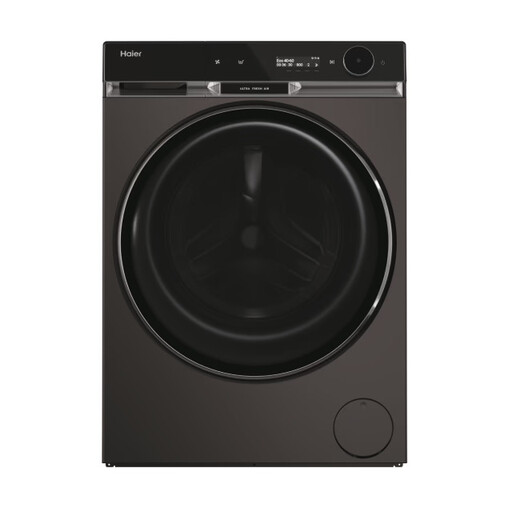 Image unavailable
This front-loading model is designed for households that regularly wash large loads. The product title lists an A rating, 1,400 rpm, AutoDose and Wi-Fi. Check the manual for programme load limits and make sure the connections are compatible with your home.
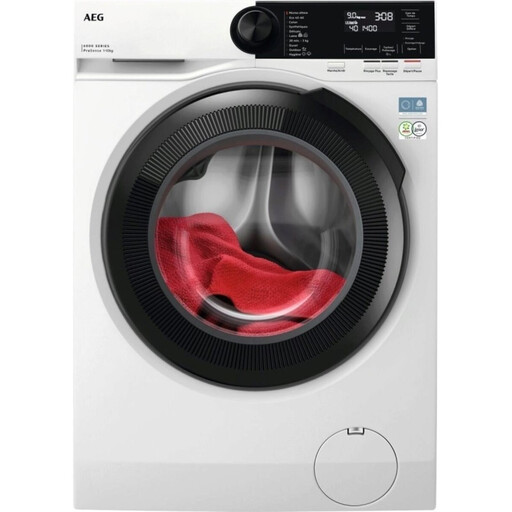 Image unavailable
Consider its 10 kg capacity in relation to the size of your bedding and towel loads. The product title lists an A rating and 1,400 rpm. Check the manual for load limits for different fabrics, and consult the regulated product information to compare Eco 40-60 consumption.
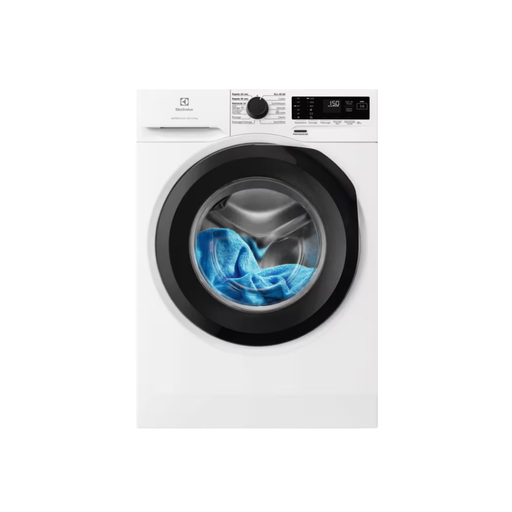 Image unavailable
Consider this model for regular large family loads rather than a drum that is often only partly full. The product title mentions an Anti-Allergy steam programme. Check the permitted loads for your fabrics and allow for the depth of 658 mm stated in the product information.
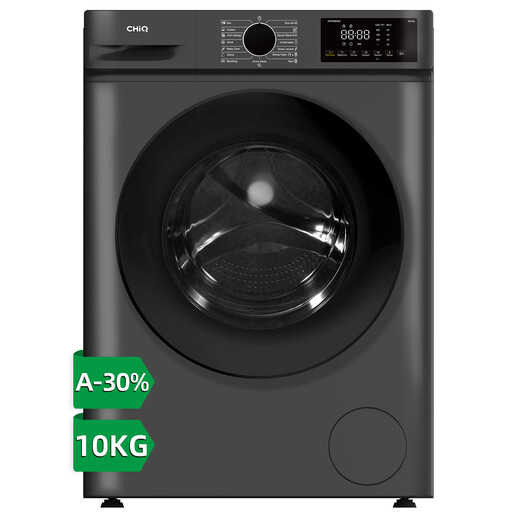 Image unavailable
Its 10 kg capacity may suit you if you regularly wash large loads and make use of that capacity. The product title lists 1,400 rpm and 16 programmes. For a duvet, check the programme limits in the manual. Compare its regulated energy information rather than interpreting the marketing claim “A-30%” as an energy rating.
Choose 10–12 kg if you regularly have large loads that fill the drum. For households of three to four people, Que Choisir considers 8–9 kg generally sufficient. However, if you often wash duvets and other bulky items, that may affect your choice.
First compare the A to G energy rating, kWh per 100 cycles and litres per cycle for the Eco 40-60 programme on the exact models you’re considering. The regulated data described by the European Commission combines full and partial loads. Also check the cycle times at full, half and quarter loads in the model’s product information, rather than assuming its capacity tells you how much it uses on a half-load cycle.
No. The stated capacity refers to a load of dry laundry, and the limits may be lower for fabrics other than cotton. Check the manual for the permitted load for synthetics, wool or the programme you’ll use for your household laundry.
It lets you compare factors such as the energy rating, energy and water consumption, and noise levels within a regulated framework. ADEME notes that the current scale runs from A to G. Don’t assume that Eco 40-60 figures apply to every other programme without checking.