According to UFC-Que Choisir, an 8–9 kg capacity is generally enough for a household of 3 to 4 people; 10–12 kg may be more suitable if you regularly have large loads to wash. If you wash duvets or alternate between large and small loads, check the limits for each programme and the model’s consumption figures too. The stated capacity alone, or the mere presence of load detection, won’t settle the question.
Which households are these capacities suited to?
The number of people in your household is a useful guide, but how often you wash large loads matters just as much.
Households of 3 to 4 people
For regular loads of clothes, towels and bed linen, 8–9 kg is generally enough, according to UFC-Que Choisir. If large loads are only occasional, choose your drum size based on your usual washing rather than the biggest load of the year.
Families with frequent large loads
If you regularly wash several large loads one after another, it’s worth considering the 10–12 kg range recommended by UFC-Que Choisir. This capacity is primarily suited to households with a recurring volume of laundry, not simply a particular number of people.
Households that often wash bulky items
If you regularly machine-wash thick duvets and throws, check that the relevant programme can handle their load and volume. A large stated capacity doesn’t tell you what the model’s Duvet programme can accommodate.
What should you check before choosing?
Start with the loads you wash every week, then compare the programmes and figures for the exact model you’re considering.
| What to consider |
What to check |
Your needs |
| Capacity |
Estimate the size of your usual loads and how often you wash large loads. UFC-Que Choisir generally recommends 8–9 kg for households of 3 to 4 people and 10–12 kg for frequent large loads. |
Would my regular loads often fill a large drum, or are my very large loads rare? |
| Programmes |
Check the manual for the maximum load allowed on the Duvet, Delicates, Wool or Quick programmes. Don’t assume the stated capacity applies to every cycle. |
I wash duvets or delicate fabrics, so the load limit for the relevant programme will determine whether the model is right for me. |
| Consumption |
Compare the energy rating, energy use per 100 cycles, water use per cycle and the duration of the Eco 40-60 programme. Gifam lists these as information provided on the energy label; they don’t cover every other programme. |
If I’m choosing between two similar capacities, I want to compare their figures on a like-for-like basis, without assuming my usual cycles will deliver the same results. |
| Varying loads |
Check whether the machine has load detection, then look at the model’s figures. UFC-Que Choisir notes that the effectiveness of adjusting settings to suit the load varies between brands. |
I also run small loads some weeks, but the advertised feature alone doesn’t guarantee lower consumption. |
| Durability |
Check the durability index shown for the exact model and look at the criteria behind it, alongside its capacity and programmes. |
I want to choose between two machines that both meet my laundry needs, rather than relying on the brand name alone. |
| Size |
Check the exact dimensions of the model and the space needed for installation, particularly if you’re considering a larger capacity. |
A larger drum won’t help if the machine won’t fit in the space available. |
Which pitfalls should you avoid?
-
Choosing a very large drum “just in case”
A machine that’s rarely full may use more resources than necessary. ADEME recommends matching capacity to your needs, while UFC-Que Choisir advises choosing a larger capacity for recurring large loads.
For a few weeks, keep track of how often you wash clothes, bed linen, towels and duvets. Choose a machine to suit the loads you regularly have.
-
Assuming the stated capacity applies to every programme
The reference figures for the Eco 40-60 programme don’t set the permitted load for Duvet, Delicates or Quick. Electrolux describes Eco 40-60 as a programme for normally soiled cotton declared washable at 40 °C or 60 °C.
Before buying, check the model’s manual and note the permitted loads for the programmes your household will use.
-
Assuming load detection guarantees savings
Load detection alone can’t predict how much energy or water a small load will use. UFC-Que Choisir points out that the effectiveness of load adjustment varies between brands.
Treat this feature as one factor among others, and compare the consumption figures and programmes for the exact model too.
-
Comparing only the stated capacities
Two models with similar capacities may have different energy label figures. Capacity alone also doesn’t tell you their durability index.
Look at the energy label, the cycles that are useful for your household and the durability index shown for each machine you’re considering.
Which brand ranges should you look at?
These examples highlight features to compare on specific models; they don’t describe every machine from each brand.
Bosch
Bosch offers washing machines with capacities from 7 to 10 kg. Its French product page lists a maximum capacity of 10 kg for the WGH254A0FR.
- The stated range gives you several capacities to consider, depending on how often your family does laundry.
- For the WGH254A0FR, as with any other Bosch model, check the programmes and their load limits in the relevant documentation.
LG
LG’s French product page for the F14R31WHSA lists an 11 kg capacity, load detection and a Duvet programme.
- This model is worth considering if you need an 11 kg capacity for frequent large loads.
- The Duvet programme and load detection don’t confirm the permitted load for that programme or the consumption figures for small loads.
Miele
Miele lists a 9 kg capacity for the WSI883 WCS PWash&TDos&Steam, as well as automatic load control.
- The model’s product page lists 49 kWh per 100 cycles and a duration of 199 minutes for Eco 40-60 at rated capacity.
- These manufacturer figures aren’t enough to conclude that this model will use less energy than another in the cycles your household runs.
Family washing machines available on Joybuy
These models have stated capacities of 9 to 11 kg, giving you options for both everyday family laundry and frequent large loads. For each one, compare the stated capacity with the programmes you’ll actually use.
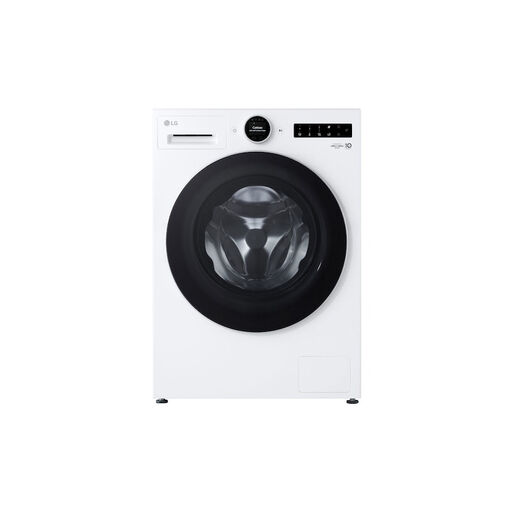 Image unavailable
LG F4WX851Y — 11 kg front-loading washing machine, A-rated
The stated 11 kg capacity is worth considering if you often wash large loads. The model is listed in white with an A energy rating. For duvets and other specialist fabrics, check the manual for the load limit of the programme you plan to use.
View on Joybuy
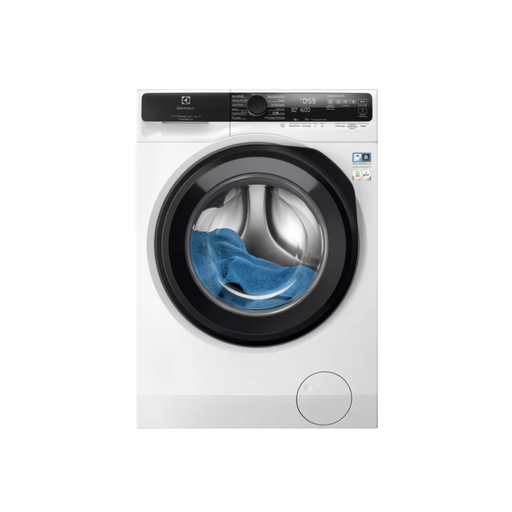 Image unavailable
Electrolux EW7FI259160V SteamCare SmartSelect — 9 kg, 1,600 rpm
With a stated capacity of 9 kg, this model falls within the range UFC-Que Choisir generally considers sufficient for a household of 3 to 4 people. If you often wash wool or delicate laundry, check the programmes and their maximum loads in the manual.
View on Joybuy
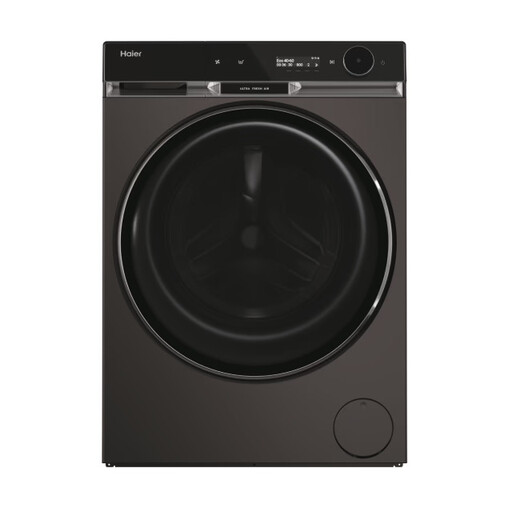 Image unavailable
Haier X Series 11 HW100-BD14397PGU1 — 10 kg, 1,400 rpm
The stated 10 kg capacity is worth considering if you regularly wash large loads. The model name lists an A energy rating and AutoDose. Check the fabric programmes, their load limits and the dimensions required for installation separately.
View on Joybuy
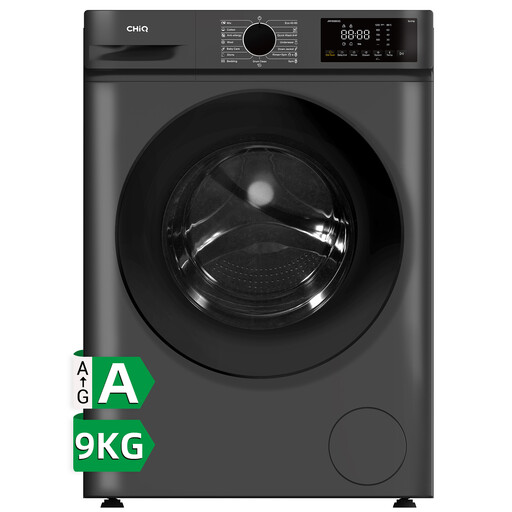 Image unavailable
CHiQ JW95883G — 9 kg front-loading washing machine, 1,400 rpm
The stated 9 kg capacity is worth considering for everyday family laundry. The model name mentions a 15-minute quick cycle, but check the manual for its permitted load. Also confirm the exact depth before deciding where to install it.
View on Joybuy
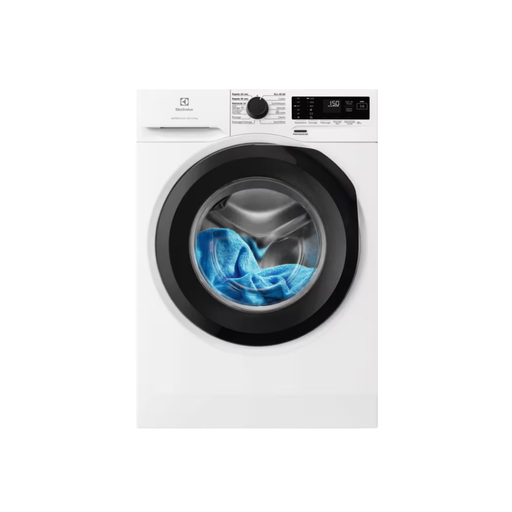 Image unavailable
Electrolux EWF1410N2 — 10 kg front-loading washing machine
The stated 10 kg capacity is worth considering if you often have several large loads to wash. The model name mentions TimeSave and Steam Anti-Allergy, but these names don’t confirm the permitted loads or any health benefits. Check the manual for the cycles your household needs.
View on Joybuy
Frequently asked questions
Does a family automatically need a washing machine with a capacity of at least 10 kg?
No. UFC-Que Choisir says that 8–9 kg is generally enough for a household of 3 to 4 people; 10–12 kg may be more suitable if you regularly wash large loads. Choose according to how often you have large loads, not just the size of your household.
Does the stated capacity apply to the Duvet programme?
Don’t assume it does. The Eco 40-60 programme figures don’t specify the permitted load for Duvet or another specialist cycle. Check the model’s manual before choosing it for bulky items.
Will load detection make a large drum economical when it’s only partly full?
Not necessarily. UFC-Que Choisir points out that the effectiveness of adjusting settings to suit the load varies between brands. Compare the model’s figures, and don’t assume the feature guarantees savings.
What should you compare on the energy labels of two washing machines?
Compare the energy rating, energy use per 100 cycles, water use per cycle and the duration of the Eco 40-60 programme, as shown by Gifam. These figures provide a common basis for this programme; check the cycles you’ll use most often separately.
How should you factor durability into your decision?
Check the durability index shown for each model you’re considering and assess it alongside the capacity, programmes and consumption figures. Don’t infer a machine’s score from the general reputation of its brand.


