Which households is this choice right for?
The size of your household matters, but how often you wash large loads is a better guide to choosing a capacity.
Families doing laundry very frequently
If you regularly run one load after another, consider 10–12 kg models: Que Choisir considers them a better fit in this situation. Compare their capacity with the loads you actually wash, rather than focusing only on the number of people in your household.
Households that often wash bedding and other home textiles
If sheets, throws or duvets feature regularly in your laundry, check the load limit for the relevant programme. The capacity shown on the product page alone doesn’t tell you whether a bulky item can be washed in one cycle.
Households with loads of varying sizes
If you alternate between small loads and large washes, check whether the specific model has a function that adjusts settings according to the weight of the laundry. For example, Electrolux says its EW6FI4130SA adjusts the cycle time, water and energy use; this feature isn’t available on all its models.
What are the key differences between 8–9 kg and 10–12 kg?
Start with the size of your usual loads, then check what the programmes and installation space actually allow.
| Criteria | What to check | Consider your needs |
|---|
| Usual load size |
Compare the size of your loads with the machine’s stated capacity. Que Choisir considers 8–9 kg generally sufficient for a household of three to four people, while 10–12 kg is a better fit when you regularly run one load after another. |
“Do I wash large loads often enough to make regular use of a 10–12 kg drum?” If not, you may rarely use the extra capacity. |
| Fabrics and programmes |
Check the maximum loads in the manual for the programmes you’ll use, particularly for synthetics, wool and duvets. Que Choisir gives the example of an 8 kg model limited to 3.5 kg for synthetics, 3 kg for jeans and 2 kg for wool. |
“I often wash bulky items, so I want to know whether the relevant programme can handle the load—not just whether the drum is labelled 10 kg.” |
| Small loads |
Check whether the exact model adjusts water, energy use or cycle time to the weight of the laundry. Also compare the information on its energy label, without assuming that an advertised feature guarantees savings. |
“Some weeks I also run small loads, so I’m looking for a machine with settings to suit both.” |
| Installation |
Check the width, height and depth of the model you’re considering, then measure access routes, the installation space and the clearance needed for opening the door and connecting the machine. |
“The machine needs to fit in the room and be easy to use once installed, as well as suit my laundry needs.” |
| Comparing models |
Compare the energy labels for the specific models you’re considering. For durability, ADEME notes that a durability index has been available for washing machines in France since early 2025. |
“I’ll use my machine often, so I want to compare more than just drum size before making a decision.” |
Which branded models are useful points of comparison?
These models illustrate features worth comparing; their functions and dimensions don’t apply across every product from each brand.
Bosch
The WGB256A0FR combines a stated capacity of 10 kg with a feature that Bosch says is designed for smaller loads.
- Bosch describes Active Water Plus as a feature of this model. Its water-saving figure is a manufacturer’s claim, not the result of an independent comparison presented here.
- Check the dimensions, programmes and energy label for the specific model before comparing it with others.
Samsung
The WW11DB7B94GBU3 is an example of an 11 kg front-loading washing machine. Samsung France lists its dimensions as 600 × 600 × 850 mm (width × depth × height).
- Its stated dimensions make it possible to check whether this model will fit in your chosen installation space.
- Don’t assume another Samsung model has the same dimensions or energy use based on this one; check the label for the product you’re considering.
Electrolux
The 10 kg EW6FI4130SA is an example of an option for households that alternate between different load sizes.
- Electrolux says SensiCare adjusts the cycle time, water and energy use to the weight of the load on this model.
- Check that this feature is available on the specific model you choose, and check its dimensions and energy label too.
Which large-capacity washing machines can you look at on Joybuy?
These Joybuy options have a stated washing capacity of 10 or 11 kg, for households considering regular large loads. One is a washer-dryer, so you’ll need to check its drying capacity separately.
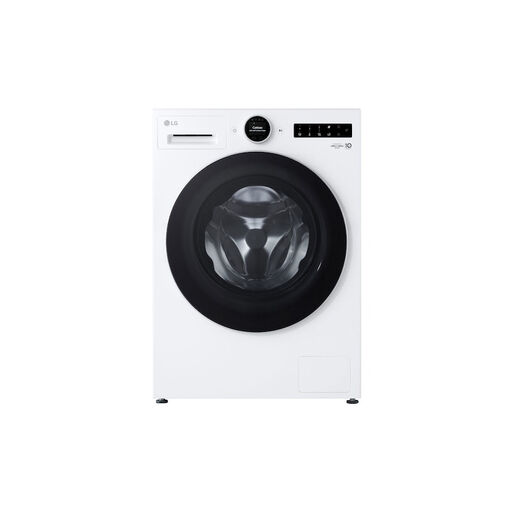 Image unavailable
LG F4WX851Y, 11 kg front-loading washing machine, Class A
Its stated 11 kg capacity is worth considering if you regularly wash large loads. Check the manual for load limits for bulky fabrics and the space needed for installation. The electrical safety of this model is listed as unconfirmed, so request the relevant documentation before using it.
View on Joybuy
 Image unavailable
Samsung WD11DG6B85BEU3, 11 kg washing capacity, 6 kg drying capacity
This washer-dryer has an 11 kg washing capacity, but a drying capacity of only 6 kg. A large load that has been washed may therefore exceed its drying capacity. Before buying, confirm the model code WD11DG6B85BEU3 and the specifications of the version being sold, as another code also appears in the product information.
View on Joybuy
 Image unavailable
Electrolux EWF1410N2, 10 kg front-loading washing machine
Its stated 10 kg capacity makes it worth considering if your family regularly has large loads to wash. For duvets or small loads, check the limits for each programme and the features of the specific model. A 10 kg capacity alone doesn’t answer either question.
View on Joybuy
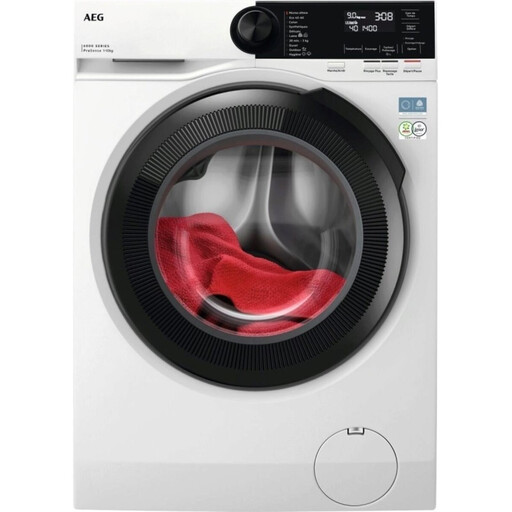 Image unavailable
AEG LFR62E114S, 10 kg front-loading washing machine, 1,400 rpm
Its stated 10 kg capacity may suit households that regularly wash large loads. If you’re considering this model for bedding, check the load limit for the relevant programme in the manual. Also compare its dimensions with your available space.
View on Joybuy
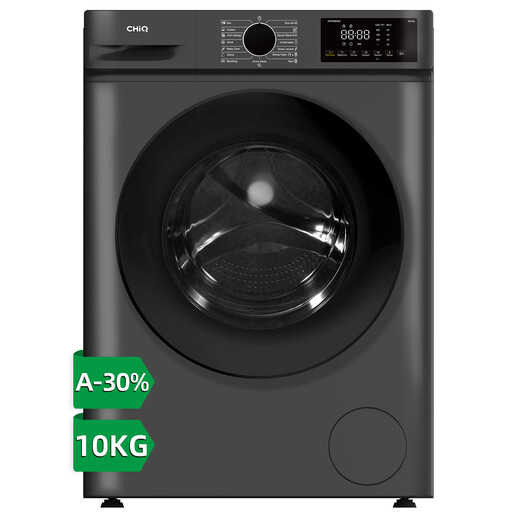 Image unavailable
CHiQ JW105883G, 10 kg front-loading washing machine, 1,400 rpm
Its stated 10 kg capacity makes it one to consider for large family loads. The mention of duvets doesn’t specify the load limit for the relevant programme, so check the manual and the machine’s full dimensions.
View on Joybuy
Frequently asked questions
Does a family always need a 10–12 kg washing machine?
No. Que Choisir considers 8–9 kg generally sufficient for a household of three to four people; 10–12 kg is a better fit when you regularly run one load after another. Compare these guidelines with how often you wash large loads. ADEME also recommends this approach to help you avoid choosing a capacity that doesn’t suit your needs.
Can a 10 kg machine wash 10 kg on every programme?
No. The permitted load depends on the programme and fabric. For an 8 kg model, Que Choisir gives limits of 3.5 kg for synthetics, 3 kg for jeans and 2 kg for wool. For a duvet or delicate laundry, check the limits in the manual for the specific model.
What should you measure before ordering a large-capacity washing machine?
Measure the width, height and, especially, depth of the model you’ve chosen, along with access routes and the clearance needed. Samsung France lists a depth of 600 mm for its 11 kg WW11DB7B94GBU3. Don’t assume this measurement applies to another model.
How can you compare energy use and durability in France?
Compare the energy labels of the models you’re interested in, rather than looking only at their capacity. If durability is also a factor in your decision, ADEME says a durability index has been available for washing machines in France since early 2025.
Should you use more detergent for large loads?
Not automatically. Follow the dosing instructions for the size of the load and the detergent you’re using. ADEME warns that using too much detergent won’t get your clothes cleaner and can cause build-up in the washing machine, leading to unpleasant smells.


