Households who like the same recipe
A large pizza means you don’t have to cook several boxes if everyone likes the topping. Still, compare the total weight with the number of people you’re feeding.


If everyone is happy with the same topping, one large pizza can mean fewer boxes to cook; if tastes or portion sizes vary, several smaller pizzas offer more flexibility. Check the total weight, available oven space, cooking instructions and allergens. ‘Family-sized’ doesn’t tell you how many people it will serve.
A large pizza means you don’t have to cook several boxes if everyone likes the topping. Still, compare the total weight with the number of people you’re feeding.
Several individual pizzas or mini pizzas make it easier to serve different portions without everyone having to share the same topping. Check how many products can cook at once.
A family-sized format doesn’t tell you about allergens or nutritional values. Check the product details and packaging for every recipe you’re considering.
First decide whether one topping will suit everyone, then check the quantity and cooking instructions against what you need for the meal.
| What to consider | What to check | Who is it for? |
|---|---|---|
| Format for sharing | Compare the net weight and the stated number of slices, where provided. | I prefer one topping if it suits everyone at the table; around 33% of consumers prioritise a format for sharing. |
| Preparation time | Check the preheating, appliance and cooking time instructions for the pizza you’ve chosen. | A weeknight dinner needs to fit the time I have and the oven I can use; around 27% of consumers put quick preparation first. |
| Ingredients and allergens | Check the ingredients list, allergens and any ‘may contain’ statements for the exact product. | If a recipe needs to meet a dietary requirement, I can’t rely on the product range name alone; around 20% of consumers prioritise this check. |
| Total quantity | Check the weight of each box and how many pizzas or mini pizzas it contains. | I want to make sure there’s enough pizza without having to add another box at the last minute; around 20% of consumers say the number of boxes needed is their top consideration. |
How many people a pizza serves depends on its weight, the portions you want and any sides you’re serving.
Work out how many people will be eating, then compare net weights. Choose several recipes if tastes differ.
A cheese pizza or one described as plant-based won’t automatically meet dietary requirements relating to gluten, milk or other ingredients.
Check the ingredients, allergens and any ‘may contain traces of’ statements on the packaging of the exact product you’re buying.
The DGCCRF warns that a rise in temperature during transport can increase food-related risks.
Pick up frozen food at the end of your shop, keep transport time to a minimum, use an insulated bag if possible and put it away promptly. Follow the storage instructions and don’t refreeze a pizza once it has thawed.
Dr. Oetker France offers Grandissima pizzas weighing 550 to 580 g, as well as smaller formats.
The range includes pizzas for sharing. Carrefour describes Fiesta 3 Formaggi as pre-cut into 12 slices and also lists a 600 g Fraîch’Up 4 fromages.
Carrefour’s Sensation pizzas include a 570 g 4 fromages and a 590 g 3 viandes.
E.Leclerc lists a 570 g Turini 4 fromages family-sized pizza, among other products.
Auchan’s frozen pizza range includes different types of base as well as mini pizzas.
For a meal to share, these products offer a choice of several mini pizzas or one larger pizza. Compare the total weight and recipe with your guests’ needs before deciding how many boxes to buy.
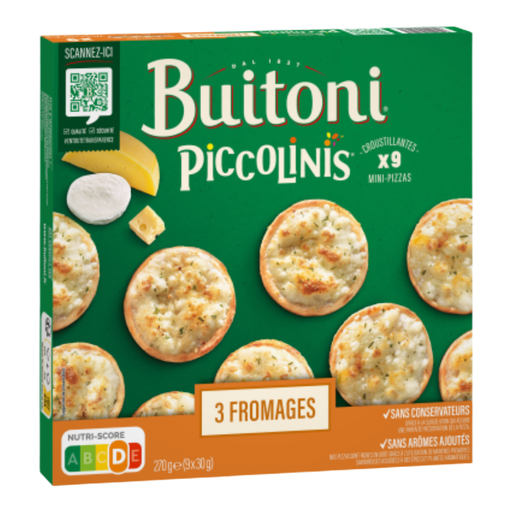 Image unavailable
Mini pizzas make it easy to share them around, provided everyone likes this recipe.
The box contains nine mini pizzas, weighing 270 g in total. Check that this is enough, and read the cooking instructions and allergen information on the packaging.
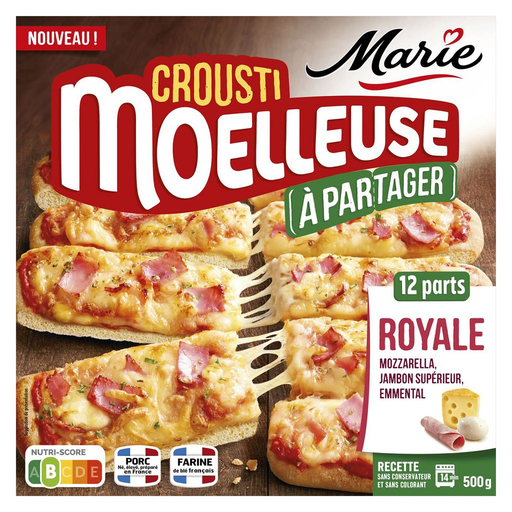 Image unavailable
This single pizza is a good choice for sharing when everyone wants the same recipe.
It weighs 500 g net, so compare that with the portions you’re planning. Check the cooking instructions and allergen information on the packaging.
Compare its net weight with the number of people eating and the portions you want, rather than relying on the word ‘family-sized’. Carrefour and E.Leclerc catalogues include pizzas for sharing weighing 570 to 600 g, but weight alone doesn’t guarantee a certain number of portions.
No. Only use a cooking method specified for the product you’ve bought. Dr. Oetker recommends using an oven rather than a microwave for its pizzas and advises against defrosting them before cooking. Check the instructions on your packaging before using another appliance.
Check the ingredients, allergens and any ‘may contain’ statements for the exact product. Information that applies to one recipe, such as ‘gluten-free’ or ‘lactose-free’, doesn’t apply to other pizzas from the same brand.
Keep them frozen and follow the storage instructions on the packaging. The DGCCRF recommends keeping transport time to a minimum and using an insulated bag if possible. Put the pizzas away promptly and don’t refreeze a product that has thawed.