Families sharing one pizza
If everyone wants the same recipe, a large pizza can make serving easier. Check its weight and how many slices you actually plan to serve: the size on the pack alone won’t tell you how much each person should have.


For lunch with a group, first decide whether you want one pizza to share or individual portions, based on how many people are eating, their tastes and any dietary requirements. Then compare similar recipes using the nutritional information, ingredients and Nutri-Score, where shown on the packaging. A family-sized format alone tells you nothing about the meal’s nutritional profile.
If everyone wants the same recipe, a large pizza can make serving easier. Check its weight and how many slices you actually plan to serve: the size on the pack alone won’t tell you how much each person should have.
The recipe name or the word ‘family-sized’ is no substitute for reading the label. Santé publique France describes Nutri-Score as a tool to help people understand nutritional information. If it’s shown, use it alongside the nutrition table and ingredients list.
Individual pizzas or mini pizzas let you choose different recipes. If anyone has an allergy, make sure you check the ingredients, allergens and any ‘may contain’ information on each relevant pack.
For a family lunch, first work out how many portions you need and whether everyone can eat the same recipe. Then compare the labels of the pizzas you’re considering, without assuming that size tells you anything about their nutritional profile.
| Criteria | What to check | Who it’s useful for |
|---|---|---|
| Nutritional composition | Compare similar recipes using the nutritional values per 100 g, then consider the portion you’ll serve. Also check the ingredients and Nutri-Score, if shown. | I want to choose between several recipes without relying on the word ‘family-sized’. Around 50% of consumers would put this nutritional comparison first. |
| Size and portions | Check the net weight and the number of portions stated, then compare these with the number of people eating and how much you want to serve. | We’re all eating the same recipe, but not necessarily the same amount. Adjusting portions would be the priority for around 30% of consumers. |
| Allergens and preparation | Check the allergens and any ‘may contain’ information for the exact product, as well as its storage and cooking instructions. | If guests have dietary requirements or there’s limited time to prepare lunch, I need to be able to check the pizza is suitable before buying it. Around 20% of consumers would prioritise these practical considerations. |
A pizza’s weight tells you how much is in the box, not its nutritional profile. Nutri-Score, where shown, is a simplified guide and doesn’t replace the nutrition table or ingredients list.
To compare similar recipes, check the information per 100 g and take the portion you’ll actually serve into account.
A short product name won’t tell you about every ingredient or possible traces. Pizza listings checked at Carrefour and Auchan include allergen information.
If you have an allergy, check the label on the product you’re buying rather than making assumptions based on the brand or another variety.
Frozen pizza must be transported, stored and cooked according to the instructions on the packaging. The products checked include instructions not to refreeze after defrosting.
Plan how you’ll get it home and into the freezer, and check the storage and cooking instructions for the specific product.
Auchan’s frozen pizza range includes Piccolinis. Their mini size lets you serve individual portions rather than cutting up one large pizza.
Auchan stocks the Ristorante range in several sizes, including individual and mini pizzas.
Carrefour’s range includes a 590 g soft-crust frozen 3 meat pizza, a size worth considering for a meal to share.
Auchan’s range includes individual pizzas and larger options, so you can choose according to how many people are eating and which recipe you fancy.
Auchan stocks a 520 g Italpizza 5 cheese pizza with a thin crust, worth considering if several people want to share the same recipe.
This selection includes larger pizzas to consider for sharing, as well as a vegetable recipe. For each one, compare the weight with the portions you’re planning and check the label for the variety you’re buying before making your choice.
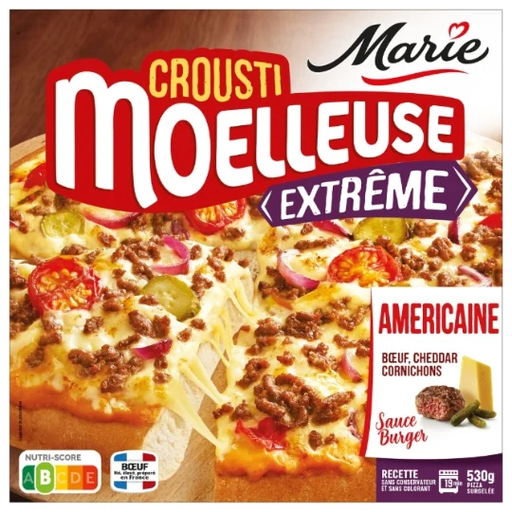 Image unavailable
For a lunch to share, check whether 530 g is enough for the portions you want to serve. Check the ingredients, allergens and nutritional information for the product you’re buying.
 Image unavailable
If several guests fancy a cheese pizza, compare the 480 g weight with the portions you’re planning. Check the ingredients and nutritional values for this recipe before choosing it over another pizza to share.
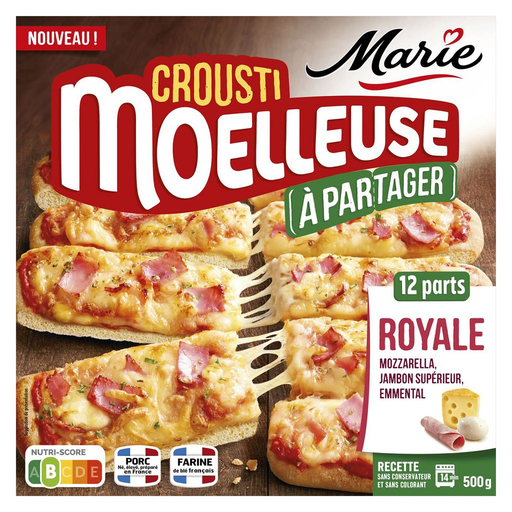 Image unavailable
This 500 g format is worth considering if everyone wants to share the same recipe. Work out how many portions you need and check the allergens and cooking instructions on the packaging.
 Image unavailable
If you’re looking for a vegetable recipe, first check how the 385 g fits into the portions you’re planning for lunch. Then compare its ingredients list and nutritional information with those of the other recipes you’re considering.
No: the size tells you how much there is to share, not what the lunch contains. To compare similar pizzas, check the nutritional values, ingredients and Nutri-Score, if shown on the packaging. Then consider the portion served and the rest of the meal.
First check the net weight and the portions you’re planning, then look at the ingredients, allergens, nutritional information, and storage and cooking instructions. When comparing two recipes, use the same basis, such as the nutritional values per 100 g.
Only if the recipe is suitable for everyone concerned: check the ingredients, highlighted allergens and any ‘may contain’ information on the exact product packaging. Individual pizzas can make it easier to choose different recipes, but you’ll still need to check each one.
The products checked advise against refreezing after defrosting. Follow the instructions on the packaging of the pizza you’ve bought, and keep to its storage conditions while transporting it and at home.