Who are these sizes for?

Families looking for a less crispy crust

If crust texture is a priority for a meal to share, a description such as “extra-soft crust” is a useful starting point. Lidl uses this wording for its Trattoria Alfredo, sold in packs of three 390 g pizzas. However, it doesn’t describe a texture suitable for a medical need.

People who want to cut a large pizza into slices

A single pizza can be convenient to cook and serve in smaller slices. Carrefour lists a 580 g pizza, E.Leclerc a 570 g Turini, and Dr. Oetker a 560 g Grandissima. They’re similar in size, but their descriptions don’t mean they have the same texture.

Households mindful of portions and allergens

Individual pizzas or a box containing several pizzas can make it easier to serve separate portions. If someone needs to avoid an ingredient, check the packaging for each product: the cheese pizzas mentioned here aren’t interchangeable in terms of their ingredients.

What should you look for before buying?

First, choose a crust that suits the meal you have in mind. Then compare the number of pizzas and the weight of each pack. Finally, check the label and cooking instructions for the product you’ve chosen.

What to consider What to check Who is it for?
Crust texture Compare descriptions such as “soft”, “thin and crispy” or “thick crust”. A gooey topping doesn’t tell you what the crust itself is like. If I want to avoid a very crispy crust for an everyday meal, the crust description matters more than the size. Around 39% of consumers prioritise this texture requirement.
Size and portions Check the net weight, how many pizzas are in the pack and whether you can cut the pizza into smaller slices after cooking. If I’m serving several people and don’t want to give everyone a large slice, I want to be able to divide the pizza easily. Around 23% of consumers prioritise sharing and portion sizes.
Allergens and recipe Read the ingredients, highlighted allergens and any “may contain” warnings on the pack you choose. If an ingredient needs to be avoided, the name “four cheese” isn’t enough to tell two recipes apart. Ingredients are the first thing around 23% of consumers look at.
Cooking and storage Check the product’s specific cooking method and time, as well as its storage instructions. If I need to keep mealtimes simple, I prefer to know what the pack says before choosing a size. Around 15% of consumers prioritise this kind of planning.

Mistakes to avoid

  • Assuming “soft” means suitable for dysphagia

    The wording used to describe a pizza is a marketing description, not an assessment of someone’s ability to swallow. France’s Haute Autorité de Santé (National Health Authority) stresses that food texture should be suited to each person’s ability to chew and swallow.

    If someone has a swallowing difficulty or has been prescribed a particular texture, ask their healthcare professional for advice rather than choosing a pizza based only on its crust description.

  • Choosing based on weight alone

    A large pizza is easy to share, but a crust described as thin and crispy doesn’t meet the same need as one described as soft.

    Compare the crust types before looking at the weight, then plan to cut the pizza into portions that suit the people you’re serving.

  • Assuming all cheese pizzas have the same ingredients

    The recipes mentioned contain wheat and milk, among other ingredients. Other allergens and “may contain” warnings vary from one product to another. France’s DGCCRF (Directorate-General for Competition Policy, Consumer Affairs and Fraud Control) states that allergens must be highlighted on the labels of prepacked foods.

    Check the ingredients list and allergen information on the pack you’re buying, even if you already know the pizza by name.

  • Breaking the cold chain

    Freezing doesn’t destroy most micro-organisms, according to Anses, the French Agency for Food, Environmental and Occupational Health & Safety. A defrosted pizza must not be refrozen.

    Pick up frozen food at the end of your shop, carry it in an insulated bag and follow the storage instructions on the packaging.

Brands to compare

Trattoria Alfredo (Lidl)

Lidl describes its extra-soft-crust four-cheese pizza as a pack of 3 × 390 g pizzas for sharing.

  • Lidl explicitly describes the crust as “extra soft”.
  • This description doesn’t guarantee the texture after cooking or mean it’s suitable for someone with dysphagia. Check that this product is available before planning your meal, too.

Dr. Oetker

The 560 g Ristorante Grandissima 4 Fromages is described as a large pizza that can be cooked on a single baking tray.

  • Its size makes it easy to serve several smaller slices from one pizza.
  • The crust is described as thin and crispy. The product information lists wheat and milk, with “may contain” warnings for soya and mustard.

Carrefour Sensation

The 580 g Pizza maxi 4 formaggi is made for sharing. Carrefour recommends cooking this product in the oven for 16 to 18 minutes.

  • The weight and cooking instructions can help you plan how to serve it.
  • A description such as “golden crust” doesn’t tell you whether the crust is soft. The recipe contains wheat and dairy ingredients, among others; check the label for allergens and traces.

Turini (Marque Repère / E.Leclerc)

E.Leclerc lists a 570 g stone-baked family-sized four-cheese pizza.

  • This size can be cut into slices for a meal to share.
  • The product description doesn’t say that the crust is soft. Check availability with your local E.Leclerc store.

Auchan

Auchan lists a 450 g Mega Cheese with a thick crust and cheese-filled edge, as well as a 200 g four-cheese pizza.

  • These two products offer different portion sizes and preparation options to consider.
  • The Mega Cheese is presented as an individual pizza with two slices. Although the topping is described as gooey, that doesn’t tell you whether the cheese-filled edge is easy to chew.

Buitoni

Buitoni products listed in Carrefour’s frozen food aisle include individual Air Fryer pizzas and Piccolinis mini pizzas.

  • These smaller sizes may be worth considering when you need to serve individual portions.
  • They may not be a substitute for one large pizza to share, and their size doesn’t tell you how easy they are to chew.

Pizzas available on Joybuy

These two MARIE pizzas offer different ways to share a meal. The 500 g Royal is described as suitable for sharing, while the 530 g American Soft & Crispy is described as serving two people. Their descriptions combine a soft or tender crust with a crispy element. Neither description guarantees that the pizza will be easy to chew after cooking.
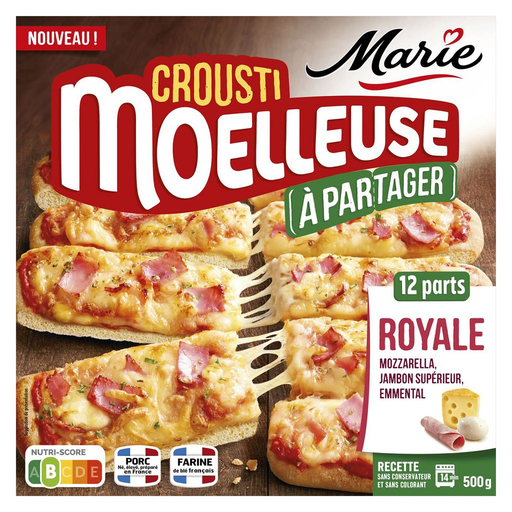
MARIE Royal pizza for sharing, 500 g

MARIE Royal Shareable Pizza 500 g

Described as a pizza to share, it may suit you if you’d like to cut your own portions.

Its description combines a tender crust with a crispy finish, so don’t assume the whole pizza will stay soft after cooking. Check the cooking instructions on the packaging and decide how many slices will suit you.

View on Joybuy
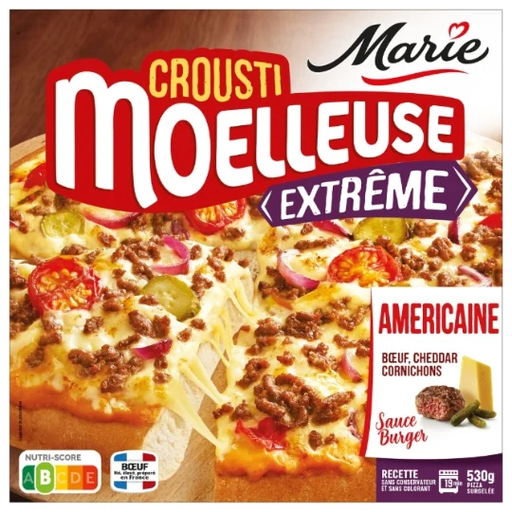
MARIE American Soft & Crispy pizza, 530 g

MARIE American Soft & Crispy Pizza 530 g

Described as a meal for two, this pizza is better suited to a small household than to a family meal based around one large pizza.

The description mentions a soft, airy crust as well as a crispy base. Check the cooking instructions on the packaging, and don’t assume the finished texture based on the product name alone.

View on Joybuy

Frequently asked questions

Is a “soft” frozen pizza suitable for someone with dysphagia?

The word “soft” isn’t enough to establish whether a pizza is suitable for someone with dysphagia. France’s Haute Autorité de Santé (National Health Authority) stresses the need to match food texture to each person’s ability to chew and swallow. Ask their healthcare professional for advice.

Should you choose one large soft pizza or several smaller ones?

A large pizza with a crust described as soft is a more direct match if you’re looking for that texture for a meal to share, but it doesn’t guarantee the texture after cooking. Several smaller pizzas can make it easier to portion out the meal. Compare the description of each one, as a smaller size doesn’t necessarily mean a less crispy crust.

Which allergens should you check in a cheese pizza?

At a minimum, check for wheat and milk in the cheese pizzas mentioned here, then look for any other allergens and “may contain” warnings specific to the recipe you’ve chosen. France’s DGCCRF (Directorate-General for Competition Policy, Consumer Affairs and Fraud Control) states that allergens in prepacked foods must be highlighted. Read the label on the pack you buy rather than relying on the pizza’s name alone.

Can you refreeze a pizza that has defrosted?

Don’t refreeze a defrosted pizza: this instruction appears in the storage guidance for the frozen products mentioned here. Anses, the French Agency for Food, Environmental and Occupational Health & Safety, reminds consumers that most micro-organisms survive freezing. Keep the product cold while you’re transporting it and follow the storage instructions on the pack.