What should you compare before buying?
First decide whether you need a meal to share or a single portion, then compare the recipes and their nutritional information. Choose any sides to suit the whole meal and the person’s needs; don’t assume those needs based on the family-sized format alone.
| What to consider | What to check | Who might find it most important? |
|---|
| Meal composition |
Compare the ingredients, allergens and nutritional values per 100 g, particularly protein and salt. Then consider them in relation to the portion actually served. |
If I’m putting together a meal for someone who needs to pay particular attention to their diet, I want to be able to look beyond the pack weight and check the recipe. Around 31% of consumers prioritise this nutritional fit. |
| Portion size and leftovers |
Check the net weight, the stated number of portions and the preparation and storage instructions. |
When someone eats alone or has a variable appetite, I’d rather be able to serve a suitable amount without leaving a large meal unused. A manageable portion comes first for around 31% of consumers. |
| Preparation |
Check what equipment is needed, the cooking instructions and how easy it is to serve the amount you want. |
If everyday meal preparation is difficult for the person or their carer, I look for a meal with steps they can manage. This simplicity is the top priority for around 19% of consumers. |
| In-store choice |
See which sizes and recipes your retailer offers, then check the label on the product you choose. |
If I rely on a particular shop, I need to find a size and recipe that suit the meal I have planned. Around 19% of consumers first look for an accessible choice. |
Retailers to explore for frozen meals
The frozen food ranges at these retailers offer options to compare, from individual meals to dishes for sharing. However, a retailer’s name alone won’t tell you about the ingredients or portion size of each recipe.
Carrefour
Carrefour’s frozen ready meal range includes, for example, 1 kg lasagnes and 900 g vegetable and potato pans.
- Different weights make it easier to compare sharing sizes.
- Check the ingredients, allergens and portions on the product you choose.
E.Leclerc
E.Leclerc’s Eco+ and Marque Repère ranges include frozen meals weighing 900 g or 1 kg, including lasagne.
- Several recipes are available in larger sizes.
- You can’t determine a recipe’s ingredients just from the range it belongs to.
Auchan
Auchan separates individual ready meals from family-sized frozen meals and states three or four portions for some products.
- This distinction helps you compare a 900 g or 1 kg meal with an individual portion.
- The stated number of portions is a guide to serving, not a personalised portion size.
Picard
Picard separates individual meals from frozen meals for sharing. For example, one 900 g vegetable and potato pan is listed as serving three to four people.
- The categories let you compare two different ways of serving a meal.
- For meals to share, check the weight of each recipe rather than relying on the category name alone.
Lidl
Lidl France has a frozen ready meal range.
- The range gives you a place to look for frozen recipes among the products available.
- Check the size of the product you choose. The range alone doesn’t tell you whether a meal is large enough to share.
Aldi
Aldi France includes frozen products in its range.
- The range offers another place to explore frozen meals.
- Before choosing a product for a shared meal, check its weight, recipe and nutritional information.
An individual-portion option on Joybuy
This 300 g lasagne is an example of an individual meal for when you’re not sharing. It isn’t a substitute for a family-sized meal weighing 800 g to 1 kg. Choose between the two sizes based on how much you need to serve and whether you can manage the leftovers.
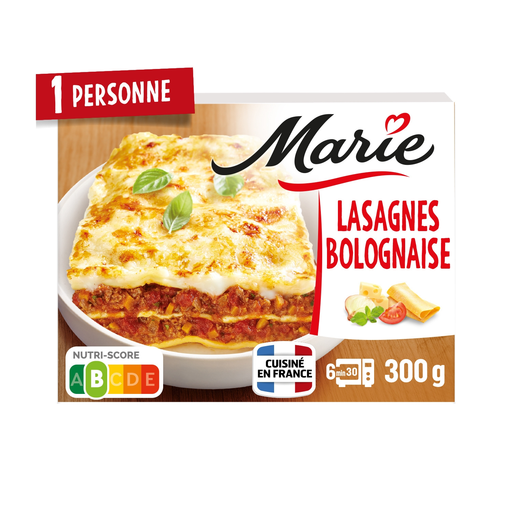 Image unavailable
MARIE Bolognese Lasagne, 300 g
This individual size may suit someone eating alone rather than a group of people. Compare the label and the amount actually served with the person’s needs.
View on Joybuy
Frequently asked questions
Does a 1 kg family-sized frozen meal provide four meals for an older person?
Not necessarily. Auchan lists four portions for some 1 kg products, but that number doesn’t determine someone’s appetite or what else is on their plate. Plan how much to serve and follow the preparation and storage instructions for the meal you choose.
What information should I compare on the packaging?
Compare the ingredients list, allergens, net quantity and nutritional information, paying particular attention to the values per 100 g and the amount in the portion you’ll serve. The DGCCRF includes the nutrition declaration among the information required on prepacked food labels. If the product has a Nutri-Score, it can offer an additional guide.
Is Nutri-Score enough to choose a meal for an older person?
No. According to the Ministry of Health, Nutri-Score summarises a product’s overall nutritional quality. It doesn’t replace checking the portion served, allergens or any individual medical advice.
Should you always cut salt out of an older person’s meals?
No. Manger Bouger advises people over 75 not to cut out salt without medical advice. You can compare the salt content listed for different meals, while following advice from a healthcare professional where relevant.
When should you ask for advice rather than choosing by size alone?
If someone’s appetite stays low, you’re concerned about weight loss or they’re finding it difficult to eat, ask a healthcare professional for advice instead of choosing based only on pack size. Manger Bouger reminds us that malnutrition is a risk to watch for in people over 75.


