People who cook and portion their own noodles
If you prepare your own toppings and cook only the amount you need, Auchan’s 1 kg and 500 g packs of dried noodles are worth considering.


To make each meal just the right size, choose a large pack of dried noodles and measure out the amount you want to cook. If you’d rather have individual portions ready to go, look for multipacks of instant noodle sachets. A pack of precooked noodles can also be quick to prepare, but check the number of portions per unit, the ingredients and the storage instructions before choosing one for solo meals.
If you prepare your own toppings and cook only the amount you need, Auchan’s 1 kg and 500 g packs of dried noodles are worth considering.
If you want to count out portions without weighing the noodles, a multipack can be more convenient than a large bulk bag. Auchan, for example, stocks Yum Yum noodles in packs of 5 × 60 g.
A sauce or seasoning changes the product’s ingredients. The De Zhuang satay product stocked by Carrefour contains wheat, soya and peanuts, among other ingredients. Check the label for the specific variety you choose before buying a multipack.
For individual meals, start by thinking about how much you want to prepare each time, then choose between measuring out your own portions and using individual sachets. Finally, check the ingredients and instructions on the exact pack you’re buying.
| Criteria | What to check | Who is this for? |
|---|---|---|
| Amount per meal | Net weight, number of units and portions stated per unit. | If I’m cooking for myself, I want to cook the amount I need without having to prepare the whole pack; around 31% of consumers prioritise portion size. |
| Quick preparation | Number of individual sachets and preparation instructions. | When I’m in a hurry, I’d rather grab a sachet than weigh out loose noodles; speed comes before other criteria for around 25% of consumers. |
| Usable quantity | Pack size, date marking and instructions for storage after opening. | I buy enough for several meals, but don’t want to leave some of the pack unused; avoiding waste is a priority for around 25% of consumers. |
| Ingredients | Ingredients and allergens in the exact recipe, including the sauce. | If some ingredients aren’t suitable for me, I need to rule out the recipe before buying several units; suitability is the top criterion for around 19% of consumers. |
Carrefour’s De Zhuang satay pack contains six 460 g units, each stated to serve two generous portions. So the number of units doesn’t necessarily match the number of individual meals.
Check the total weight, the weight of each unit and the stated number of portions separately.
The De Zhuang satay recipe stocked by Carrefour contains wheat, soya and peanuts. Knowing the brand or pack format doesn’t tell you what’s in a different recipe.
Check the ingredients and any highlighted allergens on the label for each variety.
The Directorate-General for Competition Policy, Consumer Affairs and Fraud Control distinguishes between a use-by date, which must not be exceeded, and a best-before date, which relates to product quality when the packaging remains intact.
Read the date wording on the pack and follow the storage instructions, especially after opening.
Auchan stocks its own-brand noodles in 1 kg and 500 g packs, both worth considering if you want to cook individual portions.
Auchan stocks Yum Yum instant noodles in multipacks of 5 × 60 g.
Carrefour lists a De Zhuang precooked satay noodle product in a pack of 6 × 460 g.
These products offer two ways to plan ahead for several individual meals: separate sachets of instant noodles or dried noodles that you portion yourself. Consider the weight of each sachet and any preparation needed in relation to your meals.
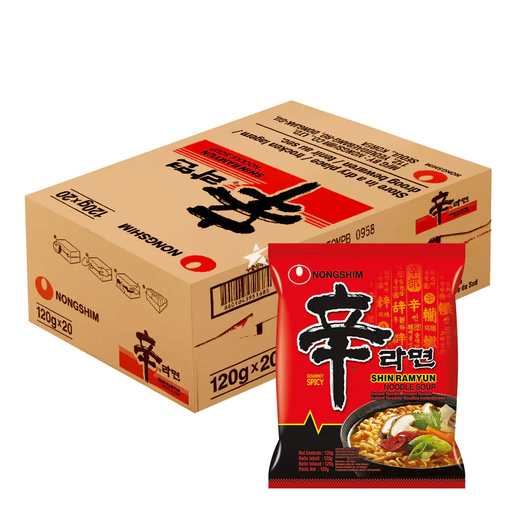 Image unavailable
The individual sachets are handy if you want to portion out meals without weighing the noodles.
Preparation is stated to take 4 to 5 minutes. Check whether 120 g per sachet is the right amount for one meal; this product contains wheat and soya.
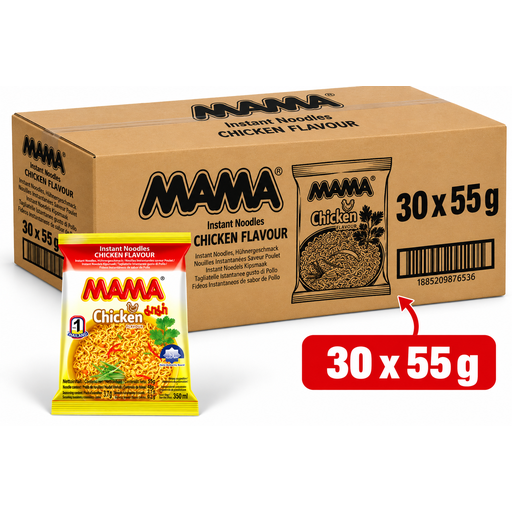 Image unavailable
The 30 individual sachets make it easy to plan how many portions you’ll need in advance.
Prepare the noodles with hot water; check the pack for the exact time and make sure 55 g is enough for you. The information provided for this product lists wheat, celery, sesame and soya.
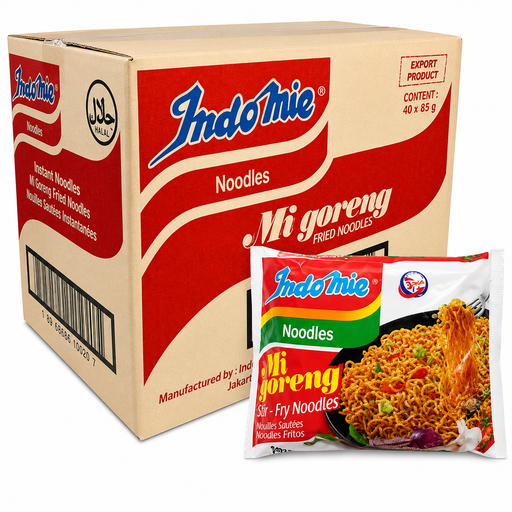 Image unavailable
The 40 individual sachets save you from measuring out a portion from a large pack every time you prepare a meal.
Check whether 80 g per sachet is right for your meal. The ingredients list includes wheat and soya, while the allergen information is contradictory. Check the pack label before buying.
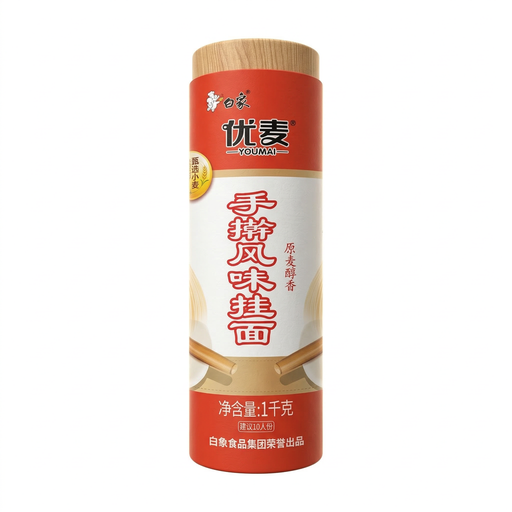 Image unavailable
This pack of dried noodles is a good choice if you prefer to measure out the amount you want to cook.
The stated cooking time is 5 to 7 minutes in boiling water. This product contains wheat; check the pack for storage instructions after opening, too.
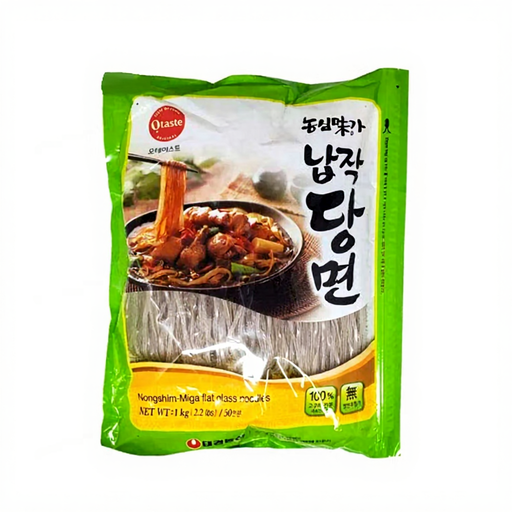 Image unavailable
The 1 kg pack lets you measure out portions for several meals instead of using pre-portioned sachets.
The instructions say to cook for 10 minutes, then rinse and drain. If you need to avoid certain ingredients, check the label for the exact variety.
Yes, if you can use it a little at a time. A pack of dried noodles lets you measure out each portion as you cook, while a multipack already separates the sachets. However, check the amount in each unit: a large pack won’t necessarily contain portions for one person.
Check the net quantity, ingredients, allergens, nutritional information and storage instructions for the variety you’ve chosen. The Directorate-General for Competition Policy, Consumer Affairs and Fraud Control reminds consumers that allergens must be highlighted on the labels of prepacked foods.
Follow the storage instructions on the pack once it’s open. The Directorate-General for Competition Policy, Consumer Affairs and Fraud Control distinguishes between a use-by date, which must not be exceeded, and a best-before date. You should also consider the condition of the packaging and follow the product’s own instructions.
The De Zhuang satay product stocked by Carrefour contains wheat, soya and peanuts, among other ingredients. If any of these affect you, check the label of a different product rather than assuming all noodles in the same format have the same ingredients.