What should you look for?
Compare the fat content on the same per-100 g basis, then check the format and the amount you’ll actually serve. Finally, look at any other label information that matters to your purchase.
| Criterion |
What to check |
Who this matters to |
| Fat |
Compare the fat content per 100 g across frozen pizzas, then work out how much that means for your portion. |
If my main aim is to limit fat, the recipe matters more to me than the size of the box. Around 46% of consumers would make this their priority. |
| Format and portions |
Check the net weight, number of pizzas and number of portions you expect to serve before deciding how much to dish up. |
For a meal with other people, I want to know whether I’m opening one large pizza or can take a single pizza from a multipack. Sharing would be the top priority for around 27% of consumers. |
| Other information |
Also read the information on saturates, salt, ingredients, listed allergens and cooking instructions for the specific product. |
Once I’ve compared fat content, I want to take account of any other information that’s useful for my meal and how to prepare it. Around 27% of consumers would prioritise these checks. |
Brands and ranges to compare
These products offer comparison points for specific recipes and formats. The composition of one pizza doesn’t apply to other products from the same retailer or brand.
Carrefour / SIMPL
The SIMPL Margherita listed by Carrefour comes in a 900 g multipack containing three 300 g pizzas.
- Its product listing gives a fat content of 4.2 g per 100 g and makes it easy to distinguish the pack weight from the weight of one pizza.
- This figure applies only to this SIMPL Margherita; check how much you plan to serve.
Carrefour Extra
The Carrefour Extra four-cheese pizza featured weighs 340 g. It’s a useful recipe comparison, rather than an example of a large sharing-size format.
- Carrefour lists 15 g of fat per 100 g for this product, a figure that can be compared directly with the per-100 g values for other pizzas.
- Its weight and composition don’t represent other Carrefour Extra recipes.
TURINI / Marque Repère E.Leclerc
The TURINI four-cheese pizza listed by E.Leclerc is a single family-size pizza weighing 570 g.
- Its listing gives the following figures per 100 g: 10.3 g of fat, 4.5 g of saturates and 1.2 g of salt.
- A larger format doesn’t determine how much you’ll eat or mean you can skip comparing the recipe.
Auchan
The 200 g Auchan four-cheese pizza offers a point of comparison for an individual pizza, rather than a family-size format.
- Auchan lists a fat content of 9.8 g per 100 g for this product.
- A 200 g pizza on its own won’t meet the same sharing need as a multipack or a large pizza.
Dr. Oetker
The Ristorante recipes featured include Mozzarella and a vegetable pizza. Each product needs to be compared separately.
- Dr. Oetker lists 12 g of fat per 100 g and 42 g for the whole 355 g Ristorante Mozzarella pizza.
- The name of a topping alone doesn’t tell you the nutritional values or number of portions for another Ristorante recipe.
Products available on Joybuy
This selection includes a pizza described as suitable for sharing, mini pizzas and other products to consider depending on their format. Rösti Pockets and lahmacuns shouldn’t be confused with a traditional frozen pizza. For each product, check the product name, portion size and nutritional information before choosing.
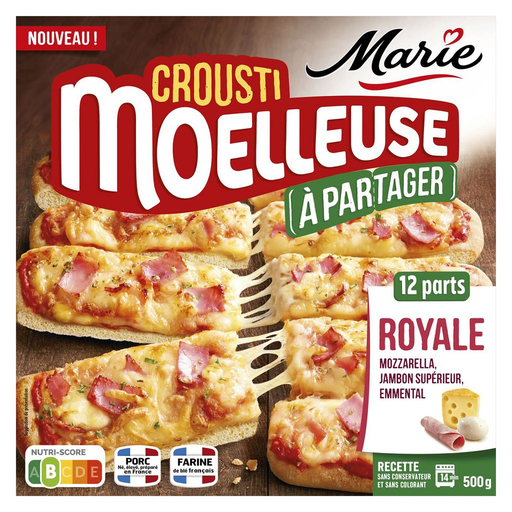 Image unavailable
MARIE Royal Shareable Pizza 500 g
The 500 g format is described as suitable for sharing, so it may work well if you decide how much to serve each person.
Check the pack for the number of portions and nutritional values for the portion you choose.
View on Joybuy
 Image unavailable
CROSTA ET MOLLICA Mini Pizzas Margherita 270 g
These mini pizzas may suit anyone who’d rather serve smaller individual pieces than cut up a large pizza.
Check how many mini pizzas are in the pack and the nutritional information for the amount you’ll serve.
View on Joybuy
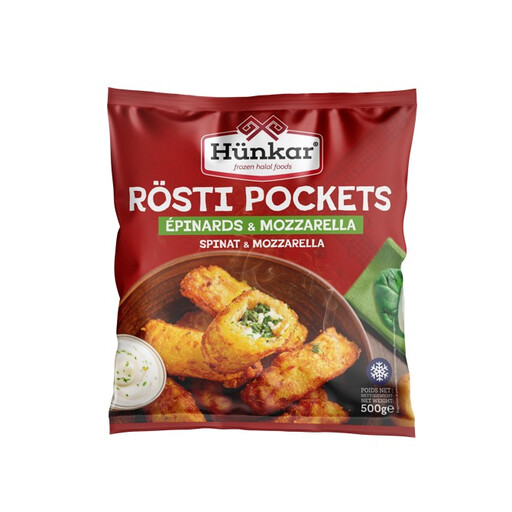 Image unavailable
HÜNKAR Rösti Pockets Spinach & Mozzarella 500 g
This spinach and mozzarella product is a different kind of frozen food, not a traditional pizza to compare like for like.
The pack is listed as 500 g; check its ingredients and how much you plan to serve.
View on Joybuy
Image unavailable
HÜNKAR Lahmacun Turkish Pizzas Halal x3 540 g
This pack of three lahmacuns may be worth considering if you want several individual items to serve. Lahmacun is a distinct speciality, rather than a traditional frozen pizza.
The stated total weight is 540 g. Check the nutritional information for the amount you’ll eat, along with any dietary details that matter to you, on the exact product packaging.
View on Joybuy
 Image unavailable
DR. OETKER Ristorante Vegetable Pizza 385 g
This 385 g vegetable pizza gives you another recipe to consider, but its fat content can’t be inferred from the topping alone.
To see if it’s right for your meal, check the per-100 g values, how much you plan to serve and the cooking instructions.
View on Joybuy
Frequently asked questions
Is a family-size pizza necessarily lower in fat?
No. ‘Family-size’ describes how a pizza is intended to be used or its format, not its fat content. Carrefour lists 4.2 g per 100 g for its SIMPL Margherita multipack of 3 × 300 g, while E.Leclerc lists 10.3 g per 100 g for the 570 g TURINI family-size four-cheese pizza. Compare the recipes per 100 g, then check how much you plan to serve.
Should I check the values per 100 g or for the whole pizza?
They answer different questions: the per-100 g value helps you compare recipes, while the figure for the whole pizza or your portion helps you assess how much you’ll consume. For the 355 g Ristorante Mozzarella pizza, Dr. Oetker lists 12 g of fat per 100 g and 42 g for the whole pizza. If you’re only having part of it, focus on the amount you actually serve.
What else should I check besides fat?
Look at the saturates, salt, ingredients and any allergens listed for the specific product. Manger Bouger recommends limiting salty products and suggests using Nutri-Score to compare products eaten on the same occasion. The score doesn’t replace checking the nutritional values and ingredients.
How can I cook a frozen pizza without getting the instructions wrong?
Follow the storage and cooking instructions on the packaging of the pizza you buy. Cooking times, temperatures and methods can vary from one recipe to another, so don’t assume the instructions for a different product will apply.


