Families short on time at lunchtime
A meal you simply heat up means fewer preparation steps. Before deciding whether you’ll need a side dish, though, check the stated portions and how much of the recipe is made up of vegetables.


If you need to serve several people quickly, a family-sized frozen ready meal could be a good option, provided you check its ingredients and the number of portions stated. If you’d rather choose the vegetables and serving sizes separately, put lunch together using frozen products and other ingredients, but allow more time for preparation. A family-sized pack and any Nutri-Score shown are no substitute for reading the label.
A meal you simply heat up means fewer preparation steps. Before deciding whether you’ll need a side dish, though, check the stated portions and how much of the recipe is made up of vegetables.
Combining frozen vegetables with other lunch ingredients lets you choose each component and serving size separately. The trade-off is that you’ll need to allow time to prepare them.
If you have an allergy or dietary requirement, compare the ingredients and allergens for the exact recipe, then check its nutritional information, quantity and storage instructions.
Choose this if: you want to serve several people with minimal preparation.
Bear in mind: the manufacturer decides the recipe and portion sizes; depending on the meal’s ingredients, you may want to serve it with a side dish.
Choose this if: you want to decide separately which vegetables to serve and how much.
Bear in mind: you’ll need to buy, prepare and bring together several ingredients.
| Factor | What to check | Consumers concerned |
|---|---|---|
| What’s in the meal | Read the ingredients and nutritional information per 100 g. If the pack shows a Nutri-Score, use it as an additional guide. | I want to choose how many vegetables to include in our lunch rather than relying on the large pack size. Around 27% of consumers rank this as their top priority. |
| How much to serve | Compare the net weight with the stated number of portions for the recipe, and take into account any other food you plan to serve. | When several people are having lunch together, I want to know whether the meal will provide enough to serve everyone. This is the top priority for around 33% of consumers. |
| Preparation time | Check the cooking or reheating instructions and how many steps are needed before the meal is ready to serve. | At lunchtime, I mainly want to cut down on preparation, even if that means having less freedom to change the recipe. Around 20% of consumers prioritise speed above all else. |
| Planning meals | Before buying several packs, consider how many portions you can use, which side dishes you’ll need and how to store them. | I want to plan lunches for my household without buying quantities that don’t suit our storage space or meals. For around 20% of consumers, planning is the priority. |
A large pack tells you nothing by itself about how many vegetables it contains, its salt content or its allergens: these vary from recipe to recipe.
Check the ingredients and nutritional information for the meal you’re considering. If you plan to serve it with vegetables, take into account any already included in the recipe.
A similar net weight doesn’t necessarily mean the same stated number of portions or the same meal once you’ve added side dishes.
Check the stated portions and any other food you’ll need before choosing a pack size for your household.
Allergens depend on the recipe. Transport, storage and defrosting conditions also affect how you use the product.
Check the allergens highlighted on the pack and follow its instructions. Anses advises against refreezing food once it has been defrosted.
Anses lists ready meals among the sources of salt in the diet, and the amount can vary from one recipe to another.
Compare the salt per 100 g in similar meals and take any planned side dishes into account.
Its ‘Esprit de famille’ range includes frozen meals to share, including a 900 g option stated to serve 3 to 4 portions.
Its frozen food section includes meals to share, individual meals and vegetable-based dishes.
Its frozen food section separates individual meals, family-sized meals and quick-cook options.
Its range includes 1 kg Eco+ frozen ready meals.
These frozen vegetables and fritters can be part of a meal you put together. They’re components rather than family-sized ready meals to serve on their own, so adjust the quantities to suit the number of people and plan for any other food you’ll need.
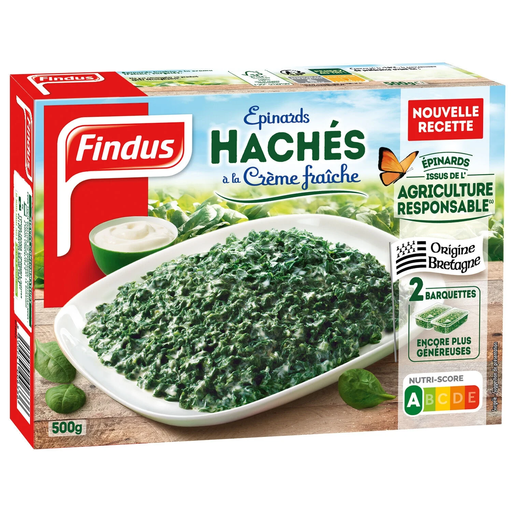 Image unavailable
Worth considering as a vegetable side for a meal you put together, rather than as a family meal on its own.
The pack states that it contains two portions, so check whether you’ll need more if several people are eating together. See the label for allergens in this cream-based recipe.
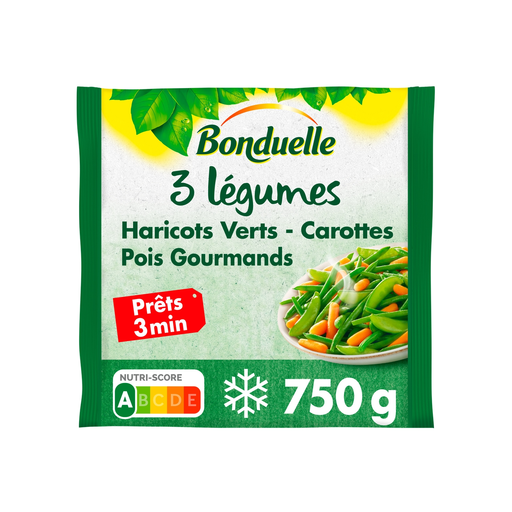 Image unavailable
This vegetable mix can be served alongside the other parts of a meal you put together.
The pack contains 750 g. Decide how much to serve based on the number of people, and check the label if you need to avoid particular allergens.
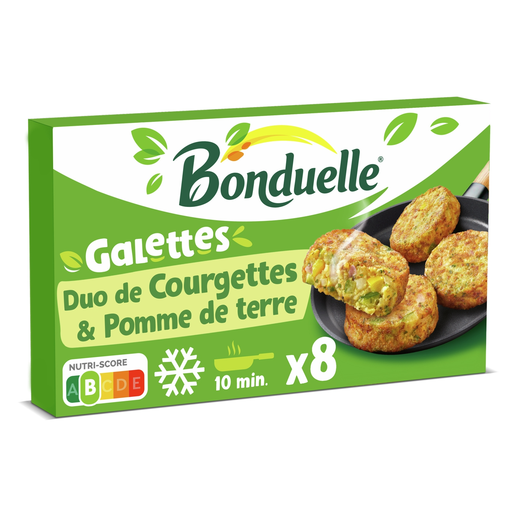 Image unavailable
These fritters can round out a meal you put together, but they won’t tell you how much food to buy for the whole family.
The pack contains 8 pieces. Check how many portions suit your household, along with the cooking instructions and allergens on the packaging.
No. Santé publique France says that displaying it is voluntary for producers. If it’s shown, use it as an additional guide and also read the recipe’s ingredients, allergens and nutritional information.
Start with the ingredients, highlighted allergens, nutritional information and net weight. To decide whether the meal is right for your lunch, compare these details with the stated number of portions and the preparation instructions.
Keep breaks in the cold chain to a minimum and follow the storage instructions on the pack. Anses recommends, in particular, picking up frozen food towards the end of your shop and transporting it in a way that keeps it cold.
No. Anses advises eating defrosted food promptly and not freezing it again. Also follow the product’s own defrosting and preparation instructions.
The Directorate General for Competition Policy, Consumer Affairs and Fraud Control distinguishes between a use-by date, which must not be exceeded, and a best-before date, after which a product may lose some of its qualities if its packaging is intact. In all cases, follow the storage instructions on the product.