Which households are these options suited to?
How often you run a cycle isn’t enough to determine the right capacity: your usual load size, the fabrics you wash and the space available all affect your choice.
Families with frequently full laundry baskets
If clothes, towels and bedding regularly make up large loads, compare the machine’s capacity with the size of your usual baskets. UFC-Que Choisir distinguishes between the needs of a family with children and those of a household that regularly runs full loads.
Households washing bulky items
Duvets and throws may point towards a larger capacity if you machine-wash them often. If you only wash them occasionally, check that the model you’re considering can take these items without sizing every cycle around them.
Families with limited installation space
If width is a constraint, it’s worth comparing a top-loading machine with a front-loader. According to the UFC-Que Choisir guide, top-loaders are 40 to 46 cm wide and have a capacity of 5 to 8 kg. Check whether that’s enough for your household’s regular loads.
What should you check before buying?
Start with the loads you wash every week, then check the capacity against the programmes you use, the space available and the figures on the energy label.
| What to consider |
What to check |
My needs |
| Usual load size |
Compare the stated capacity in kilograms with the loads you actually put in the machine. UFC-Que Choisir suggests 8 to 10 kg as a guide for a family with children, and 10 to 12 kg when full loads are washed back to back. |
Are my baskets often full, or is it mainly the number of smaller loads that adds up? |
| Fabrics and programmes |
Check the manual for the maximum load allowed on the programmes you’ll use, particularly for different types of fabric. Also check whether the model you’re considering can wash your duvets or throws. |
I regularly wash bulky items. I need to know whether they’ll fit a suitable programme, rather than just looking at the stated capacity. |
| Water, energy and cycle time |
ADEME recommends checking the energy label. Compare the kWh per 100 cycles, litres per cycle and Eco 40-60 cycle time, ideally between models with similar capacities. Check the load-sensing features of the specific model. |
I alternate between small and large loads, so I want to compare the reference consumption figures without assuming every programme will have the same values. |
| Dimensions |
Measure the width and depth, as well as the clearance needed to open the machine. The UFC-Que Choisir guide gives a width of 40 to 46 cm and a capacity of 5 to 8 kg for top-loaders. Check the exact dimensions of each front-loader. |
If space is tight, the narrower width of a top-loader matters to me, but its capacity still needs to suit my loads. |
| Durability |
Compare the durability index of the models you’re considering. The French ministry responsible for the environment says it has replaced the repairability index for washing machines in France since 8 April 2025. |
For a machine that will be used often, I want to factor this in alongside capacity and consumption. |
Which brands and models should you consider?
The features below apply to the models mentioned, not to every washing machine made by each brand.
Bosch
The WGE02203FR front-loader is worth considering if you alternate between small and large loads.
- According to Bosch Électroménager France, Active Water Plus adjusts the amount of water to the detected load and selected programme.
- Check the capacity, programmes and energy label figures for the WGE02203FR. This feature alone doesn’t demonstrate the same savings on every cycle.
Electrolux
The 600 SensiCare front-loaders EW6FI4130SA and YW6FI2814WR let you compare two capacities if your load sizes vary.
- Electrolux France says SensiCare adjusts the cycle time and water and energy consumption to the load weight on these models.
- Check the capacity, dimensions and programmes of the specific model. The description of SensiCare doesn’t apply to the entire range.
LG
The F14R33WH is a 10 kg front-loader worth comparing for family-sized loads.
- LG France lists the F14R33WH with a capacity of 10 kg.
- Check the documentation for this model to see which programmes and load-sensing features suit the fabrics you wash. Don’t assume it has a feature described for a different LG model.
Which front-loading models should you consider on Joybuy?
These Joybuy models are front-loading washing machines with a capacity of 9 or 10 kg, worth considering for frequent family laundry. Compare their individual features with your usual programmes and the space available.
 Image unavailable
Electrolux EW7FI259160V — 9 kg, 1 600 tr/min
Its stated capacity of 9 kg matches the guide figure given by UFC-Que Choisir for a family with children. The product listing describes it as a front-loader with SteamCare and SmartSelect. Before choosing this model, check the manual for the load limits on your usual programmes and the duration of the QuickCare cycle.
View on Joybuy
 Image unavailable
Haier X Series 11 HW100-BD14397PGU1 — 10 kg
The stated capacity of 10 kg may suit family baskets that are regularly full. The model name mentions a 1 400 tr/min spin speed and AutoDose. If your loads vary considerably, check the manual for the load limits for each programme and the details of its load-sensing features.
View on Joybuy
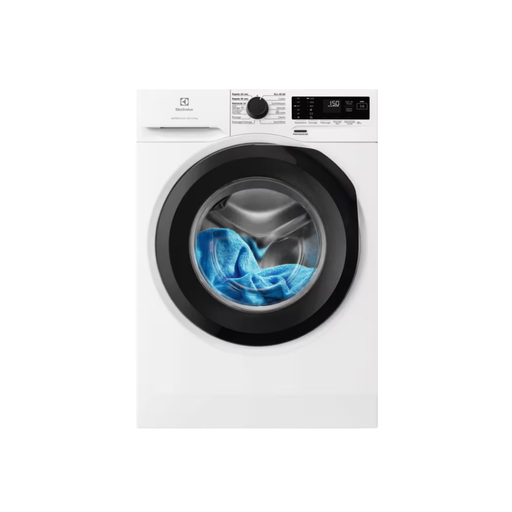 Image unavailable
Electrolux EWF1410N2 — 10 kg
This front-loader has a stated capacity of 10 kg for regular family laundry. Its name mentions TimeSave and a steam function. Check which programmes these features apply to, as well as the maximum loads for the fabrics you wash.
View on Joybuy
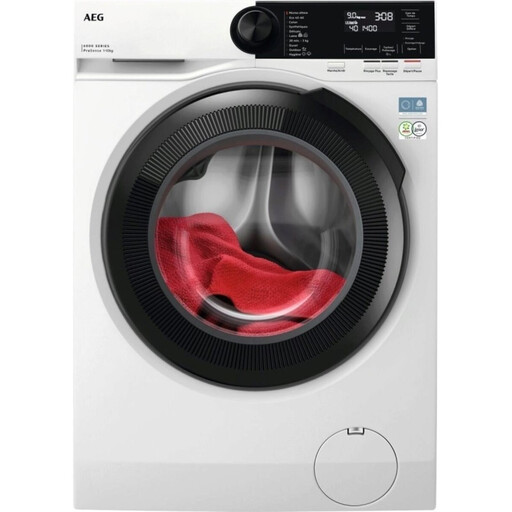 Image unavailable
AEG LFR62E114S — 10 kg, 1 400 tr/min
This freestanding front-loader has a stated capacity of 10 kg for large family loads. Its listed width is 71 cm. Measure the space and clearance required, then check the load limits for each programme and the Eco 40-60 figures before comparing it with other models.
View on Joybuy
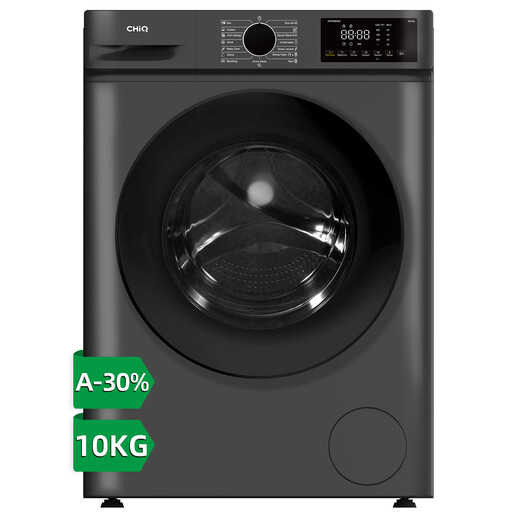 Image unavailable
CHiQ JW105883G — 10 kg, 1 400 tr/min
This front-loader has a stated capacity of 10 kg and 16 programmes, so compare these with the fabrics you wash regularly. Check its dimensions, the load limits for each programme and the detailed figures on the energy label. The “A-30%” in the product name isn’t a substitute for this comparison.
View on Joybuy
Frequently asked questions
Should you choose 12 kg just because you do laundry often?
No: what matters most is the size of the loads you wash regularly. UFC-Que Choisir suggests 8 to 10 kg as a guide for a family with children, and considers 10 to 12 kg more suitable when full loads are washed back to back. If you only wash duvets or other bulky items occasionally, check they’re compatible with the model rather than sizing all your cycles around them.
Does the stated capacity apply to every programme?
Don’t assume it does. To find out how much laundry you can wash on a synthetics, wool or other frequently used programme, check the maximum load listed in the model’s manual. The headline capacity alone won’t tell you.
Which figures should you compare on the energy label?
Look at water and energy consumption figures, along with any information relevant to your laundry routine, rather than focusing only on the energy rating. ADEME recommends checking the label when comparing appliances. To interpret the figures for the Eco 40-60 reference cycle, compare models with similar capacities where possible, and check the programmes you’ll use separately.
Is a top-loading washing machine suitable for a family that does laundry often?
Yes, if limited width makes this format the right choice and its capacity is sufficient for your usual loads. The UFC-Que Choisir guide gives top-loaders a width of 40 to 46 cm and a capacity of 5 to 8 kg. Compare these limits with your usual baskets, especially if you often wash bulky items.
How can you take durability into account before buying?
Compare the durability index of the washing machines you’re considering, as well as their capacity and features. The French ministry responsible for the environment says this index has replaced the repairability index for washing machines in France since 8 April 2025. Check the information for each model.


