Families who make hot chocolate regularly
If several people will be drinking it over the holidays, an 800 g or 1 kg pack is worth considering. However, choose a quantity your household will use after opening.


For holiday snacks, first choose a powder with ingredients that suit your household, then pick a pack size that matches the number of drinks you expect to make. An 800 g or 1 kg pack may suit regular use, but a larger pack is no reason to skip checking the listed sugars, allergens and amount of powder per drink. If a Nutri-Score is shown, use it as an extra guide alongside the label, not instead of it.
If several people will be drinking it over the holidays, an 800 g or 1 kg pack is worth considering. However, choose a quantity your household will use after opening.
Compare the ingredients and sugars listed per 100 g. To understand the nutritional values of a prepared drink, also take into account how much powder and milk are used.
Check the exact recipe before choosing a pack to share. Depending on the products reviewed, ingredients include soya, wheat or barley.
For regular snacks, first make sure the recipe suits the people who will be drinking it. Then compare the nutritional information and how much you’re likely to use.
| Criterion | What to check | Who it matters to |
|---|---|---|
| Sugars and ingredients | Compare the sugars per 100 g. If values per drink are given, also check the amount of powder and milk used in the calculation. | For regular snacks, I want to understand what goes into each drink rather than rely on the recipe name; around 45% of consumers put this comparison first. |
| Pack size | Compare the net weights of 400 g, 800 g or 1 kg to suit your needs, then check the best-before date and storage instructions. | If several people will be drinking it over the holidays, I look for a quantity we’ll use after opening; around 33% of consumers prioritise a pack size that suits their consumption. |
| Allergens and recipe | Read the ingredients list and allergen information for the exact variant, especially if the recipe contains cereals. | If someone in my household needs to avoid an ingredient, I check the recipe before choosing a pack to share; this compatibility is the priority for around 22% of consumers. |
A 1 kg pack may not be right if your household doesn’t make many hot chocolates, even during the holidays.
Estimate how many drinks you plan to make and check the storage instructions before choosing between the available pack sizes.
An opened pack can end up sitting around for a long time, partly unused.
According to Santé publique France, displaying the Nutri-Score is voluntary. Its absence alone is not enough to judge the ingredients in a chocolate powder.
If it appears on the product, use it as an additional guide and check the ingredients and nutritional information too.
Carrefour France’s product listing for Nesquik 1 kg mentions soya lecithin, while the listing for Banania 1 kg includes wheat and barley. These ingredients shouldn’t be assumed to apply to other variants.
Check the packaging of the exact product you plan to buy, especially if someone in your household needs to avoid certain ingredients.
A large pack with a recipe that doesn’t suit your household may end up unused.
Carrefour France lists a 1 kg tin of Nesquik chocolate powder.
Banania offers its Original chocolate powder in several sizes, including 1 kg according to the brand.
Carrefour France’s range includes Poulain Grand Arôme chocolate powder in an 800 g pack.
Carrefour France’s range includes Carrefour-brand chocolate powders in 800 g and 1 kg packs.
This selection includes three packs ranging from 800 g to 1 kg for making drinks regularly over the holidays, plus a 400 g option if you’d prefer a smaller quantity. Compare the recipes and labels for each product before choosing.
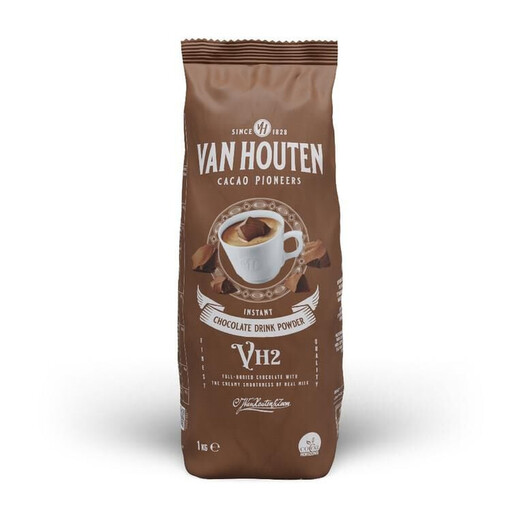 Image unavailable
The 1 kg pack is worth considering if you plan to make hot chocolate regularly over the holidays. Check the amount used per drink, as well as the ingredients and allergens for this product.
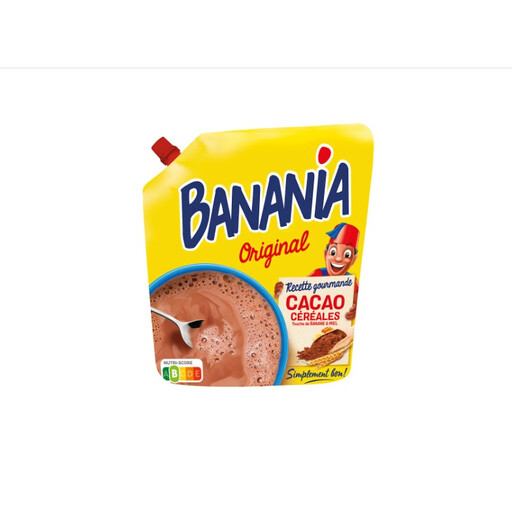 Image unavailable
This 1 kg pack is a larger-size option for regular snacks. Check the ingredients and allergens for Bananina Original on its own packaging; don’t assume they’re the same as those in a Banania recipe.
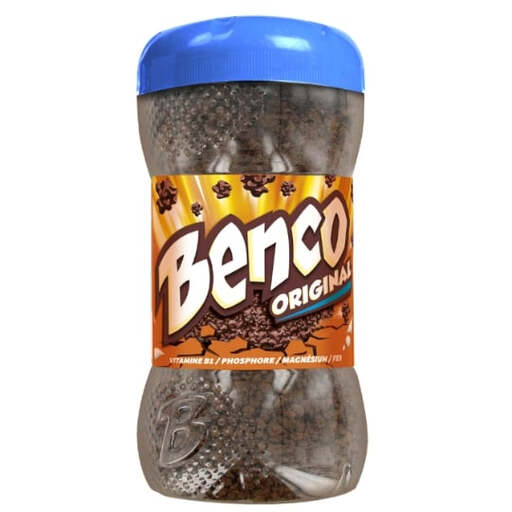 Image unavailable
The 800 g pack is an alternative to the 1 kg size, depending on how many drinks you plan to make. Before buying, read the ingredients, nutritional information and allergen details for this variant.
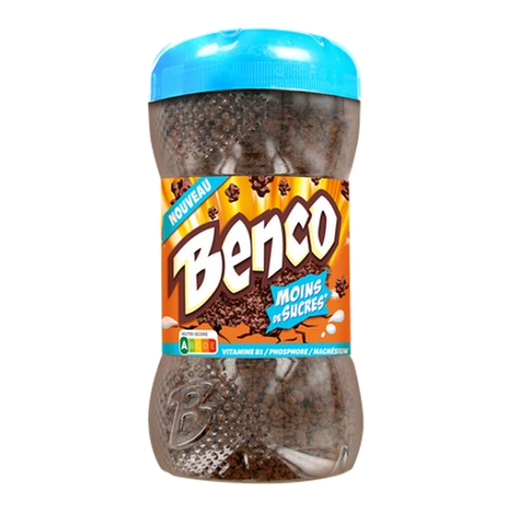 Image unavailable
The 400 g pack is worth considering if you’d rather not open an 800 g or 1 kg pack. To compare recipes, look at the sugars listed per 100 g and the amount used per drink, rather than relying on the Less Sugar name alone.
No. As Santé publique France explains, displaying the Nutri-Score is voluntary. When comparing pre-packed foods, also check the ingredients list and nutrition declaration required under the labelling rules outlined by the DGCCRF.
No. The presence of sugar in a dry powder isn’t enough to establish that it falls within the scope of this tax. Article 1613 ter of the French General Tax Code, in the version in force on 1 September 2026 and published by Légifrance, applies to drinks and liquid preparations for drinks that meet the conditions set out in the text. So don’t assume this tax applies by default when choosing a powder to dilute.
Read the ingredients and allergen information for the exact variant before choosing a pack to share. For example, Carrefour France’s listings mention soya lecithin in Nesquik 1 kg, and wheat and barley in Banania 1 kg.
Take into account the amount of powder and milk used in the recipe: the values per 100 g of powder don’t tell you everything about the drink you’ll serve. For its Original recipe, Banania gives preparation instructions using 15 g of powder and 200 ml of semi-skimmed milk. Follow the instructions for the product you buy.