Households that shop weekly
If you put away a lot of food in one go, look at the usable space in each compartment. UFC-Que Choisir includes a full weekly shop in its fridge-freezer test procedure.


For your weekly shop, first work out how much space you need for fresh and frozen food, then check that the appliance can be delivered and installed. A fridge-freezer combines both compartments in one appliance. A multi-door model is worth considering if its capacity and layout meet a genuine need, while separate appliances let you choose the capacity for fresh and frozen food independently—as long as you have room for both.
If you put away a lot of food in one go, look at the usable space in each compartment. UFC-Que Choisir includes a full weekly shop in its fridge-freezer test procedure.
When you store pre-prepared portions, the space available for frozen food and the size of the drawers matter just as much as the total capacity. Compare the compartment layout before choosing between a fridge-freezer, a multi-door model and separate appliances.
Having enough room in your kitchen doesn’t guarantee that a large appliance will fit through to it. Measure doorways, corridors and lifts too; Samsung specifically recommends checking that the packaged appliance will fit through.
The right format depends mainly on how much space you need for fresh and frozen food, as well as the room available for installation.
Worth considering : if you want one appliance for your everyday shop and a quantity of frozen food that will fit in its freezer compartment.
The trade-off : the freezer compartment may not have enough room if you regularly prepare and freeze lots of meals.
Worth considering : if you’ll make use of its different storage areas and there’s enough space to get it through to your kitchen.
The trade-off : check its width, how the doors open and the selected model’s annual energy consumption.
Worth considering : if your frozen-food storage needs mean choosing a freezer capacity independently of your fridge capacity.
The trade-off : you’ll need space for two appliances and should check the annual energy consumption of both.
| Criteria | What to check | What matters to shoppers |
|---|---|---|
| Right-sized capacity | Compare the usable capacity in litres of both compartments with the size of your household and how often you shop. UFC-Que Choisir suggests 100 to 150 l as a starting point for one person, then 50 l for each additional person. | After the weekly shop, I want to be able to put everything away without choosing an appliance that’s bigger than I need. Around 36 % of shoppers would prioritise getting the size right. |
| Space for frozen food | Check the freezer capacity and drawer sizes against the portions, containers and frozen food you store. | If I prepare meals in advance, I need enough room to freeze them without cutting down too much on fridge space. Around 29 % of shoppers would put this balance first. |
| Installation and delivery | Measure the space, door clearance and delivery route; ask for the dimensions of the packaged appliance. | A large fridge only works for me if it can get through the access points and the doors can open in my kitchen. Around 21 % of shoppers would put these practical considerations first. |
| Energy and noise | Check the kWh/year and noise emissions on the EU energy label, then compare appliances with similar capacities and layouts. | In an open-plan kitchen, I want to take noise into account without overlooking the energy use of an appliance that runs all the time. Around 14 % of shoppers would prioritise these factors. |
Two appliances with a similar total capacity can offer different amounts of space for fresh and frozen food. UFC-Que Choisir puts the split in a standard fridge-freezer at around two-thirds for refrigeration and one-third for freezing.
Compare the capacity of each compartment in litres with what you put away after a weekly shop and when storing prepared meals.
A multi-door model might fit in the space you’ve planned for it but not through a doorway, corridor or lift. Samsung advises measuring these access points to make sure the packaged appliance will fit.
Check the packaged dimensions with the retailer and allow enough space to open the doors once the appliance is installed.
According to the European Commission, the label also shows annual energy consumption, storage volumes and noise emissions—the rating letter alone doesn’t tell you about these differences.
Compare kWh/year, capacity and noise levels between models that meet similar storage needs.
In France, the DGCCRF says that retailers must take back a similar used appliance free of charge when you buy a new one—the ‘one-for-one’ take-back scheme. Refrigeration appliances must then be handled through a suitable disposal route for their refrigerants, as explained by ADEME.
Agree the practical details of the take-back with the retailer before delivery.
A brand to consider if you’re looking for a freestanding fridge-freezer with the freezer at the bottom.
A brand to compare if you’re considering a multi-door model and have enough space for it.
A brand to consider for a multi-door model with fridge and freezer capacities that suit your storage habits.
These models let you compare two ways to store your shopping in one appliance: a fridge-freezer and a multi-door model. Start by choosing the format and capacity that suit your household, then check the delivery access route.
 Image unavailable
Worth a look if you’d like to organise your shopping across the compartments of a four-door appliance. The model name lists a capacity of 467 l, Total No Frost and an E energy rating. Check how much space each compartment offers and whether the appliance will fit through to your kitchen.
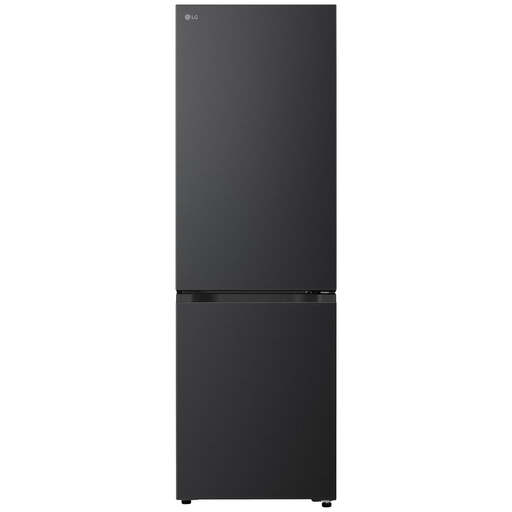 Image unavailable
Worth comparing if you want to keep fresh and frozen food in one fridge-freezer. The model name lists a capacity of 333 l and a C energy rating. Check the freezer capacity separately, along with the clearance needed for installation.
 Image unavailable
Worth considering if you prefer a fridge-freezer with the freezer at the bottom. The model name lists a capacity of 282 l and an E energy rating. Check the freezer capacity against your usual storage needs and make sure it will fit before ordering.
 Image unavailable
Worth a look if your shopping needs justify the capacity of a multi-door model. The model name lists a capacity of 495 l and an E energy rating. Compare the fridge and freezer capacities, then measure the delivery route and the space needed to open the doors.
Work out how much room you need for fresh and frozen food separately, then adjust for how often you shop. UFC-Que Choisir suggests 100 to 150 l as a starting point for one person, plus 50 l for each additional person. Frozen portions and less frequent shops can change how much capacity you need.
As well as the energy rating, look at annual consumption in kWh, storage volumes and noise emissions. The European Commission says these details appear on fridge and freezer labels. To make a useful comparison between two models, take their capacity and layout into account too.
Find the coldest area in your fridge and put any food that needs it there. The French Ministry of Agriculture recommends using a thermometer to identify this area, which should be no warmer than 4 °C; its position varies by model.
In France, ask the retailer to take back your old appliance when you buy a similar new one: the DGCCRF says this ‘one-for-one’ take-back is free. Agree the practical arrangements for collecting your old appliance before delivery.