What to compare for family food shops made to last
Start by working out how much space you need for fresh and frozen food, then check the overall dimensions and compare the annual energy consumption of models with enough room for your needs.
Fridge-freezer
Worth considering: if you want two separate compartments in an appliance with a more compact width.
Check: the specific model’s height, depth and usable capacities, as well as whether it can be brought through to your kitchen.
Multi-door fridge-freezer
Worth considering: if you want to organise food across several zones and have enough space for the appliance.
Check: the dimensions, the capacity of each compartment and the model’s annual energy consumption, rather than looking only at its total capacity.
Separate freezer compartment
Worth considering: if a separate compartment within the fridge suits the way you organise your frozen food.
Check: its exact capacity. A separate compartment doesn’t necessarily have enough room for several days’ worth of frozen food.
Manufacturer examples show how much capacities can vary between models, but there’s no universal capacity for each format. The Bosch KGN39VLCT is listed with 260 l of usable fridge capacity and 103 l of freezer capacity, at a width of 60 cm; the LG GML844PZAE lists 286 l and 220 l respectively. Bosch and LG publish these specifications for these specific models.
| What to compare |
What to check when buying |
Who it matters most to |
| Fresh food capacity and storage |
Compare the fridge’s usable capacity in litres and the layout of the shelves and drawers. |
If I mainly store fresh food, prepared meals and leftovers for several days, I want a fridge compartment that suits my shopping; around 33% of consumers prioritise fresh food storage. |
| Space for frozen food |
Check the freezer compartment’s capacity and the layout of the drawers, rather than relying on the total capacity alone. |
If my shopping includes lots of frozen food, I want to know how much space is actually set aside for it; around 27% of consumers prioritise frozen food storage. |
| Access and door clearance |
Measure the delivery route and the space where the appliance will go, then check the clearance needed for doors and drawers in the model’s instructions. |
If access to my kitchen or the space around the appliance is limited, I want to make sure I can get it inside and use it properly; around 20% of consumers prioritise how well an appliance fits into their kitchen. |
| Energy consumption |
Compare the kWh/year and usable capacities on the energy labels of models that suit your needs. |
Once I’ve found the capacity I need, I want to take annual energy consumption into account; around 20% of consumers put energy consumption first. |
When comparing models, look at the capacity of each compartment alongside the kWh/year figure on its energy label. The European Commission lists the capacities of fridge and freezer compartments separately, as well as annual energy consumption. An energy rating alone won’t tell you whether an appliance has enough room for your household.
Fridges available on Joybuy
This selection features multi-door and side-by-side fridges with dedicated spaces for fresh and frozen food.
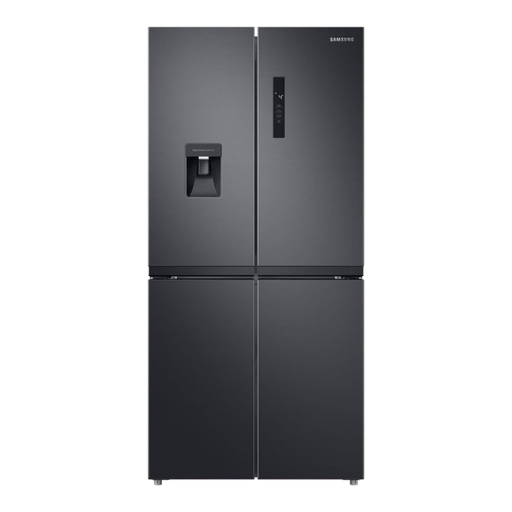 Image unavailable
Samsung RF48A401EB4, 488 l, E energy rating, black
The listed capacity is split between a fridge and a freezer compartment, making it easier to organise fresh and frozen food shopping.
329 l for the fridge and 159 l for the freezer; Twin Cooling; filtered water dispenser and ice maker listed.
View on Joybuy
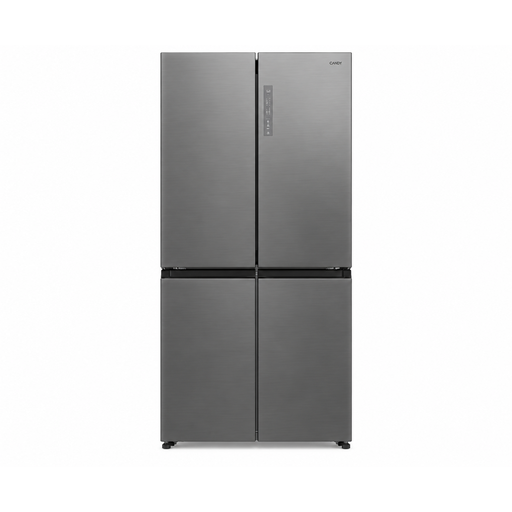 Image unavailable
Candy CFQQ5T817EPS, 467 l, E energy rating, silver
The separately listed capacities make it easy to compare the space available for fresh and frozen food.
311 l for the fridge and 156 l for the freezer; No Frost; four doors, six door balconies and two freezer drawers. Listed dimensions: 83.3 × 65 × 181.5 cm.
View on Joybuy
 Image unavailable
Sonlu CC-520WE, 444 l, E energy rating
You can compare its listed total net capacity with your needs, bearing in mind that the split between compartments isn’t detailed here.
444 l total net capacity; E energy rating; listed annual energy consumption of 289 kWh; Total No Frost technology listed for the fridge and freezer compartments.
View on Joybuy
 Image unavailable
Samsung RF50C530EB1, 495 l, black, E energy rating
The separate capacities let you check whether the model’s balance of fresh and frozen food storage suits your household.
330 l for the fridge and 165 l for the freezer; Twin Cooling and No Frost listed; listed annual energy consumption of 301 kWh.
View on Joybuy
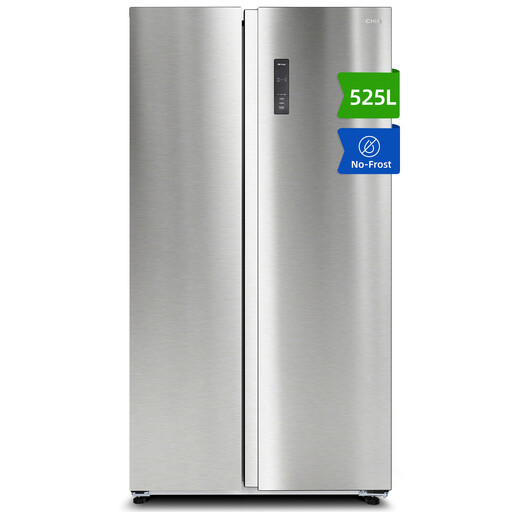 Image unavailable
CHiQ JR525WSE, 525 l, E energy rating
The listed fridge and freezer capacities help you check whether the split suits your shopping needs.
333 l for the fridge and 192 l for the freezer; No Frost and Multi-Airflow listed; adjustable shelves.
View on Joybuy
Frequently asked questions
Is total capacity enough to help me choose a family fridge-freezer?
No. Check the listed capacity in litres for fresh food and freezer compartments separately on the model’s product page or energy label, then compare each one with what you usually buy.
How can I check that a fridge-freezer can be delivered to and used in my kitchen?
Measure the route to the space where the appliance will go, as well as the available space, then compare your measurements with those of the exact model. Also check its instructions for the clearance needed and to make sure the doors and drawers can open.
How can I compare the energy consumption of two models?
Compare the kWh/year figures on the energy labels of models that both offer the capacities you need. To estimate your annual energy costs, multiply the stated consumption by your own price per kWh; actual consumption will depend on how the appliance is used.
What temperature should I aim for when storing chilled food?
Anses recommends keeping the coldest part of the fridge between 0 and +4 °C. Follow the food storage instructions, too, and check the temperature after installation.
How can I dispose of my old fridge-freezer?
The ministry responsible for ecology lists options including taking it to a collection point or recycling centre, or returning it to a retailer. Check with the retailer and delivery service about the practical arrangements for any home collection.


