Households that stock up in bulk
You regularly freeze bulk-bought food or prepared meals. Net capacity matters, but you also need to be able to fit the appliance in and access what’s inside.


For stocking up for the family, choose a chest freezer if capacity is your priority and you have a suitable space, or an upright freezer if you want to organise food and access it often. An under-counter freezer is better suited to providing extra storage, while a large fridge freezer is worth considering if you’re replacing your fridge too. In every case, compare the freezer compartment’s net capacity, check the dimensions and ventilation clearances, and make sure the model can operate at the ambient temperature in your chosen location.
You regularly freeze bulk-bought food or prepared meals. Net capacity matters, but you also need to be able to fit the appliance in and access what’s inside.
You open the freezer often and prefer to sort food into drawers or compartments rather than rummaging at the bottom of a chest freezer.
You need to work around an alcove, space under a worktop or a cold room. The dimensions, ventilation clearances and permitted ambient temperature will all help determine which model to choose.
Your choice of freezer depends first on the space available and how you use your food stores. Capacity, everyday access and installation conditions may not all point to the same appliance.
Consider it: if having plenty of storage is your priority and you have enough floor space.
Bear in mind: food at the bottom needs careful organisation, and you’ll need room to open the lid.
Consider it: if you check your food stores often and want to keep different types of food separate.
Bear in mind: the door swing and drawer layout need to suit your space and the food you plan to store.
Consider it: if space is limited and you’re looking for a small amount of extra storage.
Bear in mind: a compact appliance may not have room for all the food you want to store. Compare its net capacity with your needs.
Consider it: if you’re replacing your main fridge and want both functions in one appliance.
Bear in mind: the total capacity isn’t the same as the freezer capacity. An integrated model must also fit its housing unit.
| Factor | What to check | Who it matters to |
|---|---|---|
| Storage capacity | Compare the freezer’s net capacity with the food you usually store, and measure the available space. If you’re choosing a fridge freezer, don’t just look at its total capacity. | If bulk-bought food quickly fills my current freezer, I want more room to store it. Around 36% of consumers would prioritise capacity. |
| Access and organisation | Check the drawers or baskets and make sure there’s enough room to open the door or lid. | If I take food out often, I want to find it without having to move everything else. Around 29% of consumers would put access and organisation ahead of other factors. |
| Suitability for the room | Check the dimensions and clearances in the manual against your chosen space, then make sure the permitted ambient temperature range is suitable. | If I have a narrow alcove or a cold room, I need to be able to install and use the appliance as intended. Around 21% of consumers would consider suitability for their space their top priority. |
| Maintenance and reliability | Check the cooling system and the stated storage time in the event of a power cut. Also compare the models’ annual energy consumption in kWh/year. | If I want to reduce defrosting and be prepared for a power cut, these features matter more to me. Around 14% of consumers would put them first. |
The permitted ambient temperature range depends on the model, not just its design. According to Liebherr, its CFe 2500 chest freezer with FrostProtect can operate at ambient temperatures as low as −15 °C. This doesn’t apply to all chest freezers.
Check the possible temperatures in the room and compare them with the product information and manual for the appliance you’re considering.
You’ll also need room to open the door or lid and to meet the ventilation clearance requirements. Beko’s recommendation to leave at least 5 cm at the sides and back applies to a fridge freezer, so it isn’t a rule for every model.
Check the installation diagram for the specific model before deciding where to put it.
A compact model may fit the available space, but it may not have enough capacity for the food you regularly store.
Estimate how much food you want to keep between shopping trips, then compare it with the net capacity and internal layout.
In France, the statutory guarantee of conformity applies to goods sold by a business to a private individual, as the Ministry of the Economy explains. A commercial warranty is an extra and does not replace it.
Before buying an extended warranty, compare its length, exclusions and claims process with the protection already provided by the statutory guarantee.
A brand to look at if you’re considering a freestanding upright freezer.
A brand to consider when comparing appliances designed to fit a fitted kitchen.
A brand to look at if you’re comparing large-capacity chest freezers or need an appliance for a cold room.
These appliances let you compare chest freezers in different capacities with a drawer-style upright freezer for family food storage. Before choosing, consider their capacity and layout alongside the space available and the room temperature.
 Image unavailable
Worth considering if you want plenty of storage in a chest freezer.
The title lists fridge or freezer modes, a removable basket, LED lighting, a 5-level digital control and an E energy rating.
If you’re installing it in a garage, check the permitted ambient temperature and the clearance requirements for this model.
 Image unavailable
Worth considering if you’d rather organise extra food storage in drawers.
The title mentions drawers, No Frost, a reversible door and a C energy rating.
Check the dimensions, possible door-opening direction and permitted ambient temperature before choosing where to put it.
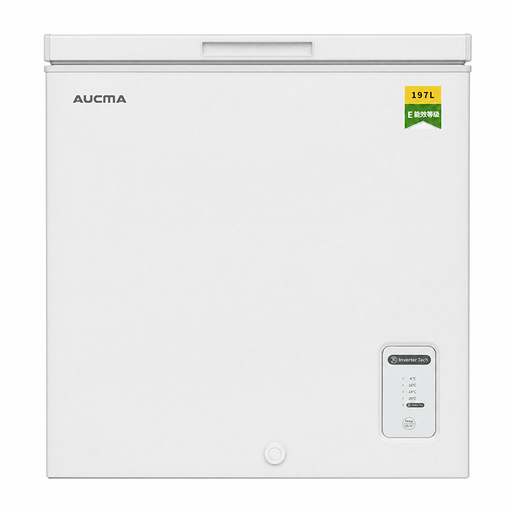 Image unavailable
Compare it with other chest freezers if you’re looking for 197 L of storage.
The title lists fridge or freezer modes, a removable basket, a 5-level digital control and an E energy rating.
Check the ambient temperature range if it’s going in a cold room, and leave enough space to open the lid.
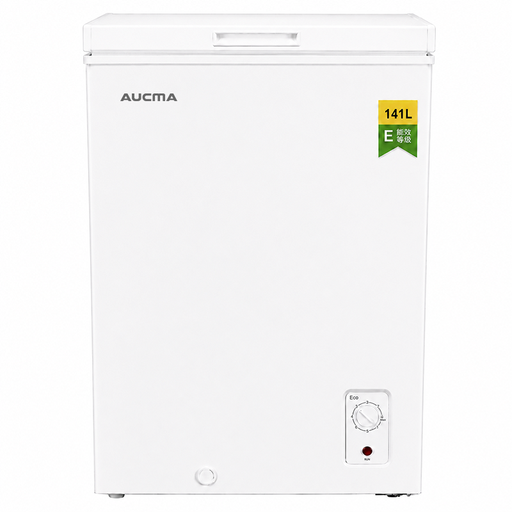 Image unavailable
Worth considering for extra storage if 141 L is enough for your needs.
The title lists fridge or freezer modes, a removable basket, a 7-level thermostat and an E energy rating.
Before installing it in a cold room, check the permitted ambient temperature and installation clearances.
 Image unavailable
Worth comparing if 140 L is enough for your household’s extra storage needs.
The title mentions a storage basket, a counterbalanced lid, an adjustable temperature control and an E energy rating.
Check the ventilation clearances and permitted ambient temperature for your chosen location.
No. Check the ambient temperature range specified for the exact model. According to Liebherr, the CFe 2500 with FrostProtect can operate at ambient temperatures as low as −15 °C, but this feature isn’t available on all freezers.
Follow the clearance requirements in the manual for your chosen model, and allow room to open the door or lid. Beko recommends leaving at least 5 cm at the sides and back of a fridge freezer, but this isn’t a universal rule.
According to Liebherr, No Frost is designed to prevent frost from building up in freezers with this feature. Check that the specific model you’re considering includes it rather than assuming it applies to an entire brand or all types of cooling system.
No. For a purchase made by a private individual from a business in France, the statutory guarantee of conformity applies independently of any commercial warranty, as the Ministry of the Economy explains. Compare the extra cover and exclusions before taking out an extended warranty.
Compare the freezer compartment’s net capacity, the dimensions, annual energy consumption in kWh/year and the noise level of the models you’re considering. The European EPREL register includes details such as annual energy consumption and compartment capacities for appliances covered by Regulation (EU) 2019/2016. Also check each product page for the features that suit your needs.