How do the different types compare?
For prepared meals and family shopping, start by thinking about how you’ll use the food. Then compare the capacity you want with the space available and the room temperature where the freezer will be kept.
Upright freezer
Consider it if: you regularly take out portions and want to organise them in separate drawers.
Bear in mind: the compartments may limit the space available for larger packs.
Chest freezer
Consider it if: you shop less often or store bulky food, and have enough floor space.
Bear in mind: food at the bottom can be harder to reach unless you use baskets or organise the space.
Table-top or under-counter model
Consider it if: you need a little extra capacity in a kitchen or suitable alcove.
Bear in mind: this type won’t usually replace a large family freezer.
Large fridge-freezer
Consider it if: you’re also replacing your fridge and want both functions in one appliance.
Bear in mind: it’s the net capacity of the freezer compartment that matters for your frozen food, not the total capacity of the appliance.
| Criteria |
What to check |
What matters to shoppers |
| Access to food |
Drawer or basket layout; whether the appliance can open fully in its intended position. |
When I regularly take out portions, I want to find them without rummaging at the bottom of the freezer. Around 37% of shoppers would put easy access and organisation first. |
| Storage capacity |
Net capacity in litres and the space needed for your bulkiest containers. |
If I want to shop less often, I need enough room for the quantities and sizes of food I freeze. Around 27% of shoppers would make capacity their top priority. |
| Installation |
Dimensions and clearance; the minimum and maximum temperatures allowed for the exact model. |
If the appliance needs to go in a cold room or a tight space, I need to be sure it can be installed and opened as intended. Around 18% of shoppers would put this compatibility first. |
| Day-to-day use |
Storage time during a power cut, annual energy consumption in kWh/year and cooling type. |
With a large amount of food in storage, I want to take possible power cuts and regular maintenance into account. Around 18% of shoppers would prioritise storage time or ease of use. |
Freezers for different needs
This selection of Joybuy models includes an upright freezer for organising food and chest freezers in different sizes, for either your main freezer or some extra capacity. Compare their layouts and dimensions with your needs, then check the product details for the installation requirements and power-cut storage time that matter to you.
 Image unavailable
AUCMA 291 L convertible chest freezer
Worth considering if you want to store larger quantities and have enough room to open a chest freezer.
The product name specifies conversion between fridge and freezer modes, an energy rating of E, LED lighting, a five-setting temperature control, a removable basket and a defrost drain.
Plan how you’ll organise food at the bottom, and check the permitted ambient temperature range and power-cut storage time for your installation.
View on Joybuy
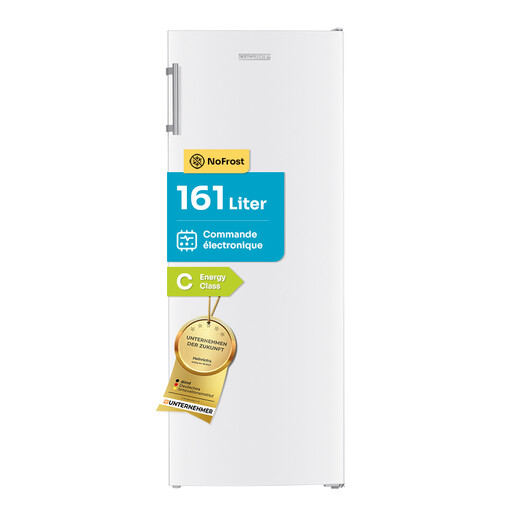 Image unavailable
Heinrich´s 161 L No Frost upright freezer, white
Worth considering if you regularly use portions and prefer to organise them in an upright freezer.
The product name specifies drawers, a No Frost function, an alarm, a reversible door and an energy rating of C. The −14 °C to −22 °C range in the name refers to the freezer’s temperature setting, not the room temperature.
Check the dimensions, permitted ambient temperature range and power-cut storage time before choosing this model.
View on Joybuy
 Image unavailable
AUCMA 95 L convertible chest freezer
Consider it for extra capacity if you want a small chest freezer rather than a large family-sized one.
The product name specifies conversion between fridge and freezer modes, an energy rating of E, a seven-setting thermostat, a removable basket and a defrost drain.
Leave enough room to open the lid, and check the permitted ambient temperatures and power-cut storage time for your intended location.
View on Joybuy
 Image unavailable
TCL CF182EWE0FR 140 L chest freezer
Worth considering for extra storage if you’d prefer a 140 L chest freezer to a model with drawers.
The product name specifies a storage basket, a counterbalanced lid, temperature adjustment and an energy rating of E.
Plan how to organise food so you can reach items at the bottom, then check the lid clearance, ambient temperature range and power-cut storage time.
View on Joybuy
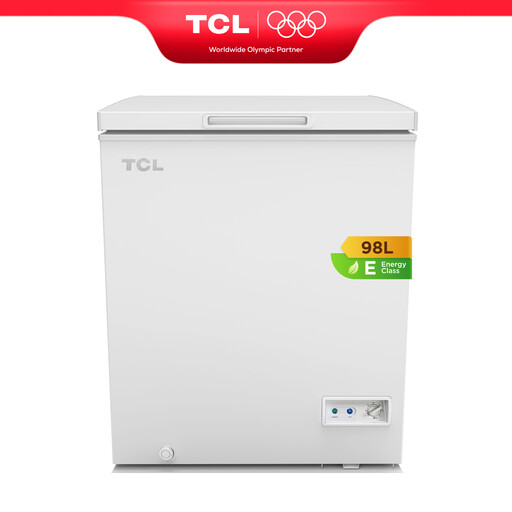 Image unavailable
TCL CF126EWE0FR 98 L chest freezer
Consider it for a little extra storage, rather than as a large freezer for the family shop.
The product name specifies a storage basket, a counterbalanced lid, temperature adjustment and an energy rating of E.
Before deciding where to put it, check the dimensions and lid clearance, along with the ambient temperature requirements and the model’s power-cut storage time.
View on Joybuy
Frequently asked questions
Can you put a freezer in a garage or cellar?
Yes, provided the temperatures in the room stay within the range permitted for the model you choose. Beko’s product details for the B5RFNE315G specify an SN-T climate class, corresponding to 10 °C–43 °C, while Liebherr states that the CFe 2500 Pure can operate down to −15 °C. Don’t assume one appliance’s temperature range applies to another.
Is a chest freezer always better for a family?
No. A chest freezer can hold large quantities and bulky items, but it takes up floor space and you’ll need to organise access to food at the bottom. If you take out portions every week, the drawers in an upright freezer may suit the way you store food better, even if it has a lower capacity.
Do you need No Frost for prepared meals?
No. Choose this feature if you want to reduce the need for defrosting, and the capacity and other specifications of the model also suit your needs. LowFrost isn’t the same as No Frost, so check the care instructions for the appliance you’re considering.
How do you compare storage time during a power cut?
Compare the times in hours and check that they’re based on comparable conditions. Don’t confuse them with freezing capacity, which is expressed in kg/24 h. In its freezer testing protocol, Que Choisir measures how long it takes for food to warm from −17 °C to −9 °C without a power supply.
What should you do with your old freezer?
Don’t put it in your household rubbish: freezers must be disposed of through the waste electrical and electronic equipment scheme. Ask the retailer whether they offer a take-back service when you buy a new one, and find out about local collection options.


