Choose an upright freezer if you need to organise and retrieve portions frequently, or a chest freezer if your priority is a large stock of food and you have enough floor space. A large-capacity fridge freezer is suitable when you also need more refrigeration space, but compare its freezer capacity, dimensions, climate class, power-cut storage time and energy label separately.
Which households are they for?
Families who regularly freeze prepared portions
If you need to quickly find portions, meals and ingredients without emptying the appliance, an upright freezer with drawers or a fridge freezer with a freezer compartment that is genuinely large enough for your portions will often be more practical than a poorly organised chest freezer.
Households with a utility room, cellar or garage available
A chest freezer can suit a substantial food reserve if you are happy with the floor space it takes up and its dimensions and climate class are suitable for an unheated room.
Households that also need more fridge space
When both fresh and frozen food need more room, compare the refrigeration and freezer capacities separately before replacing your fridge freezer: the total capacity can hide a smaller freezer compartment.
Buying priorities
Upright freezer
Consider it: for organising portions and retrieving them frequently, particularly when floor space is limited.
Trade-off: its capacity is often lower than that of a chest freezer; check the drawers, door opening direction and dimensions.
Chest freezer
Consider it: for storing batches of meals, large shops or bulky food in a separate room.
Trade-off: access is less direct; baskets, boxes and labels make it easier to rotate food.
Large-capacity fridge freezer
Consider it: if you also need more space for fresh produce and want to replace just one kitchen appliance.
Trade-off: the overall capacity includes the fridge; check how many litres are actually allocated to freezing.
| Priority |
What to check |
Your needs |
| Freezer capacity |
Compare the litres in the freezer compartment, not just the total capacity. A chest freezer may offer a very large capacity, while upright models prioritise a more organised vertical format. |
I want to keep a reserve of meals and food without underestimating the space actually available for frozen products. |
| Organisation |
Check the number of drawers, shelves or baskets, as well as how easy they are to access. In a chest freezer, use storage bins and label food by category or date. |
Portions should remain visible, and older food should be easy to retrieve without searching through the entire stock. |
| Installation |
Measure the width, height, depth and clearance. Check the climate class or the intended temperature range for the room, especially in a cellar, garage or utility room. |
My appliance must fit in the available space without being exposed to temperatures outside those specified by the manufacturer. |
| Protection and energy use |
Compare the storage time during a power cut, energy class, annual consumption in kWh, freezer capacity and noise level on the UK energy label. |
I want to protect a substantial food reserve and compare appliances that will run continuously at home. |
Mistakes to avoid
-
Choosing an appliance for a garage without checking its operating range
The climate class corresponds to the temperatures in the room where the appliance is installed. An appliance unsuitable for cellar or garage conditions may not maintain the expected storage conditions.
Record the lowest and highest temperatures reached in the room throughout the year, then check the operating range or climate class of the model you choose.
-
Comparing the total capacity of a fridge freezer with that of a dedicated freezer
The total capacity of a fridge freezer includes the refrigerator section. For example, a 256 L appliance may allocate just 62 L to freezing.
Note the refrigeration and freezer capacities separately, then compare the latter with the number of portions and containers you need to store at the same time.
-
Buying a large chest freezer without organising the inside
A chest freezer provides open, flexible storage, but food can be less accessible than in drawers, particularly when it is stored deep inside.
Use baskets, boxes, dividers and labels showing the contents and date; keep food that needs to be used soon in the most accessible areas.
-
Confusing freezing with automatic food safety
Anses states that freezing food at home at -18 °C stops bacterial growth, but most micro-organisms survive freezing.
Freeze food soon after buying or preparing it, maintain the cold chain and do not refreeze food once it has defrosted.
Brand overview
Beko
The French range includes upright and chest freezers. The brand distinguishes upright models with drawers for organisation from chest freezers designed for large capacities in a separate room.
- Depending on the model, features such as No Frost, reversible doors and Freezer Guard are available.
- The specifications of the BRFNE157E20W, including 177 L, an SN-T climate class and 9 hours of stated storage time, do not apply to the entire range.
Whirlpool
The chest freezer range is aimed in particular at households looking for additional capacity for long-term storage.
- For the WHM251122, Whirlpool states a capacity of 255 L, castors, a lock and interior lighting.
- The 32-hour storage time during a power cut and operation down to -15 °C stated for this model must be checked for each individual reference.
Bosch
The range includes freestanding and integrated upright freezers which, depending on the model, focus on No Frost, internal organisation and pairing with a refrigerator.
- Bosch presents the GSN36AICM as a 334 L upright freezer with No Frost, 14 hours of storage time and a freezing capacity of 16 kg/24 h.
- These figures relate to the GSN36AICM and do not allow you to compare other Bosch upright freezers automatically.
Electrolux
The French range reviewed mainly includes integrated freezers and fridge freezers for fitted kitchens where seamless integration and easy maintenance matter.
- Electrolux states that No Frost cooling limits frost formation, depending on the model, and makes maintenance easier.
- The integrated ENG7TD18S fridge freezer offers 194 L of refrigeration and 62 L of freezer capacity: the latter remains lower than that of a large dedicated freezer.
Joybuy products for a family food reserve
These Joybuy options include chest freezers for adding a family food reserve and an upright freezer with drawers for organising portions you use more frequently.
 Image unavailable
AUCMA 291 L convertible chest freezer
An option for a large family reserve of meals and food, with a removable basket for keeping smaller items within easy reach.
- 291 L, freezer mode and 4-star rating stated.
- Stated dimensions: 1100 × 597 × 872 mm.
- Interior lighting, five-level digital control and defrost drain stated.
- For a garage, cellar or utility room, check the model’s climate class and temperature range.
- Check the storage time during a power cut if you have a substantial stock of frozen food.
Joybuy
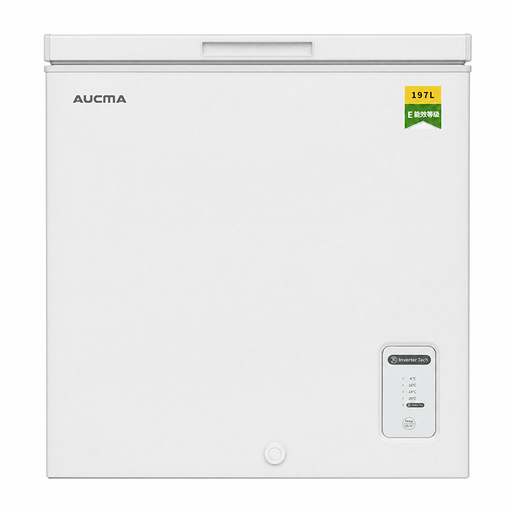 Image unavailable
AUCMA 197 L convertible chest freezer
This chest freezer adds considerable storage without replacing your existing fridge, with a removable basket for separating smaller portions.
- 197 L stated in 4-star freezer mode.
- Stated dimensions: 816 × 554 × 848 mm.
- Five-level digital control and defrost drain stated.
- Before installing it outside the kitchen, check the ambient temperature range and climate class.
- Confirm the storage time during a power cut if this is an important consideration.
Joybuy
 Image unavailable
Heinrich´s 161 L No Frost upright freezer
This upright freezer prioritises sorting and easy access to portions, thanks to its drawers and shelves.
- Stated capacity: 161 L.
- Three drawers and two shelves stated.
- No Frost, Fast Freeze at -22 °C, LED display, alarm and reversible door indicated.
- Check the dimensions, clearances and climate class before installation, especially outside the kitchen.
- Check the storage time during a power cut if you keep a substantial reserve.
Joybuy
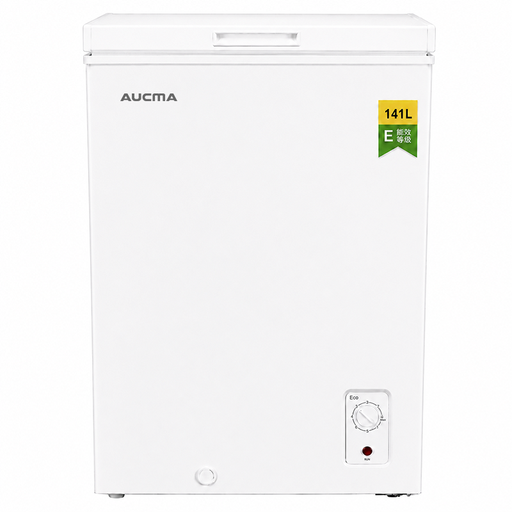 Image unavailable
AUCMA 141 L convertible chest freezer
An additional storage option for households that do not need a very large reserve, with a removable basket for smaller items.
- Stated capacity: 141 L.
- Stated dimensions: 632 × 554 × 848 mm.
- Seven-level mechanical thermostat, adjustable feet and defrost drain stated.
- Estimate the volume of portions you need to keep before choosing this capacity.
- For an unheated room or in the event of a power cut, check the model’s ambient temperature range and storage time.
Joybuy
 Image unavailable
TCL CF182EWE0FR 140 L chest freezer
This moderately sized chest freezer can complement a main freezer, with a storage basket and stated castors.
- Stated capacity: 140 L.
- Stated dimensions: 637 × 556 × 846 mm.
- Storage basket, balanced lid, castors, adjustable feet and front water drain indicated.
- Check whether 140 L meets your usual portion storage needs.
- Check the climate class, storage time during a power cut and freezing capacity if you often add large quantities of fresh food.
Joybuy
Frequently asked questions
Can I install a freezer in a garage or unheated cellar?
Yes, but only if the model’s ambient temperature range or climate class covers the temperatures actually reached in that room. Que Choisir and ADEME recommend checking the stated minimum and maximum temperatures; suitability down to -15 °C applies only to models that explicitly state it.
What is the practical difference between an upright and a chest freezer for prepared meals?
An upright freezer makes it easier to organise and retrieve portions thanks to its drawers and compartments. A chest freezer prioritises capacity and open storage, but requires baskets and labels to keep portions visible; it also takes up more floor space.
How should I compare the energy consumption of two freezers?
Compare the energy labels on the same basis: A to G energy class, annual consumption in kWh, freezer compartment capacity and noise level. The European Commission states that the label brings these indicators together; do not estimate an appliance’s consumption from its class or capacity alone.
What should I do with homemade meals once they have been frozen?
Freeze them soon after buying or preparing them rather than at the end of their use-by date. According to Anses, freezing food at home at -18 °C stops bacterial growth without destroying most micro-organisms; defrost food in the fridge, in the microwave using the defrost setting or quickly by cooking, then eat it without refreezing.


