Choose a capacity based on your usual laundry loads, rather than an occasional duvet wash. According to UFC-Que Choisir, 8 to 9 kg is generally enough for a household of three or four people, while 10 to 12 kg is a better fit when you regularly wash larger loads. Samsung also suggests 10 to 12 kg for a king-size duvet. If you often wash small loads, compare the machines’ energy and water use, and don’t assume that an automatic setting will make up for a large drum that’s only partly full.
Who is this choice for?
Households that do laundry very frequently
If clothes, towels and bedding regularly fill your laundry basket, look for a capacity that means you don’t have to split your usual loads. UFC-Que Choisir recommends considering how often you actually do the laundry, not just the size of your household.
Households that wash duvets and throws at home
Your bedding needs to fit in the drum without exceeding the load limit for the relevant programme. Samsung suggests 10 to 12 kg for a king-size duvet, but always check its care label and your washing machine’s manual.
Households that alternate between small and large loads
If you often wash items separately but sometimes need more room for household bedding, consider both the capacity and the machine’s energy and water use. ADEME recommends checking that a larger capacity genuinely meets your needs.
Which features should you prioritise?
Start with the loads you wash most often, then check separately how much room you need for duvets and how the machine performs when the drum is less full. The three priorities below are for shoppers choosing a washing machine for a larger household or bulky items.
| Factor |
What to check |
Who is it for? |
| Number of cycles |
Compare the capacity in kg of dry laundry with the larger loads you usually wash. UFC-Que Choisir gives 8 to 9 kg as a general guide for households of three or four people. |
When laundry builds up at home every day, I want to avoid splitting a regular load across two cycles; around 36% of shoppers rank this as their top priority. |
| Duvets and throws |
Check the item’s care label and the maximum load for the relevant programme, which may differ from the machine’s rated capacity. Samsung suggests 10 to 12 kg for a king-size duvet. |
If I regularly wash a duvet or throw at home, I need a programme that can genuinely handle it; this is the top priority for around 36% of shoppers. |
| Small loads |
Compare the kWh per 100 cycles and litres per cycle for the models you’re considering. Check the manual to see exactly what the load-sensing feature adjusts. |
If I often wash colours or delicate fabrics separately, my large drum will also run with only a small amount of laundry in it; around 28% of shoppers prioritise using resources efficiently for these smaller loads. |
Mistakes to avoid
-
Choosing a machine for a duvet you only wash occasionally
A capacity far larger than your usual loads could mean the drum is only partly full most of the time. UFC-Que Choisir recommends choosing a capacity that reflects the laundry you actually wash.
For a few weeks, keep track of how often you wash clothes, bedding, throws and duvets before choosing a capacity.
-
Assuming the stated capacity applies to every programme
A machine advertised as 10 kg won’t necessarily take 10 kg on its duvet, wool or delicates programme. The manual for Electrolux model EW6FI5120WA says to follow the maximum load for each programme.
Check the programme table for the model you’re considering and the duvet’s care label before relying on being able to wash it at home.
-
Measuring only the width of the space
Depth also varies between high-capacity machines: Electrolux lists a depth of 658 mm for its 10 kg EW6FI5120WA, while Haier lists 679 mm for its 12 kg X11.
Check the exact model’s dimensions against the available space, access routes, connections and the room needed in front of the door.
-
Relying on load detection to make up for everything
An adjustment feature alone doesn’t guarantee low energy and water use when the drum is only partly full. UFC-Que Choisir points out that the effectiveness of this adjustment varies between models.
Check the features described in the manual for the exact model, and compare its energy label with those of the other capacities you’re considering.
Brands and models to consider
These examples can help you compare specific configurations. Their features shouldn’t be assumed to apply to every washing machine from the same brand.
Electrolux
Worth considering if you’re looking for a 10 kg front-loading machine with a duvet programme.
- Electrolux says the EW6FI5120WA has a 69 L drum and a duvet programme.
- For a particular duvet, check the manual for the load permitted on this programme. It can’t be inferred from the machine’s stated 10 kg capacity.
Haier
The 10 kg and 12 kg X11 models are worth considering if you regularly wash larger loads.
- Haier describes its 12 kg X11 as suitable for bulky items, among other things.
- This description doesn’t confirm that a particular duvet is within the load limit for the chosen programme. The stated depth of the 12 kg model is also 679 mm.
Samsung
An option if you’re looking for a larger capacity while keeping an eye on the space it takes up.
- Samsung has announced 11 kg models in Europe with a depth of 60 cm.
- Check the dimensions, programmes and exact model you’re considering: this announcement doesn’t describe every Samsung model.
Miele
A 10 kg model whose product information lets you compare several stated features.
- Miele lists a 10 kg capacity and a weighted energy consumption of 52 kWh per 100 cycles for the WCK360 WCS PWash&10kg.
- These figures apply to this specific model and don’t tell you the load permitted for a duvet on a particular programme.
Washing machines available on Joybuy
These 8 to 10 kg models offer a chance to compare standard and larger capacities for family laundry. If you’re washing a duvet, always check its care label and the load permitted on the chosen model’s programme.
 Image unavailable
Haier X Series 11 HW100-BD14397PGU1, 10 kg
Worth considering if you alternate between larger family loads and smaller washes.
The product name lists a 10 kg capacity, 1,400 rpm, an A energy rating, AutoDose and Wi-Fi connectivity. Check the manual for the load permitted for bulky items and the space needed for installation.
View on Joybuy
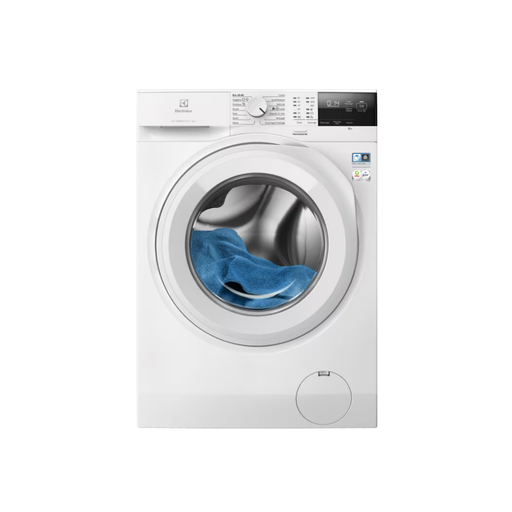 Image unavailable
Electrolux EW6FI4805AW, 8 kg
Worth considering if your usual loads are fairly small and you only wash bulky items occasionally.
The product name lists an 8 kg capacity, 1,400 rpm and SensiCare. If you plan to wash a duvet, check the load permitted on the relevant programme and the item’s care label.
View on Joybuy
 Image unavailable
Electrolux EW7FI259160V, 9 kg
Worth considering for frequent everyday washing, with the occasional larger load.
The product name lists a 9 kg capacity, 1,600 rpm, SmartSelect, SteamCare and a connected feature. Check the depth required and, for a duvet, the relevant programme and its maximum load.
View on Joybuy
 Image unavailable
Electrolux EWF1410N2, 10 kg
Worth considering if you regularly wash larger family loads that make a 10 kg drum worthwhile.
The product name mentions TimeSave and an Inverter motor. Before relying on it to wash a duvet, check the programmes and their maximum loads in the manual. Also measure the space available in depth.
View on Joybuy
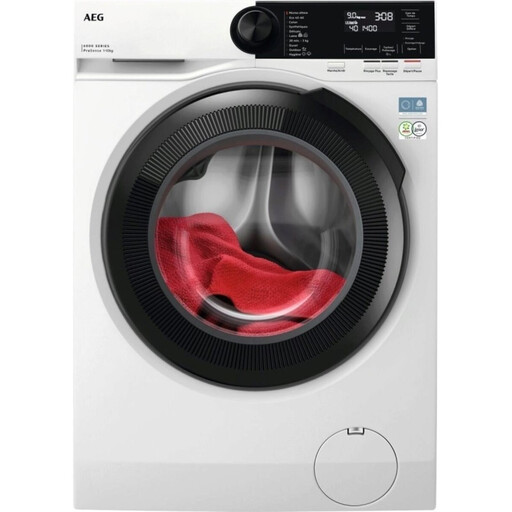 Image unavailable
AEG LFR62E114S, 10 kg
Worth considering if you often wash larger loads and have enough space for this model.
The product name lists a 10 kg capacity, 1,400 rpm and an A energy rating. Check the dimensions before buying, then consult the energy label and manual to compare energy and water use, and the loads permitted for each programme.
View on Joybuy
Frequently asked questions
Will a 10 kg washing machine take 10 kg on every programme?
No. The permitted load depends on the programme. Electrolux’s manual for the EW6FI5120WA says to follow the maximum load for each one. Check the load table for the model you’re considering, particularly for duvet, wool and delicates programmes.
What capacity do you need to wash a duvet at home?
Samsung suggests 8 kg as a guide for a single duvet and 10 to 12 kg for a king-size duvet. However, check that your duvet is machine washable and that its load is within the limit for the programme you choose.
Which figures should you compare on the energy label?
Compare the capacity, kWh per 100 cycles, litres per cycle and Eco 40–60 programme duration for the models you’re considering. ADEME recommends using the energy label to help you choose, rather than judging energy use by the stated capacity in kilograms alone.


