Which criteria should you compare?
For everyday washing, first choose a size that fits your kitchen, then check that the baskets can accommodate the dishes you use regularly. The three configurations below suit different installation requirements.
60 cm freestanding
Consider it if: you have enough width and want a finished appliance that doesn't need a kitchen door panel.
Bear in mind: the appliance will be visible. If you plan to fit it under a worktop, check whether its top can be removed.
Integrated
Consider it if: you have a suitable alcove and want the dishwasher to blend into your kitchen behind a compatible door panel.
Bear in mind: the door panel, its fixings and installation all need to be checked and may add to the fitting costs.
Slimline 45 cm
Consider it if: there isn't enough room for a 60 cm appliance and your usual load is suited to this size.
Bear in mind: Que Choisir puts its capacity at between 9 and 10 place settings, so you may need to run more cycles if dishes pile up.
| Criterion |
What to check before buying |
Who it's for |
| Capacity and loading |
Compare the stated number of place settings with the room actually available for your dishes and utensils, particularly if the baskets are adjustable. |
When meals quickly fill the sink, I want to fit large dishes alongside everyday tableware without running extra cycles; around 33% of consumers would prioritise this usable capacity. |
| Running costs |
Check the kWh per 100 cycles and litres per cycle on the label, then factor in how often you wash and which products you use. |
If the dishwasher runs often, I want to understand the long-term cost of water, electricity and consumables; around 27% of consumers would put keeping these costs under control first. |
| Noise |
Compare the noise level in dB and the noise class shown on the label. ADEME explains that a 3 dB difference corresponds to almost twice the noise. |
In an open-plan kitchen or when running cycles late, I want the appliance to disturb the living area less; around 20% of consumers would prioritise noise. |
| Space and installation |
Measure the space or alcove and check the installation type, connections and door-panel compatibility for an integrated model. |
When the available width or fitted kitchen limits my choice, I need an appliance that can actually be installed; around 20% of consumers would prioritise a good fit for their space. |
Dishwashers available from Joybuy
These models cover two options for everyday meals: freestanding and integrated into a fitted kitchen. Compare their stated capacity with your usual loads, then check the available space and Eco-cycle consumption figures before choosing.
 Image unavailable
Samsung DW60M6050FS, 14 place settings, grey
Worth considering if your priority is fitting your everyday dishes into a freestanding appliance. It has a stated capacity of 14 place settings and 7 programmes. Check that its dimensions and baskets suit your dishes and the space available.
View on Joybuy
 Image unavailable
Indesit D2F HK26 S, 60 cm, 14 place settings, grey
Worth considering if you have 60 cm of width for a freestanding appliance and need to wash your household's dishes. It has a stated capacity of 14 place settings and an E energy rating. Check the Eco-cycle figures to get an idea of running costs.
View on Joybuy
 Image unavailable
Hotpoint H4FD641A, 60 cm, 14 place settings, white
Worth considering if the dishwasher will run near a living area and you want a family-sized freestanding model. The model title lists 14 place settings, 41 dB and a C energy rating. Also compare the Eco-cycle figures in light of how often you'll use it.
View on Joybuy
 Image unavailable
Samsung DW70H72WCB0U1 integrated, 60 cm, 13 place settings
Worth considering for a fitted kitchen with a suitable alcove for a 60 cm integrated model. It has a stated capacity of 13 place settings and a C energy rating. Check the door panel, installation dimensions and Eco-cycle consumption before ordering.
View on Joybuy
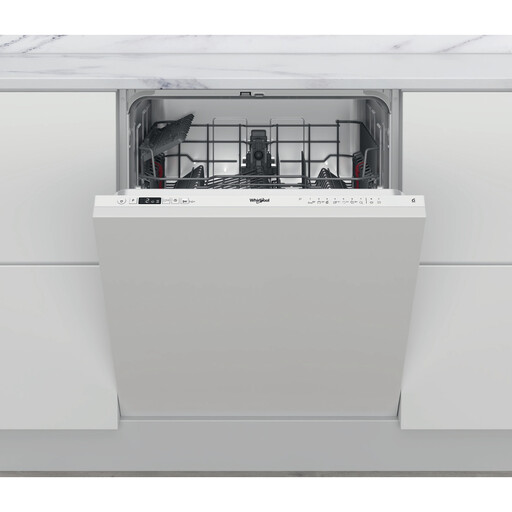 Image unavailable
Whirlpool W2I HD526 A integrated, 60 cm, 14 place settings, white
Worth considering if your kitchen can accommodate a 60 cm integrated appliance for everyday dishes. It has a stated capacity of 14 place settings and an E energy rating. Check the alcove and door-panel compatibility, then compare the Eco-cycle figures.
View on Joybuy
Frequently asked questions
Is a 45 cm dishwasher big enough for a household's meals?
It may be, if your usual loads fit in the baskets and the available width means this is the right size for you. Que Choisir gives a typical capacity of 9 to 10 place settings for a 45 cm model, compared with 12 to 17 for a 60 cm one. Remember to allow for the space your dishes take up, not just your plates.
What else should you budget for besides the appliance?
Allow for any delivery and installation you need, as well as the water, electricity and products used over time. For an integrated model, check whether the door panel, fixings and connections are included. Que Choisir also highlights the cost of detergents as part of running costs.
Which figures should you compare to estimate consumption?
Compare the kWh per 100 cycles and litres per cycle on the label, then relate them to how often you wash. ADEME says the label also shows the Eco-cycle duration, capacity and noise level. Figures for a quick programme aren't directly comparable with those for the reference cycle.
What should you check before choosing an integrated model?
Check the alcove, door panel and hinges, as well as the water inlet, waste outlet and electrical supply. Que Choisir explains that an integrated dishwasher must be fitted in a suitable alcove; it isn't simply used like a finished freestanding appliance.


