Parents planning breakfasts
They want a number of cartons that suits their household’s consumption and storage space, without having to shop too often.


A multipack of almond drink can be handy if your household regularly gets through several cartons. Choose the recipe to suit how you plan to use it, then check that the pack size and shelf life fit your routine. An unsweetened version, a recipe labelled as containing calcium and a drink with a stronger almond flavour each meet different needs, so check the label on each one. For babies under one, Anses advises that plant-based drinks are no substitute for breast milk or infant formula.
They want a number of cartons that suits their household’s consumption and storage space, without having to shop too often.
They compare ingredient lists and nutritional information across different recipes, particularly if they want to avoid added sugars.
They look for a recipe that works well with cereal or in home cooking, while checking the ingredients and allergens for everyone who will be drinking it.
For family use that doesn’t involve feeding a baby, start with the recipe you want, then choose a pack size to suit your household’s consumption. The needs below can help you work out what matters most when choosing.
| Criteria | What to check | Who it’s for |
|---|---|---|
| Stock and storage | Number of cartons, total volume and date shown on the pack; storage instructions after opening. | If you regularly have the drink for breakfast, keeping several cartons at home can save you from shopping too often, as long as you have room to store and use them. Around 36% of consumers put having a stock at home first. |
| Ingredients | Ingredient list, sugar claims, allergens and nutritional information; whether it contains calcium, if that matters to you. | If your priority is finding an unsweetened recipe or checking exactly what’s in it, pack size alone won’t help you decide. Ingredients come first for around 36% of consumers. |
| Flavour and recipes | Almond content, if listed, whether it contains sugar or flavourings, and how you plan to use it in cooking. | For cereal or cooking, some households are mainly looking for an almond flavour they enjoy, without assuming that the word “intense” tells them anything else about the product. Around 28% of consumers prioritise this use. |
A pack of three 1 L cartons takes up storage space and needs to be used. The date on the cartons and the storage instructions after opening matter just as much as the pack size.
Choose the number of cartons to suit your available space and household’s consumption; check the date on the product, and don’t confuse the best-before date with the use-by date.
Products vary in their ingredients and nutritional claims: “organic” or “intense” doesn’t mean “unsweetened”.
Compare the ingredient list and nutritional information for the exact product, paying particular attention to sugars, almond content and allergens.
Anses advises that plant-based drinks aren’t suitable for the needs of babies under one and must not replace breast milk or infant formula.
Don’t choose this product to feed a baby instead of these. If you have a question about a child’s diet or a suspected allergy, ask a healthcare professional for advice.
Alpro offers almond drinks in 1 L cartons, including a roasted recipe and an unsweetened option.
Carrefour Bio offers almond drinks in 1 L cartons, including an Intense version.
Bio Village has an organic Intense almond drink and an organic unsweetened version, both listed in 1 L cartons by E.Leclerc.
Auchan offers a 1 L almond-based drink, as well as an unsweetened version.
Aldi France lists a 1 L carton of MY VAY® organic almond plant-based drink.
These 1 L products let you compare recipes for breakfast, coffee or cooking. If you’re looking to stock up for the family, check how many cartons are included with each product and follow the storage instructions on the packaging.
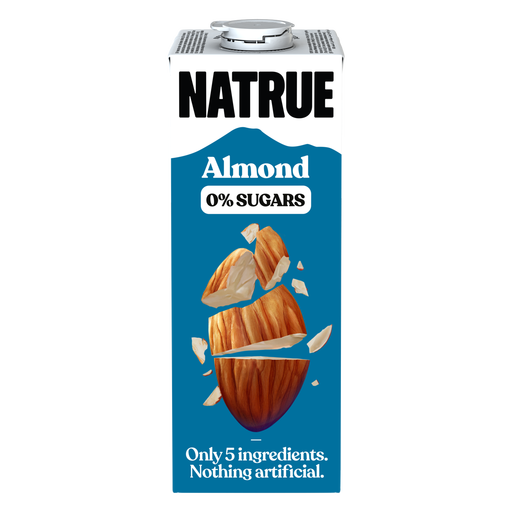 Image unavailable
Worth considering if you’re looking for a 1 L carton of almond drink for everyday use at home.
Check how many cartons are included and read the ingredients list, particularly if soya is an allergen you need to consider in your household.
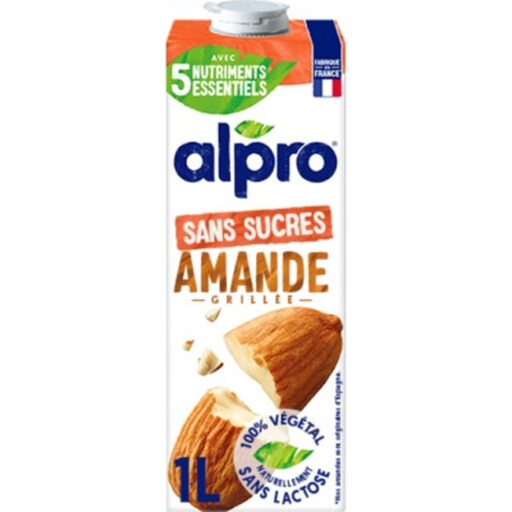 Image unavailable
This unsweetened 1 L version is a good choice if you’re comparing ingredients rather than pack sizes.
Check the ingredients, any allergen information and the storage instructions for after opening on the carton you choose.
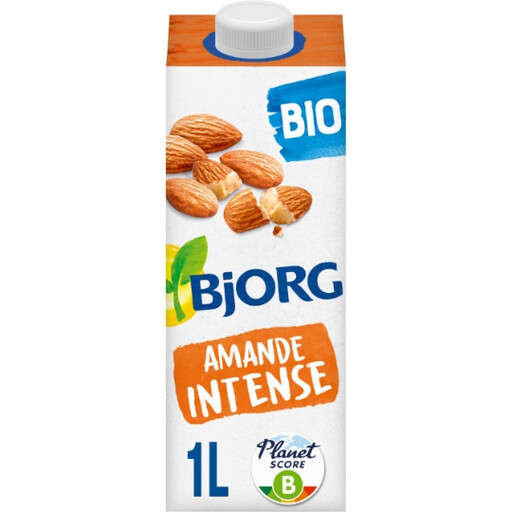 Image unavailable
For cereal or recipes, this 1 L Intense version is worth comparing with the other drinks you’re considering by checking the ingredients list.
If you’re choosing it because you prefer no added sugars, check both the claim on the packaging and the ingredients on the exact carton.
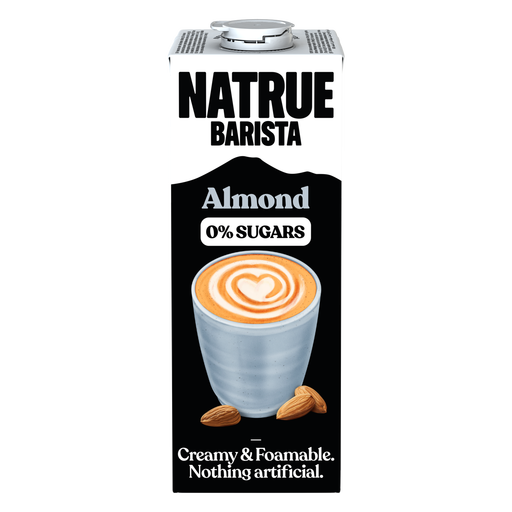 Image unavailable
This 1 L Barista Edition is for households looking for an almond drink to use in coffee, among other things.
Check the ingredients and total quantity in the pack before choosing it to stock up on several cartons.
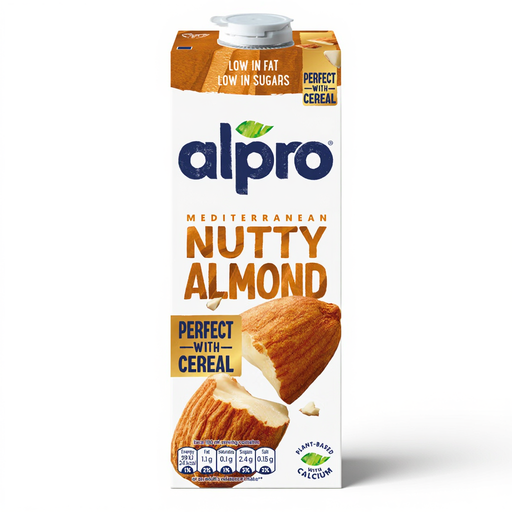 Image unavailable
For breakfast, you can compare this 1 L almond drink with Alpro’s unsweetened version.
It’s a different recipe, so check its ingredients and nutritional information, as well as how many cartons are included, before you buy.
No, not for a baby under one: Anses advises that plant-based drinks aren’t suitable for their needs and must not replace breast milk or infant formula. If you have a question about a child’s diet or a suspected allergy, speak to a healthcare professional.
A pack of three 1 L cartons is handy if your household uses them regularly and has space to store them. Check the date on each carton and follow its own storage instructions for using it after opening.
Check the product name, ingredients list and allergens, followed by the net quantity, nutritional information and date. For prepacked food sold in France, the Ministry of the Economy states that mandatory labelling information must be written in French.
Follow the storage time and temperature on the carton you’ve bought, as these may vary from one product to another. Auchan’s listing for its unsweetened almond drink states that this product should be kept refrigerated between 0 °C and +6 °C and used within five days of opening.