Shoppers who pay attention to labels
You want to identify the exact standard and, where stated, the proportion of ingredients it covers. Fairtrade / Max Havelaar, Fair for Life and Bio Équitable en France refer to different standards.


When choosing a fair-trade herbal tea for your regular shop, first check which standard is named and what proportion of the ingredients it covers. An organic claim or a fair-trade initiative alone does not prove that the product carries the Fairtrade / Max Havelaar label. Next, choose a blend that suits you, paying attention to liquorice, then pick a format that fits the way you like to prepare your drink. A wellbeing claim is no substitute for reading the ingredients or, where necessary, seeking medical advice.
You want to identify the exact standard and, where stated, the proportion of ingredients it covers. Fairtrade / Max Havelaar, Fair for Life and Bio Équitable en France refer to different standards.
You prefer something easy to prepare, with a flavour you enjoy and, if you wish, a blend without caffeine. Always check the list of herbs before making this drink part of your routine.
You check in particular for liquorice and don’t treat claims such as “digestion” or “sleep” as a guarantee of an effect. Anses warns of risks associated with excessive liquorice consumption, particularly for people with high blood pressure.
For your regular shop, first distinguish between fair-trade standards, then check the ingredients and how you plan to prepare or drink it.
| Criterion | What to check | Who is it for? |
|---|---|---|
| Fair-trade credentials | The standard named on the pack and the proportion of ingredients it covers, where stated. Organic certification does not prove that a product carries the Fairtrade / Max Havelaar label. | I want to recognise the fair-trade scheme before buying the same product again on my next shop; around 36% of shoppers would make this their top criterion. |
| Ingredients | The list of herbs, particularly whether it contains liquorice. If you have high blood pressure, take medication or have concerns before drinking it regularly, ask a health professional for advice. | If I drink herbal tea often, I’d rather know which herbs it contains than rely on its name; for around 29% of shoppers, ingredients would be the main criterion. |
| Everyday use | Whether it contains tea, the flavour you’re looking for, the brewing instructions and the format: tea bags, loose or ready to drink. | For an evening drink, I want a flavour I enjoy and something that’s easy to prepare; around 21% of shoppers would prioritise this everyday convenience. |
| Availability and format | Whether it’s available in your shop and the packaging of the product actually on sale. Don’t assume that an online product listing matches the pack you find on the shelf. | When I do my regular shop, I want to find the same product again in a format that suits me; easy restocking would be the top priority for around 14% of shoppers. |
These claims do not offer the same guarantee. Fairtrade / Max Havelaar France describes its label as being based on social, economic and environmental criteria monitored by an independent certifier.
Check the name of the standard on the product and, if stated on the packaging, the proportion of ingredients it covers.
Some blends contain liquorice. According to Anses, excessive consumption can lead to high blood pressure and cardiovascular complications, among other issues.
Look for liquorice in the ingredients list. If you have high blood pressure, take medication or have concerns before drinking it regularly, ask a health professional for advice.
A claim such as “sleep” or “detox” does not make an herbal tea a medicine. The DGCCRF reminds consumers that health claims used for food must be authorised.
Choose your drink based on its ingredients and your preferences; don’t change any treatment based on the packaging.
A product listing does not guarantee that you’ll find the herbal tea in your usual shop.
Check local availability before relying on that product for your next shop.
If the product is out of stock, you may need to make another trip to the shop or place a separate order.
Ethiquable offers teas, rooibos and herbal teas made through fair-trade initiatives, available in tea bags or loose.
The brand offers tea bags and loose tea, among other products; its Curcuma Gingembre listing carries the “Fair trade” claim.
Some Pukka herbal teas provide information about the proportion of ingredients covered by fair-trade standards.
Retailer listings state that some of the brand’s herbal teas contain a proportion of ingredients from agricultural sources that meet fair-trade standards.
These products suit different needs: a ready-to-drink rooibos beverage, a herbal tea to brew and a green tea. Check the fair-trade standard for each one rather than treating them as interchangeable formats or labels.
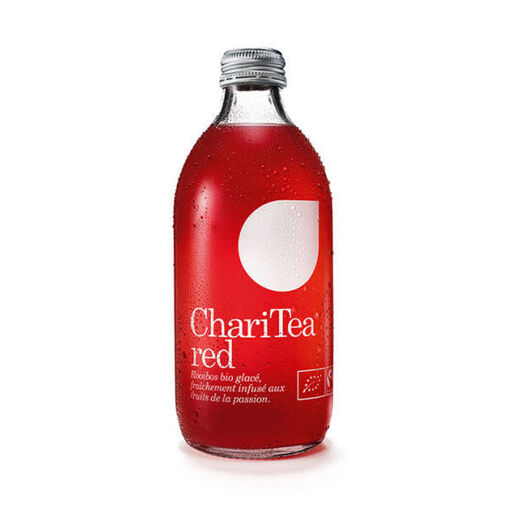 Image unavailable
Worth considering if you’re looking for a ready-to-drink beverage rather than a herbal tea to brew. The stated size is 33 cl; check the packaging for the fair-trade standard and what the Fairtrade claim covers.
 Image unavailable
If you’re looking for a herbal tea to brew, compare the fair-trade standard stated and read the ingredients before making it a regular drink, especially if you avoid liquorice. The stated pack size is 36 g.
 Image unavailable
Compare this if you’d prefer matcha green tea to a herbal tea. If you’re looking for a caffeine-free evening drink, check this before buying, along with the fair-trade standard stated. The stated pack size is 30 g.
No. An organic claim does not prove that a product carries the Fairtrade / Max Havelaar label. If this label is important to you, look for it on the specific product. Fairtrade / Max Havelaar France associates it with social, economic and environmental criteria monitored by an independent certifier.
No. They are separate initiatives and should not be confused with Fairtrade / Max Havelaar. To compare two herbal teas, check the exact standard and, where stated, the proportion of ingredients it covers. Don’t assume that the percentages refer to identical certifications.
Because excessive liquorice consumption can pose health risks, including high blood pressure and cardiovascular complications, according to Anses. Check the ingredients, particularly if you have high blood pressure, take medication or plan to drink it often. If you’re unsure, ask a health professional for advice.
No. These words alone are not enough to establish that an herbal tea will have the intended effect. The DGCCRF reminds consumers that health claims used for food are regulated. When choosing your drink, check its ingredients and any precautions relevant to you first.